Beyond the Scale: Why Body Composition Matters in Weight Manage
Published in Healthcare & Nursing, Social Sciences, and Physics

Why Weight Loss Should Be About More Than the Number on the Scale
When people begin a weight-loss journey, the number on the scale is often the first thing they look at.
But is losing weight alone enough?
For clinicians working with obesity, the answer is increasingly clear: not necessarily.
Successful obesity management should aim not only to reduce body weight, but also to improve body composition—particularly by reducing excess fat while preserving skeletal muscle. This question was at the heart of our recent study, published in SN Comprehensive Clinical Medicine.
Looking beyond weight loss
One of the challenges in obesity treatment is that a reduction in body weight does not tell us exactly what has been lost.
A person may lose several kilograms, but those kilograms can come from different compartments of the body, including fat mass, muscle mass, and body water.
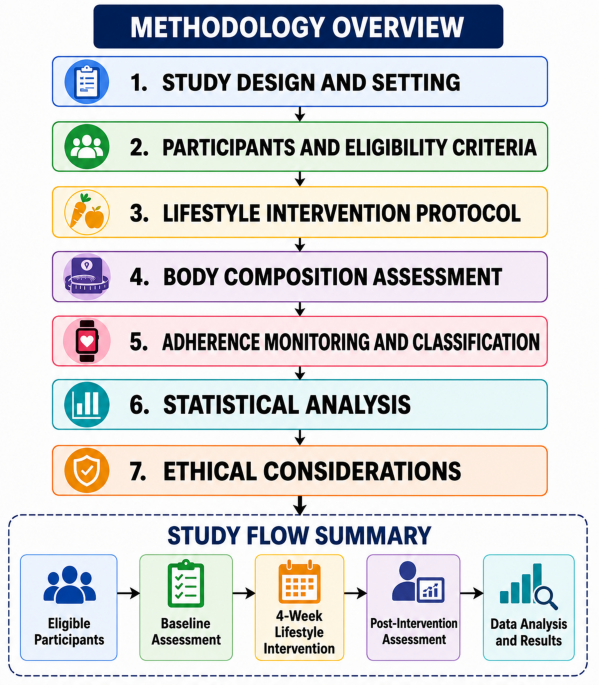
For this reason, we wanted to examine what happens to body composition when a structured, moderate lifestyle intervention combines a balanced calorie-restricted diet with regular aerobic exercise.
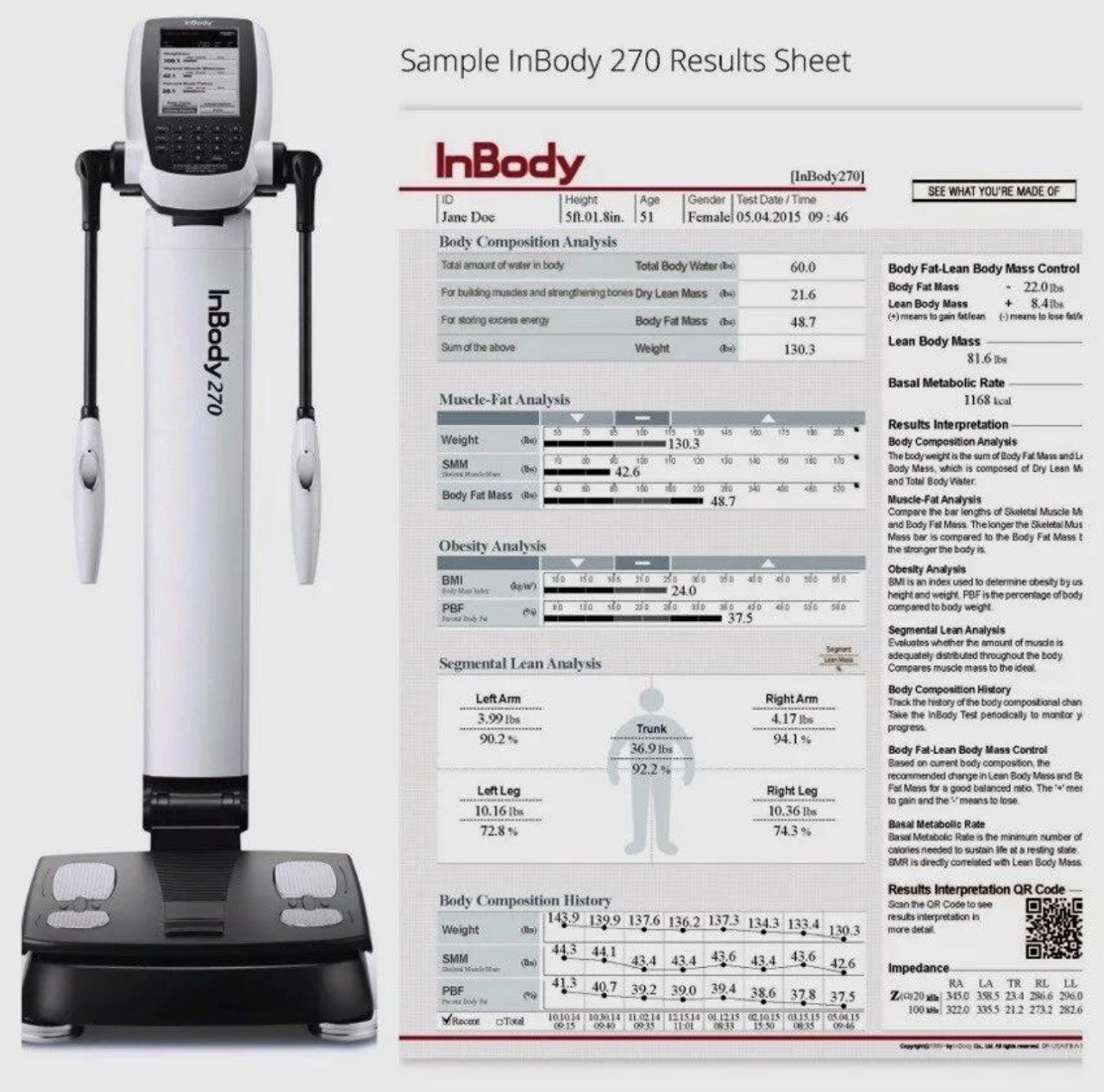
Our study included 1,000 adults with obesity, aged 18–70 years, who participated in a four-week lifestyle intervention. The program involved an individualized balanced diet designed to create an approximately 500-kcal daily energy deficit, together with 60 minutes of moderate-intensity aerobic exercise each day. Body composition was assessed at baseline and follow-up using bioelectrical impedance analysis.
What did we find?
The results were encouraging.
Participants experienced an average reduction in body weight of 6.44 kg over the intervention period, accompanied by a significant reduction in BMI.
More importantly, body fat percentage also decreased, while skeletal muscle mass was largely preserved.
The average reduction in skeletal muscle mass was only 0.26 kg, and this change was not statistically significant. This finding is particularly important because preserving muscle during weight loss is a major clinical consideration.
We also observed differences between men and women. Men achieved a greater average absolute weight reduction than women in our cohort—approximately 12.3 kg compared with 5.5 kg.
Another interesting finding was adherence. Around 34.8% of participants achieved more than 5% reduction in their initial body weight, demonstrating that a structured lifestyle approach can produce meaningful short-term changes in a real-world clinical population.
Why preserving muscle matters
Imagine two people who both lose 6 kilograms.
At first glance, their results look identical.
But if one person loses mostly fat while preserving muscle, and the other loses a substantial amount of muscle along with fat, the clinical meaning of that weight loss is very different.
Skeletal muscle contributes to physical function, mobility and metabolic health. Therefore, the goal should not simply be to make the number on the scale smaller. Instead, we should aim for healthier body composition.
This perspective is especially relevant when treating obesity over the long term.
What surprised us?
One of the most interesting aspects of the study was how much could change within a relatively short period.
A four-week intervention produced substantial reductions in body weight and BMI while maintaining skeletal muscle mass at the group level.
This does not mean that four weeks is enough to treat obesity permanently. It is not.
Rather, it highlights the potential impact of combining two fundamental components of obesity management: a moderate energy deficit and regular physical activity.
The findings also reinforce an important message for both clinicians and patients: aggressive approaches are not necessarily required to achieve meaningful early improvements.
The bigger picture
Obesity is a complex chronic disease, and effective management requires more than simply prescribing a diet.
Individualization matters.
Adherence matters.
Physical activity matters.
And perhaps most importantly, what is lost matters as much as how much is lost.
Our findings support a clinical approach that pays attention to body composition rather than relying exclusively on body weight or BMI.
Bioelectrical impedance analysis can provide additional information about changes in body composition and may help clinicians monitor progress beyond the traditional bathroom scale.
From research to clinical practice
As a clinical nutrition physician, I see every day how differently people respond to weight-management interventions.
Two patients can follow apparently similar plans and experience very different changes.
This study reinforced for me the importance of looking deeper into the numbers.
Weight loss should ideally represent a reduction in excess adiposity while preserving functionally important lean tissue.
That is why the conversation with patients should move from:
“How many kilograms did you lose?”
to:
“What changed in your body?”
That small change in the question can represent a much bigger change in how we think about obesity treatment.
What comes next?
Our study provides evidence from a large cohort, but it also raises further questions.
Longer-term studies are needed to determine whether these improvements in body composition can be maintained and how adherence, diet quality, exercise type, sex, age and baseline body composition influence outcomes over time.
Future research should continue moving beyond weight alone and toward a more comprehensive understanding of body composition and metabolic health.
For me, this is the most important message behind the paper:
Successful weight management is not simply about losing weight. It is about losing the right weight while protecting what the body needs.
That is the direction in which obesity care should continue to move.

Follow the Topic
-
SN Comprehensive Clinical Medicine
A broadly based, peer reviewed journal that publishes original research in all disciplines of clinical medicine and their subspecialties, including all aspects of Imaging, Surgical and Medical studies related to diagnosis, treatment and management.

Related Collections
With Collections, you can get published faster and increase your visibility.
Environmental and Lifestyle risk factors for Non-Communicable Diseases
Research pointing at the role of environmental and lifestyle risk factors towards increased burden of Non-Communicable Diseases (NCDs) is fragmented in consideration of the large span of risk factors. Some of them are largely studied, e.g. air pollution, tobacco smoking, alcohol use, whereas other are less extensively studied: for example, exposure to noise, or some dietary risks (e.g. low consumption of nuts and seeds, low intake of omega-3 fatty acids). Moreover, many analyses focus on one-to-one associations between risk factors and NCDs. The overall effect of this is that a global picture of the effects of environmental and lifestyle risk factors is difficult to gather, with very few exceptions (e.g. smoking or high blood pressure). In addition to this, the “targets” of risk factors are not evenly addressed, and include risk factors for disease onset, risk factors for mortality and risk factors for disease progression (each with its own definition of progression).
This collection is aimed to provide an overview on the main risk factors for NCDs. Submissions are mostly welcome in the format of literature reviews, either systematic or narrative, that provide an appreciation of the impact that risk factors have on mortality and morbidity of selected NCDs. Contribution might be either disease-oriented (e.g. exploring the risk factors for stroke), or risk oriented (e.g. exploring which diseases are associated to low physical activity).
The specific requirements are:
1) to compare the results gathered in the contribution against the most recent estimates that can be produced by the Global Burden of Disease (GBD) study, thus showing what the manuscript adds to the state of knowledge in a GBD perspective;
2) to specifically link the results to the UN Sustainable Development Goals (SDGs), thus showing the potential impact of implementing policies towards risk reduction or elimination in light of global health improvement.
Publishing Model: Hybrid
Deadline: Mar 31, 2027
Talent Honors Program 2026
This article collection will welcome research or review articles authored by Early Career Researchers (PhD/PostDoc or Resident) on any topic covered by the journal.
Applications can be made by the submission of a Research or Review article (as the corresponding or co-corresponding author), within the scope of SN Comprehensive Clinical Medicine, to the article collection "Talent Honors Program 2026". Applicants should include a declaration of their eligibility in the cover letter alongside their submitted article.
15 articles will be published under this program and, if not published under an OA license (please check SN OA agreements for eligibility), they will be granted Free Temporary Access (FTA) for 4 months. FTA will be granted to 15 applicants on a first-come, first-served basis, upon acceptance and publication of their submitted article after peer review.
All submitted articles will be sent for an initial round of peer-review, regardless of novelty, provided they are in scope and sufficiently sound. Articles will follow the journal's standard peer-review process, with the collection edited and overseen by the Editor-in-Chief.
The program will close to submissions October 31st, 2026, or once the total number of published articles has been reached.
Successful applicants will also be considered for the role of guest editor for a new collection planned for 2027. To apply, they will need to submit a proposal for a prospective article collection, in which they would serve as junior guest editor under the guidance of a senior member of the editorial board. All proposals will be reviewed by the Editor-in-Chief, and only one or two projects will be selected for implementation each year.
Additionally, successful applicants will be invited to join the Editorial Board of the journal as Junior members.
Publishing Model: Hybrid
Deadline: Oct 31, 2026

Please sign in or register for FREE
If you are a registered user on Research Communities by Springer Nature, please sign in