Bhadran’s point of generation segregation theory for behavioral precision in biomedical waste management
Published in Biomedical Research, Behavioural Sciences & Psychology, and Law, Politics & International Studies



 Improving Biomedical Waste Segregation Through Behavioral Precision: The Story Behind PGST
Biomedical waste management remains one of the most persistent operational challenges in healthcare systems worldwide. Despite the existence of regulations, color-coding systems, and training programs, errors in waste segregation continue to occur at the point of generation—the moment when healthcare workers discard materials after clinical procedures.
These errors may appear minor, but their consequences can be significant. Improper segregation can increase treatment costs, compromise recycling potential, create occupational risks for healthcare workers, and ultimately affect environmental and public health outcomes.
Our recently published study in Scientific Reports introduces Bhadran’s Point-of-Generation Segregation Theory (PGST), a behavioral framework designed to improve the accuracy of biomedical waste segregation by focusing on the human decision-making process at the moment waste is generated.
Why focus on the point of generation?
In most hospitals, biomedical waste management systems rely heavily on downstream controls—transportation protocols, treatment technologies, and regulatory monitoring. While these are essential, they cannot fully correct errors that occur earlier in the chain.
If waste is misclassified at the source, the entire system downstream must deal with the consequences. For example, non-infectious waste incorrectly placed in infectious waste streams increases treatment costs and environmental burden, while infectious waste placed in general waste streams may create safety risks.
PGST therefore focuses on the behavioral precision of healthcare workers at the point where segregation decisions are made.
From observation to theory
The idea behind PGST emerged from repeated observations in hospital environments where staff were well trained and aware of waste management rules, yet segregation errors still occurred.
Traditional explanations often attribute these errors to lack of training or negligence. However, field observations suggested that the problem was more nuanced. In many cases, staff were operating in high-pressure clinical environments with rapid decision-making demands.
This raised an important question:
What behavioral factors influence segregation decisions at the exact moment waste is discarded?
PGST was developed to answer this question by analyzing the behavioral environment surrounding waste disposal actions.
The Precision Behavior Score (PBS)
At the core of PGST is the Precision Behavior Score (PBS)—a metric designed to quantify how accurately segregation behaviors are performed at the point of generation.
PBS evaluates several behavioral elements that influence decision accuracy, including:
Cognitive Anchoring
The ability of healthcare workers to recall and apply segregation rules when disposing of waste.
Visual Discrimination
The clarity with which healthcare workers can distinguish color-coded containers and waste categories in real-time settings.
Repetition Reinforcement
Repeating correct segregation actions across disposal events, leading to habit formation.
Error-Responsive Feedback
The ability to recognize segregation errors and correct them through feedback and learning.
Together, these components create a measurable framework that links human behavior with operational waste management performance.
Measuring segregation performance
Using the Precision Behavior Score (PBS) framework, the study introduces measurable indicators to evaluate segregation performance at the point of waste generation.
Point-of-Generation Segregation Accuracy (PGSA)
A metric that quantifies how accurately healthcare workers place waste items into the correct disposal categories at the moment of generation.
Waste Quality Metrics (WQM)
Operational indicators that assess the composition and contamination levels of segregated waste streams, reflecting the overall quality of segregation practices.
Together, these indicators translate behavioral precision into measurable performance outcomes, enabling healthcare facilities to identify systemic weaknesses and design targeted interventions for improving biomedical waste management.
Implications for healthcare systems
The PGST framework has several practical implications.
First, it shifts the focus of waste management from purely regulatory compliance toward behavioral precision. Rather than assuming that training alone will solve segregation problems, the framework encourages healthcare facilities to evaluate the cognitive and environmental factors that shape staff behavior.
Second, it provides a way to measure behavioral performance objectively. Hospitals can use PBS-based metrics to monitor segregation accuracy and identify departments or workflows where errors occur more frequently.
Third, the approach supports evidence-based training and system design. By understanding which behavioral components influence segregation decisions, administrators can design interventions that improve real-time decision-making rather than relying solely on periodic training sessions.
Relevance for global health and sustainability
Biomedical waste management is increasingly recognized as a global health and environmental priority. Poor segregation not only increases treatment costs but also undermines sustainable waste management strategies.
Improving segregation accuracy contributes to safer waste handling, better recycling opportunities, and reduced environmental impact—objectives closely aligned with the goals of the United Nations Sustainable Development Agenda.
By introducing behavioral metrics into waste management systems, PGST provides a framework for integrating human behavior into environmental health strategies.
Looking ahead
PGST represents an initial step toward understanding biomedical waste segregation as a behavior-driven system rather than a purely technical process.
Future research will focus on validating PBS metrics across different healthcare settings and exploring how digital monitoring tools, artificial intelligence, and behavioral analytics can further enhance segregation accuracy.
Ultimately, improving biomedical waste management requires not only better technologies and policies but also a deeper understanding of how healthcare workers make decisions in real clinical environments.
PGST aims to contribute to that understanding.
Read the full article: https://doi.org/10.1038/s41598-025-32195-4

Dr. Renjith Seela Bhadran is an Indian academic, public health researcher, and developer of Bhadran's Point-of-Generation Segregation Theory (PGST). His research integrates behavioural science, public health, environmental health, implementation science, and systems thinking to address complex challenges in healthcare waste management, environmental exposure prevention, and precision public health. He is an Assistant Professor in the Department of Public Health, Amrita School of Medicine, Amrita Vishwa Vidyapeetham, Kochi, India, where he primarily teaches Social and Behavioral Science to healthcare students.
Dr. Bhadran completed his Doctor of Philosophy (PhD) at Amrita School of Medicine, Amrita Vishwa Vidyapeetham, where his doctoral research led to the development of Bhadran's Point-of-Generation Segregation Theory (PGST), a behavioural systems framework that conceptualises biomedical waste segregation as a precision-dependent behavioural process occurring at the moment of waste generation. The theory introduces analytical constructs such as the Precision Behaviour Score (PBS; Bhadran's Score) and Moment-Based Precision Behavioural Fidelity (MBPBF) to evaluate behavioural precision during critical waste segregation tasks, together with the Behavioural Drift concept to monitor system performance and support continuous quality improvement over time.
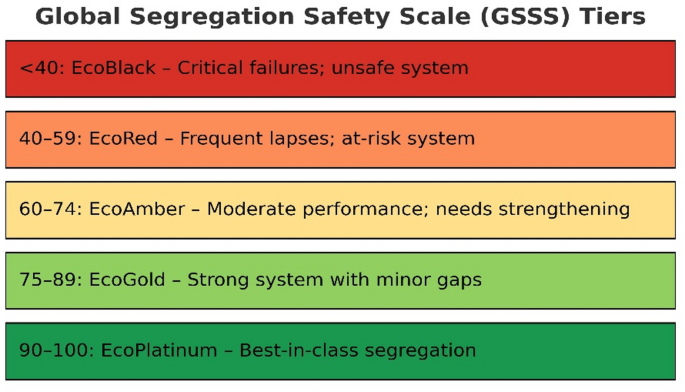
Building upon PGST, Dr. Bhadran further developed the Global Segregation Safety Scale (GSSS; Bhadran's Scale), a structured benchmarking framework designed to classify institutional segregation performance and facilitate international comparisons in biomedical waste management practices. By reframing biomedical waste segregation as a behavioural decision-making process rather than solely an operational activity, PGST provides a novel interdisciplinary perspective linking healthcare worker behaviour, environmental sustainability, occupational safety, and public health protection.
Dr. Bhadran's research has subsequently evolved into the PGST Scientific Ecosystem, an integrated body of interconnected theories, behavioural metrics, conceptual frameworks, and systems-level constructs centred on Bhadran's Point-of-Generation Segregation Theory (PGST). This ecosystem includes the Precision Behaviour Score (PBS) as a quantitative behavioural precision metric for identifying split-second execution accuracy during critical operational tasks; the Point-of-Generation Systems Approach (PGSA); the Behavioural Drift concept; the Contamination Multiplier; the Global Segregation Safety Scale (GSSS); the Behavioural Exposome; the Behavioural Precision–Exposure–Disease Continuum; the Point-of-Generation Segregation Theory–Breast Cancer Environmental Exposure Pathway Framework (PGST–BCEEPF); and other complementary theoretical and methodological developments. Collectively, these interconnected contributions establish the scientific foundation for the emerging interdisciplinary field of Precision Behaviour Science, which integrates behavioural science, implementation science, human factors engineering, systems safety, environmental health, exposomics, and precision public health. The PGST Scientific Ecosystem proposes measurable behavioural precision as an upstream determinant of environmental exposure generation, institutional safety, healthcare quality, and disease prevention, with potential applications across healthcare systems, environmental management, biosafety, occupational health, public health, and other safety-critical industries.
Prior to his doctoral research, Dr. Bhadran earned a Master of Science in Public Health (MSc PH) from the University of Bedfordshire and an MBA from the University of Nottingham, United Kingdom. His academic training reflects a multidisciplinary perspective that combines public health systems analysis, behavioural science, environmental sustainability, and management sciences. His early research focused on onsite biomedical waste segregation challenges in healthcare facilities and subsequently expanded to investigate the cognitive, behavioural, and systems-level determinants influencing waste segregation practices at the point of generation.
Through his research, Dr. Bhadran continues to advance the integration of behavioural systems science with environmental health and precision public health, with the long-term objective of establishing Precision Behaviour Science as a transformative interdisciplinary research domain for improving behavioural reliability, reducing environmental exposure, strengthening institutional safety, and informing evidence-based public health policy.
Follow the Topic
-
Scientific Reports
An open access journal publishing original research from across all areas of the natural sciences, psychology, medicine and engineering.

Related Collections
With Collections, you can get published faster and increase your visibility.
Cancer Prevention and Control
Publishing Model: Hybrid
Deadline: Feb 19, 2027
Healthy Aging
Publishing Model: Open Access
Deadline: Dec 31, 2026