Building Evidence During Crisis: Breast Cancer Care Pathways in a Resource-Constrained Setting
Published in Cancer, General & Internal Medicine, and Public Health
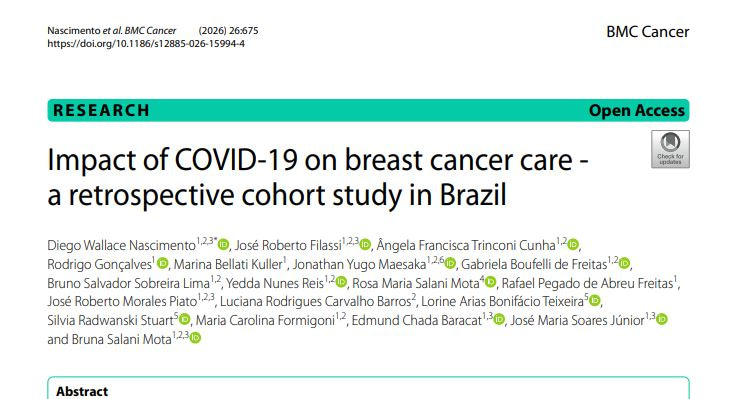
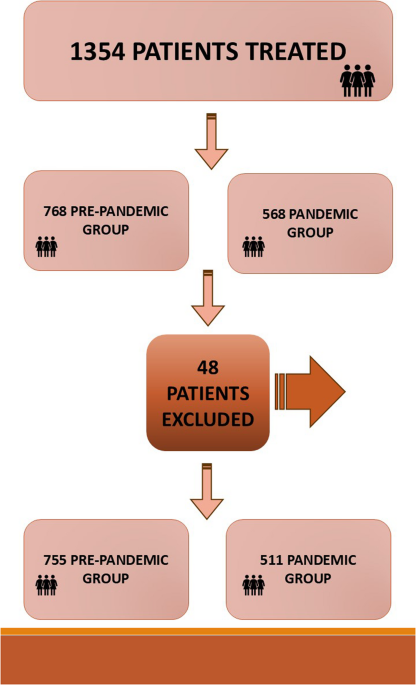

Conducting this study required a true multidisciplinary task force involving attending physicians, breast surgery residents, and collaborators from different medical specialties, both during and after the pandemic period. Data collection itself became a major challenge, as clinical workflows were constantly changing and healthcare professionals were simultaneously balancing patient care, surgical backlogs, academic responsibilities, and the emotional burden imposed by the pandemic.
One of the strongest motivations behind this project was the belief that experiences from resource-constrained public healthcare systems also deserve scientific visibility and international discussion. Despite the limitations inherent to retrospective analyses performed in middle-income settings, we believed that documenting the experience of a large public oncology center during the pandemic could provide valuable external perspectives on how cancer care pathways behave under healthcare system stress.
In many ways, this study was also an exercise in resilience — not only in maintaining cancer care during a global crisis, but also in sustaining academic collaboration, clinical research, and scientific production in a setting with limited resources and continuously shifting priorities.
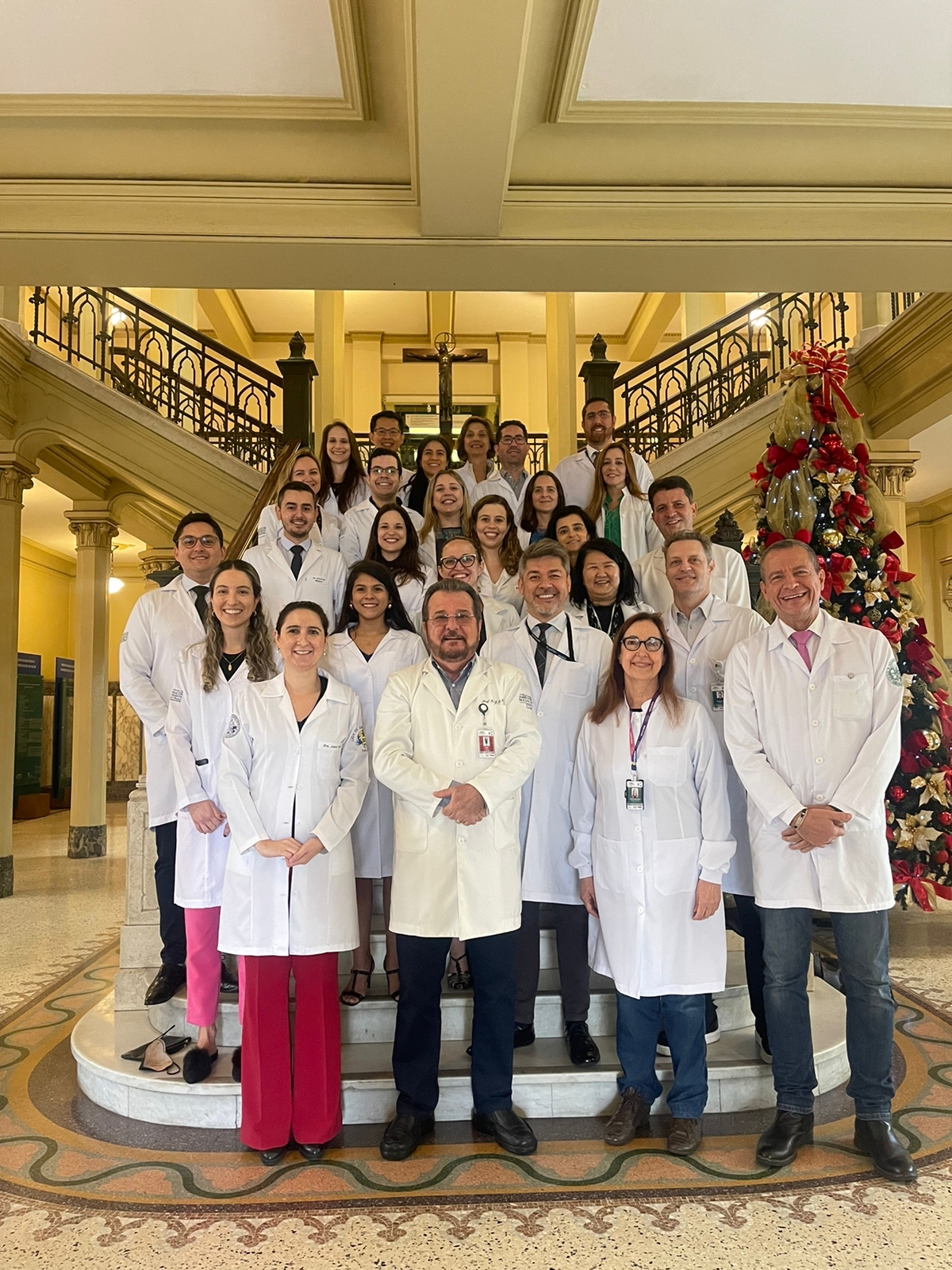
“This experience reinforced our conviction that meaningful clinical research can emerge even under adverse conditions when collaborative academic networks remain active.”
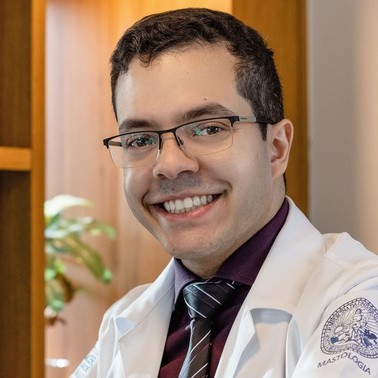
Master of Science from the Department of Obstetrics and Gynecology, Faculty of Medicine, University of São Paulo (FMUSP).
Breast Surgeon (Mastologist) trained at the University of São Paulo (USP - SP) and General Surgeon by the Pontifical Catholic University of São Paulo (PUC - SP).
Holds a Medical Degree from Centro Universitário Lusíada / Faculdade de Ciências Médicas de Santos (FCMS).
His master’s research focused on the impact of the COVID-19 pandemic on the diagnosis and treatment of patients with breast cancer in a public reference center, evaluating how the health crisis affected oncological navigation and clinical outcomes.
Author of publications in the fields of breast surgery, obstetrics, and general surgery.
Instructor of the Advanced Trauma Life Support (ATLS) course by the American College of Surgeons (ACS).
Follow the Topic
-
BMC Cancer
This is an open access, peer-reviewed journal that considers articles on all aspects of cancer research, including the pathophysiology, prevention, diagnosis and treatment of cancers.

Related Collections
With Collections, you can get published faster and increase your visibility.
Cancer survivorship: surveillance, prevention, and long-term care
Research has shown that cancer survivors require risk-adapted, comprehensive follow-up strategies that address both the ongoing risk of disease recurrence and the long-term health needs associated with cancer and its treatment. Effective survivorship care extends beyond routine surveillance and clinical assessments to encompass the monitoring and management of treatment-related sequelae and late effects, promotion of healthy behaviors, psychological and social wellbeing, and prevention or early detection of future health impairments. Within this framework, surveillance for recurrence remains an important component of post-treatment care, while personalized survivorship approaches can help integrate disease monitoring with strategies to optimize long-term health and quality of life.
Recent advances in surveillance imaging, recurrence risk assessment, risk stratification, and personalized survivorship care planning have strengthened post-treatment management by enabling more individualized follow-up. At the same time, behavioral health interventions, including smoking cessation, physical activity, dietary modification, and psychosocial support, may contribute to improved health and survivorship outcomes. Survivorship care plans can provide structured, risk-based recommendations that integrate recurrence surveillance with the prevention and management of late effects and other long-term health needs.
Despite these advances, important gaps remain in understanding how clinical, behavioral, biological, and patient-reported factors interact to influence recurrence, late effects, quality of life, and long-term health outcomes. Further research is needed to evaluate personalized surveillance strategies, interventions to prevent and manage treatment-related sequelae, lifestyle and behavioral interventions, predictive care models, and emerging technologies that can support individualized survivorship care. Addressing these questions will be essential to advancing evidence-based approaches that support cancer survivors across the full continuum of post-treatment care.
In light of this, BMC Cancer is opening this collection on "Cancer survivorship: surveillance, prevention, and long-term care." We invite submissions addressing the broad spectrum of cancer survivorship research, including but not limited to:
- Prevention, detection, and management of treatment-related late effects and sequelae
- Behavioral health and lifestyle interventions, including physical activity, nutrition, and smoking cessation
- Psychosocial health and quality of life in cancer survivors
- Cancer surveillance and follow-up methodologies
- Recurrence risk assessment and risk-adapted surveillance
- Imaging and other technological advancements in post-treatment follow-up
- Patient-reported outcomes and survivor-centered approaches to care
- Risk stratification and personalized survivorship care
- Survivorship care planning and models of coordinated follow-up
- Prevention and early detection of long-term health complications
- Digital health and emerging technologies for monitoring and supporting cancer survivors
- Implementation of evidence-based survivorship interventions in clinical practice
Publishing Model: Open Access
Deadline: Jun 15, 2027
Mitochondrial dynamics in cancer biology
Mitochondria are vital organelles that govern cellular bioenergetics, metabolic flexibility, and programmed cell death. In cancer biology, the dynamic remodeling of mitochondria, through coordinated fusion, fission, and mitophagy, has emerged as a central determinant of how tumor cells adapt to fluctuating metabolic demands and hostile microenvironmental conditions. These remodeling events are driven by specialized regulatory proteins. Shifts in the activity or expression of these molecules can reconfigure mitochondrial architecture, influencing reactive oxygen species (ROS) signaling, metabolic flux, and cellular resilience. Importantly, inflammatory signals within the tumor microenvironment can modulate these processes by altering cytokine-driven stress responses and ROS levels, thereby shaping mitochondrial dynamics in ways that favor tumor adaptation and survival. Because tumor cells often exploit such altered dynamics to enhance proliferation, evade apoptosis, and thrive in hypoxic niches, dissecting these processes may reveal key vulnerabilities in cancer progression.
Investigating mitochondrial dynamics in cancer is therefore essential for shaping effective therapeutic approaches. Advances in live-cell imaging, genetic perturbation, and metabolic profiling have deepened our understanding of how structural alterations in mitochondria intersect with cancer-specific phenotypes, including metabolic rewiring and stress tolerance. Importantly, modulating fusion–fission balance or mitophagy pathways can disrupt bioenergetic stability, sensitize tumor cells to oxidative damage, and bolster responses to existing anticancer treatments. This expanding body of knowledge highlights the potential of targeting mitochondrial function not merely to suppress tumor growth, but also to overcome drug resistance and eliminate hard-to-treat cancer stem cell populations.
With this in mind, BMC Cancer is opening a Collection on Mitochondrial dynamics in cancer biology. Topics of interest include:
- Therapeutic targeting of mitochondrial fission and fusion
- Role of mitophagy in tumor progression
- Impact of mitochondrial dynamics on chemotherapy resistance
- Transfer of mitochondrial between cells in cancer
- Context-dependent remodelling of mitochondrial dynamics within inflammatory tumor microenvironments
- Interactions between inflammatory signaling, ROS, and mitochondrial function in cancer
All manuscripts submitted to this journal, including those submitted to collections and special issues, are assessed in line with our editorial policies and the journal’s peer review process. Reviewers and editors are required to declare competing interests and can be excluded from the peer review process if a competing interest exists.
Publishing Model: Open Access
Deadline: Jan 20, 2027