Call for Entries: 2026 BMC Ecology and Evolution & BMC Zoology Image Competition
Published in Ecology & Evolution and Zoology & Veterinary Science
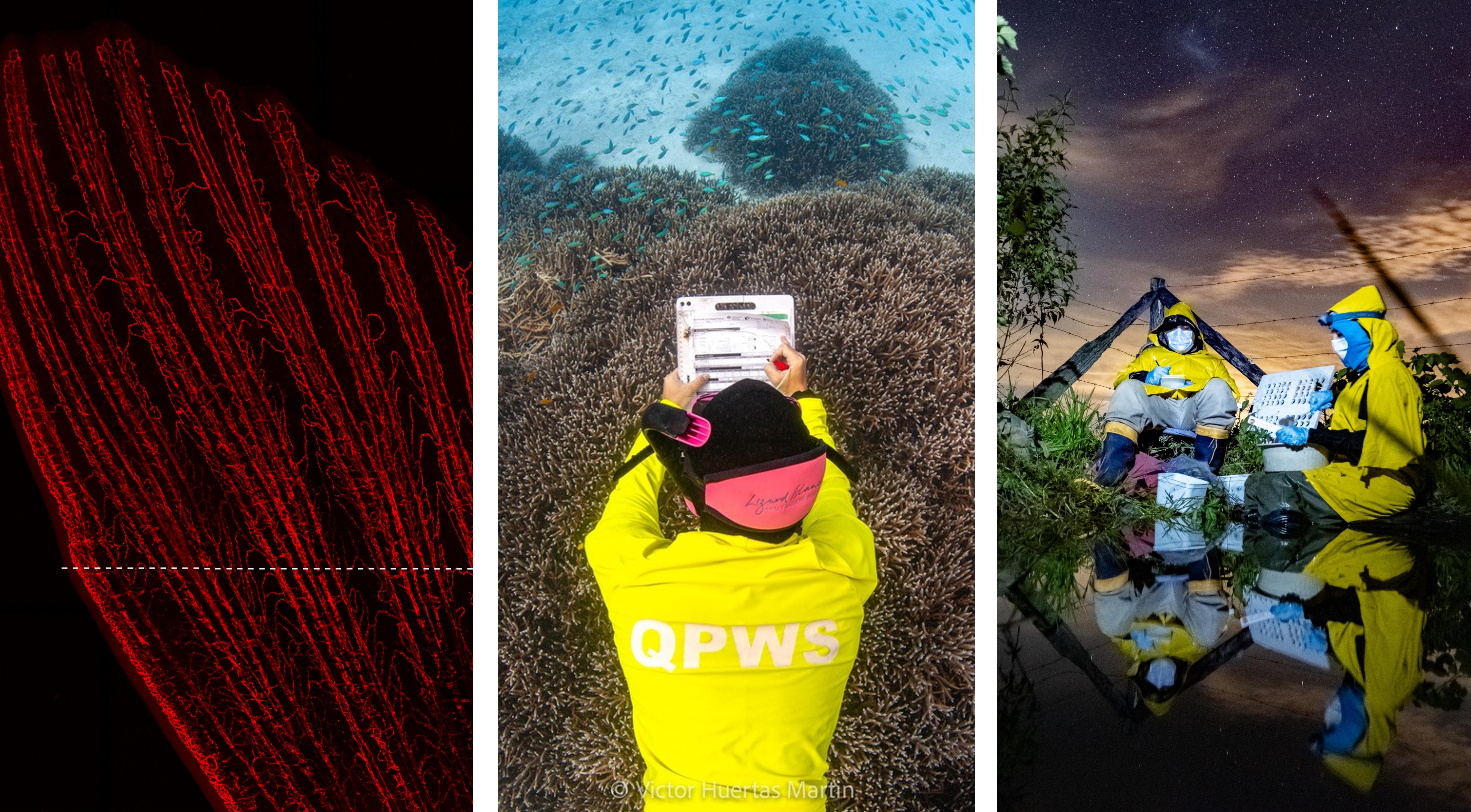



The annual image competition hosted jointly by BMC Ecology and Evolution and BMC Zoology is now open for submissions! Each year, we are delighted to receive a spectacular collection of images from researchers worldwide that celebrate the power of scientific storytelling through imagery.
Don’t miss your chance to showcase your research, win prizes (up to €500), and see your work featured in an editorial published by BMC Ecology and Evolution.
Anyone affiliated with a research institution and working in ecology, evolutionary biology, palaeontology, or zoology is eligible to enter.
For more information and how to enter visit: https://link.springer.com/journal/12862/updates/27851542
The entry deadline is June the 20th, 2026, with the winners being announced on August the 21st.

Follow the Topic
-
BMC Ecology and Evolution
An open access, peer-reviewed journal interested in all aspects of ecological and evolutionary biology.
-
BMC Zoology
This is an open access, peer-reviewed journal that considers articles on zoology, including comparative physiology, mechanistic and functional studies, morphology, life history, animal behavior, signaling and communication, cognition, parasitism, systematics, biogeography and conservation.


Related Collections
With Collections, you can get published faster and increase your visibility.
Pollinators under pressure: ecology, evolution, and environmental change
BMC Ecology and Evolution is calling for submissions to our Collection, Pollinators under pressure: ecology, evolution, and environmental change. Pollinators are important for a healthy and functioning planet, playing a vital role in ecosystem health and food production. Pollinators directly and indirectly support several of the United Nation's Sustainable Development Goals, from SDG 2: Zero Hunger to SDG 15: Life on Land. However, largely due to human activities, pollinator populations are declining worldwide. Almost 35% of invertebrate pollinators, including many bee and butterfly species are facing extinction. Similarly, 17% of vertebrate pollinators, such as bats and hummingbirds, are at risk.
Pollinators face numerous challenges, including habitat loss, climate change, pesticide exposure, and diseases. This Collection welcomes research that advances our understanding of how these pressures shape pollinator populations, behaviors, communities and the ecosystems they support. We are particularly interested in studies that generate actionable insights for conservation, restoration and policy, including work that evaluates mitigation strategies, models future risks, or examines the effectiveness of current management practices.
Topics of interest include but are not limited to:
- Impacts of pesticide exposure on pollinator health
- How habitat and land‑use changes affect pollinators
- Pollinator biodiversity monitoring
- Pollinator conservation and restoration approaches
- How management practices impact pollinators
- Pollination ecology in changing environments
- Effects of diseases on bee populations
- Climate‑driven shifts in pollinator phenology, distribution and behavior
- Evolutionary responses to environmental stressors, including adaptation, plasticity and genetic change
- Impacts of invasive species on native pollinators and pollination systems
- Landscape connectivity and fragmentation, and their influence on pollinator movement and gene flow
- Neuroethological and behavioral studies linking stressors to changes in cognition, navigation and foraging
- Socio‑ecological and policy‑relevant research that informs conservation planning, agri‑environment schemes and ecosystem‑service management
- Modeling approaches predicting future risks to pollinators or forecasting ecosystem impacts of pollinator decline
All manuscripts submitted to this journal, including those submitted to collections and special issues, are assessed in line with our editorial policies and the journal’s peer review process. Reviewers and editors are required to declare competing interests and can be excluded from the peer review process if a competing interest exists.
Publishing Model: Open Access
Deadline: Jan 25, 2027
Nighttime ecology and evolutionary adaptations to low-light environments
BMC Ecology and Evolution welcomes submissions of research exploring the remarkable adaptations and ecological dynamics that enable life to flourish in the dark and low light environments. Contributions will explore evolutionary adaptations such as sensory specialization (e.g., night vision, echolocation, bioluminescence, heat-sensitive pits, and specialized hairs) that allow organisms to navigate, forage, and communicate in low-light conditions from caves to the deep sea. The collection will also investigate behavioral and physiological mechanisms, including circadian rhythm adjustments and predator-prey interactions, that are essential for survival in nocturnal niches.
Submissions on the impact of anthropogenic influences, such as light pollution, on nocturnal ecosystems and biodiversity are encouraged. The Collection also welcomes research on nighttime bioacoustics and soundscapes, examining how sound is used to adapt to and shape nocturnal environments. Contributions discussing the role of citizen science in advancing our understanding of nighttime ecology are also encouraged.
Publishing Model: Open Access
Deadline: Nov 20, 2026