Call for papers: Advances in embryonic development Collection
Published in Cell & Molecular Biology


Explore the Research
 Nature
Advances in embryonic development
This collection welcomes original research on the molecular basis of embryonic development.
Collection Overview
Scientific Reports has launched a Guest-Edited Collection on Advances in embryonic development.
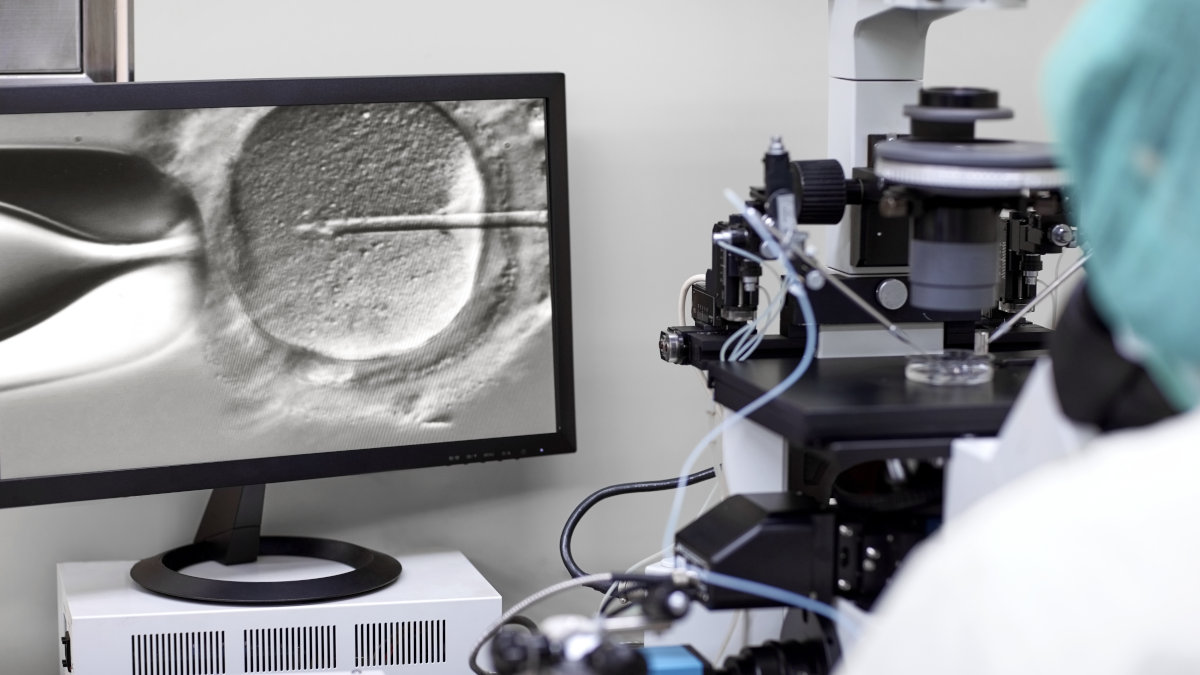
Human embryonic development begins with a single fertilized egg and involves complex processes regulated at molecular and cellular levels. Advances in high-resolution imaging, single-cell transcriptomics, spatial genomics, and stem cell-based 3D models are transforming traditional descriptive embryology research. Animal models have considerably advanced our understanding of basic embryology and early developmental events. In addition, the current organoid and synthetic embryo-like systems provide deeper insights into lineage specification and early morphogenesis.
This will be a Collection of original research papers and will be open for submissions from all authors – on the condition that the manuscripts fall within the scope of the Collection and of Scientific Reports more generally. We are welcoming submissions until 16th September 2026.
Why is this Collection important?
"This Collection welcomes original research investigating the molecular mechanisms underlying embryonic development. Recent advances in high-resolution imaging, single-cell transcriptomics, spatial genomics, and stem cell–derived 3D models are expanding traditional embryology research. Animal models have greatly advanced our understanding of developmental events, while emerging organoid and synthetic embryo-like systems provide new insights into lineage specification and early morphogenesis. As one of the Guest Editors of this special Collection, I am particularly excited to present a selection of representative studies highlighting recent advances in the molecular understanding of embryonic development. We hope this Collection will showcase emerging technologies, novel experimental systems, and new conceptual insights that are shaping the future of developmental biology."
- Dr. Gabriela Pavlinkova, Guest Editor
"This Collection highlights cutting‑edge progress in embryonic development, spanning molecular regulation, morphogenesis, stem cell models, and translational applications. Embryonic development is foundational to life, health, and disease; advances here directly improve reproductive health, congenital disorder prevention, and regenerative medicine. I am thrilled to curate this interdisciplinary hub for high‑quality, open‑access research. It will unify global insights, accelerate discovery, and shape future directions. Researchers should submit to gain visibility, join a leading community, and share impactful work with a broad, influential audience."
- Dr. Shen Xiaopeng, Guest Editor
Why submit to a collection?
Collections like this one help promote high-quality science. They are led by Guest Editors, who are experts in their fields, and In-House Editors and are supported by a dedicated team of Commissioning Editors and Managing Editors at Springer Nature. Collection manuscripts typically see higher citations, downloads, and Altmetric scores and provide a one-stop-shop on a cutting-edge topic of interest.
Who is involved?
Guest Editors:
- Mubeen Goolam, University of Cape Town, South Africa
- Gabriela Pavlinkova, Institute of Biotechnology Czech Academy of Sciences, Czech Republic
- Shen Xiaopeng, Anhui Normal University, China
Internal Team:
- In-House Editor: Sumedha Kondekar, Scientific Reports, India
- Commissioning Editor: Ashiya Salim, Fully OA Brands, Springer Nature, UK
- Managing Editor: Libby Symons, Fully OA Brands, Springer Nature, UK
How can I submit my paper?
Visit the Collection page for more information on the Collection, and how to submit your article.
Follow the Topic
-
Scientific Reports
An open access journal publishing original research from across all areas of the natural sciences, psychology, medicine and engineering.
-
A Collection of original research articles on the molecular basis of embryonic development.

Related Collections
With Collections, you can get published faster and increase your visibility.
Cancer Prevention and Control
Publishing Model: Hybrid
Deadline: Feb 19, 2027
Healthy Aging
Publishing Model: Open Access
Deadline: Dec 31, 2026