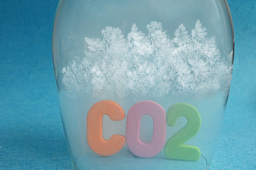
Call for papers: Decoding Disorder in Glass-forming Materials
Published in Materials



What is this collection about?
Glass remains one of the great unsolved mysteries in condensed matter physics. When a liquid is cooled sufficiently rapidly, it can avoid crystallization and instead form a disordered state that retains the microscopic characteristics of a liquid while exhibiting the mechanical rigidity of a solid. Despite decades of research, a unified theoretical framework that seamlessly links microscopic atomic rearrangements with macroscopic rheological behaviour and thermodynamic properties of glass-forming materials remains elusive.
In this cross-journal Collection, editors from Nature Communications, Communications Materials, Communications Physics, and Scientific Reports invite submissions that advance our understanding of the fundamental glass physics across a wide range of materials.
Topics of interest include, but are not limited to, the following:
- The existence of ideal glass
- Glass transition – a thermodynamic vs dynamic process
- Structural relaxation and its relationship to dynamic heterogeneity
- The origin of excess wing observed in dynamic susceptibility spectra
- The decoupling between diffusion and viscosity
- Mechanical responses of glasses upon shearing
- Ductile-to-brittle transition in glasses
- Jamming transition in athermal systems
- Rheology of glasses and soft glassy materials
- Physics-informed machine learning for glass discovery
- Experimental testbeds for testing and validating glass theories
All manuscripts will be subject to the same rigorous editorial standards and peer-review process as regular articles published in Nature Communications, Communications Materials, Communications Physics, and Scientific Reports.
Why submit to a collection?
Collections like this one help promote high-quality science. They are led by In-House Editors who are experts in their fields and supported by a dedicated team of Commissioning Editors and Managing Editors at Springer Nature. Collection manuscripts typically see higher citations, downloads, and Altmetric scores, and provide a one-stop-shop on a cutting-edge topic of interest.
Who is involved?
This is a cross-journal Collection involving Nature Communications, Communications Materials, Communications Physics, and Scientific Reports. Authors are welcome to submit to any of the participating journals. All manuscripts published in the collection are hosted on a dedicated nature portfolio portal, giving articles high visibility beyond the journal they are published in.
How can I submit my paper?
Visit the Collection page to find out more about this collection and submit your article.
Follow the Topic
-
Nature Communications
An open access, multidisciplinary journal dedicated to publishing high-quality research in all areas of the biological, health, physical, chemical and Earth sciences.
-
Scientific Reports
An open access journal publishing original research from across all areas of the natural sciences, psychology, medicine and engineering.
-
Communications Materials
A selective open access journal from Nature Portfolio publishing high-quality research, reviews and commentary in all areas of materials science.
-
Communications Physics
An open access journal from Nature Portfolio publishing high-quality research, reviews and commentary in all areas of the physical sciences.

Related Collections
With Collections, you can get published faster and increase your visibility.
Phytochemicals and health
Publishing Model: Open Access
Deadline: Oct 28, 2026
Women's Health
Publishing Model: Hybrid
Deadline: Ongoing