Call for papers: Engineering unsteady and turbulent flows: sensing, prediction, and control
Published in Mechanical Engineering


What is this collection about?
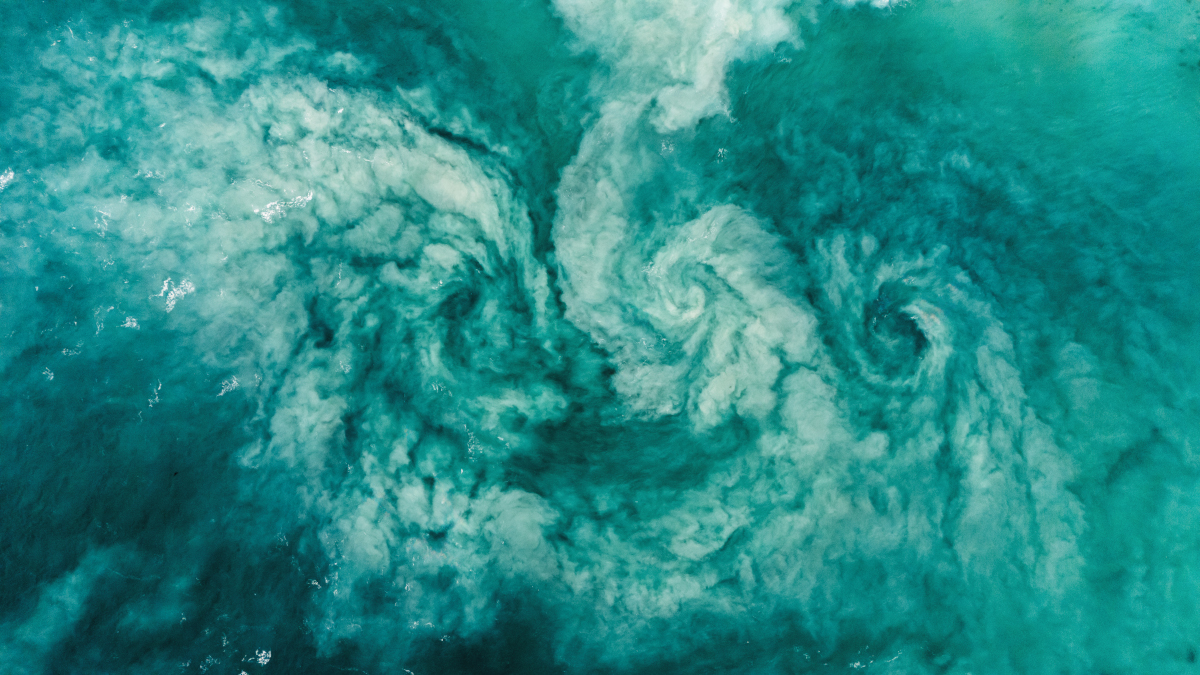
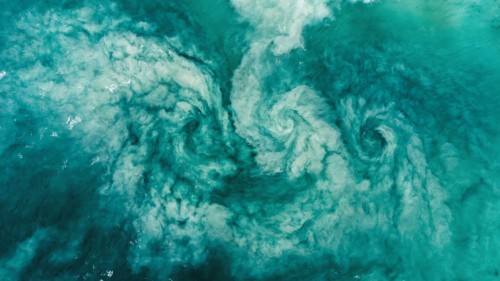
Unsteady and turbulent flows involve nonlinear interactions across a wide range of spatial and temporal scales, influencing flow characteristics such as drag, mixing, and heat and mass transport, as well as overall system efficiency and stability.
This collection brings together fundamental and applied research advancing the measurement, modelling, prediction, design, and control of unsteady and turbulent flows. It highlights advances in:
- Transportation (aerodynamic and hydrodynamic vehicles)
- Industrial infrastructure (turbomachinery, pipelines, and energy systems)
- Natural systems (environmental and biofluid flows)
Why is this collection important?
Advances in time-resolved sensing and diagnostics, high-fidelity computational fluid dynamic simulations, reduced-order modelling, and physics-informed data-driven methods (including machine learning and reinforcement learning) are enabling new opportunities to characterize and predict flow. Additionally, flow behaviour can be manipulated across scales, from macroscopic design (e.g. geometry and topology optimization) to active and passive flow control strategies.
Why submit to a collection?
Collections like this one help promote high-quality science. They are led by Guest Editors and In-House Editors who are experts in their fields and supported by a dedicated team of Commissioning Editors and Managing Editors at Springer Nature. Collection manuscripts typically see higher citations, downloads, and Altmetric scores, and provide a one-stop-shop on a cutting-edge topic of interest.
Who is involved?
Leonardo Chamorro, PhD, University of Illinois Urbana-Champaign, United States
Leonardo P. Chamorro is a Professor, the Stan B. Hanssen Faculty Scholar, and Associate Head of Undergraduate Programs in the Department of Mechanical Science and Engineering, with affiliate appointments in Aerospace Engineering, Civil and Environmental Engineering, and Earth Science and Environmental Change. His research spans turbulence, particle dynamics, boundary-layer processes, turbulence–structure interaction, aerodynamics, cavitation, and wind and marine energy, supported by advanced flow diagnostics. He has authored approximately 180 peer-reviewed articles and delivered around 170 presentations at international symposia. Dr. Chamorro leads the Renewable Energy and Turbulent Environment group, which combines 2D/3D particle image velocimetry, computer vision, and 3D particle tracking velocimetry to study complex flows. He previously served as scientific chair for the Energy, Electrical Engineering, Electronics, and Mechanics panel (W&T7) at Belgium's Research Foundation Flanders (FWO).
Brandon Lowe, PhD, NASA Ames Research Center, United States
Brandon Lowe is a Senior Aerospace Engineer in the Computational Aerosciences Branch at NASA Ames Research Center. Since joining NASA’s Launch, Ascent, and Vehicle Aerodynamics (LAVA) group in May 2022, he has advanced high-fidelity simulations, aerodynamic shape optimization, and multidisciplinary design and analysis on structured overset grids. His research interests and expertise include unsteady fluid-structure interaction and reduced-order modelling. In 2025, the LAVA CFD and Design Optimization Team, of which he is a member, received a NASA Group Achievement Award.
How can I submit my paper?
Visit the Collection page to find out more about this collection and submit your article.
Follow the Topic
-
Communications Engineering
A selective open access journal from Nature Portfolio publishing high-quality research, reviews and commentary in all areas of engineering.

Related Collections
With Collections, you can get published faster and increase your visibility.
Generative AI for mechanical engineering design and optimization
Publishing Model: Open Access
Deadline: Dec 31, 2026
Industry Showcase 2026: Solutions for Sustainability
Publishing Model: Open Access
Deadline: Oct 28, 2026