Call for Papers: Paleoecology of Extinct Species
Published in Ecology & Evolution
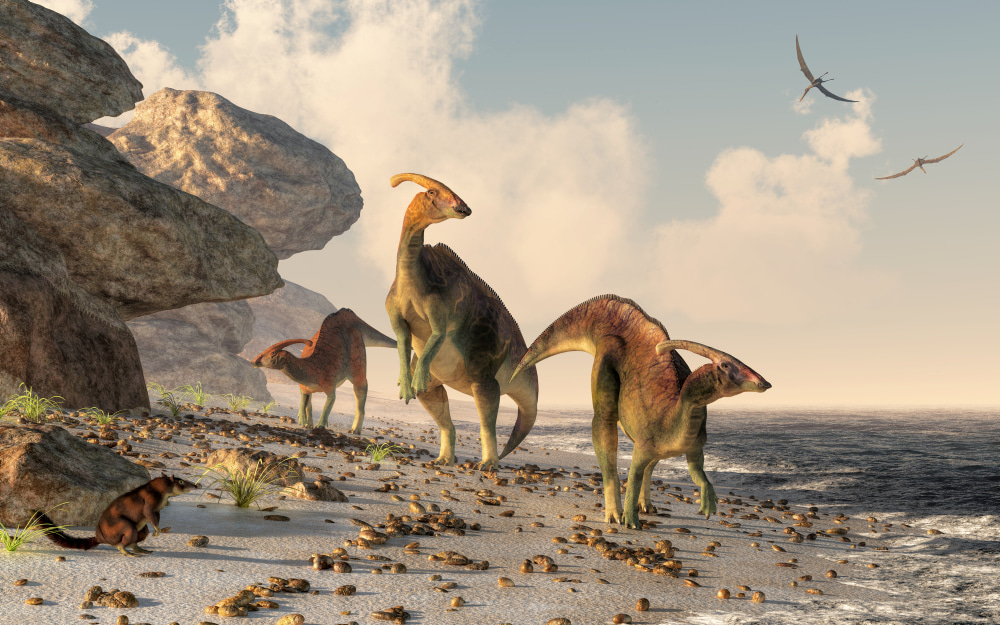



BMC Ecology and Evolution is calling for submissions on the paleoecology of extinct species.
Paleoecological studies offer captivating glimpses into long-lost worlds. With recent technological advances, including new imaging and DNA sequencing techniques, researchers are providing an increasingly clear window to the past. BMC Ecology and Evolution has launched this Collection to attract papers from this multidisciplinary field. The Collection welcomes research:
- using micro- and macro fossils to study the paleoecology and palaeontology,
- on the interactions between extinct organisms and their environment over a variety of spatial and temporal scales,
- using histology, imaging, chemical analysis, biomechanical modeling techniques and other relevant approaches to unlock information within fossils,
- using sedimentary ancient DNA (e.g. metabarcoding, metagenomics, and target genome capturing) to gain paleoenvironmental/ paleoecological insights
- applying niche modeling, species distribution modeling, and spatiotemporal modeling to investigate the distribution ranges and population sizes for extinct species.
Meet the Guest Editors
Michael Pittman: School of Life Sciences, The Chinese University of Hong Kong, Shatin, Hong Kong, China.
Dr. Pittman is an integrative, multi-disciplinary palaeobiologist at The Chinese University of Hong Kong. He earned a BSc in Geology, MSc in Geoscience and PhD in Palaeobiology from UCL. His research in dinosaur palaeobiology covers anatomy, systematics, biomechanics, ecology and macroevolution. It is focused on the dinosaur-to-bird transition, including flight origins. He studies exceptionally preserved fossils with multiple methods, including laser-stimulated fluorescence. In addition to the journal’s Editorial Board, Dr. Pittman is an Associate Editor of the systematics journal Cladistics and edited the special volume Pennaraptoran Theropod Dinosaurs: Past Progress and New Frontiers.
Yucheng Wang: Department of Zoology, University of Cambridge, Cambridge, UK
Dr. Wang is an evolutionary bio-ecologist interested in applying ancient environmental DNA (eDNA) to understand how ecosystems and species respond and adapt to variable climate, environment, and human activities. His work involves using and developing eDNA metabarcoding, ddPCR, shotgun metagenomics, and target genome capturing, both in wet-lab and bioinformatics, to reconstruct the ecological evolutions, successions, and interactions, as well as the domesticating and evolutionary histories of key species. In addition to his work at the University of Cambridge, he is also a guest researcher at ALPHA, State Key Laboratory of Tibetan Plateau Earth System Science, Institute of Tibetan Plateau Research (ITPCAS), Chinese Academy of Sciences (CAS) in Beijing, China and associated with the Lundbeck Foundation GeoGenetics Centre, Globe Institute, University of Copenhagen in Copenhagen, Denmark.
Submission guidelines
This Collection will consider research, database and software articles. Review articles will be considered at the discretion of the Journal’s Editor. If you would like to submit a review article, please first email Jennifer Harman <jennifer.harman@springernature.com> - the Editor of BMC Ecology and Evolution. Please note that unsolicited reviews will not be considered as per our submission guidelines.
Datasets, descriptions and short reports relevant to the Collection will be considered by BMC Research Notes as data or research notes. This type of content will be published in BMC Research Notes and included in the final collection.
Articles under consideration for publication within the collection will be assessed according to the standard BMC Ecology and Evolution editorial criteria and will undergo the journal’s standard peer-review process overseen by Guest Editors Dr Michael Pittman (The Chinese University of Hong Kong, China) and Dr Yucheng Wang (The University of Cambridge, UK).
Before submitting your manuscript, please ensure you have read our submission guidelines. Articles for this Collection should be submitted via our submission system, Snapp. During the submission process you will be asked whether you are submitting to a Collection, please select "Paleoecology of extinct species" from the dropdown menu.
If accepted for publication, an article processing charge applies. Please click here to find out about our standard waiver policy.
Submission Status: Open | Submission Deadline: 6 December 2023

Follow the Topic
-
BMC Ecology and Evolution
An open access, peer-reviewed journal interested in all aspects of ecological and evolutionary biology.

Related Collections
With Collections, you can get published faster and increase your visibility.
Evolution of disease: From pathogens to proliferating cells
Evolution of disease: From pathogens to proliferating cells is a special Collection that explores how evolutionary processes shape health and disease—from infectious microbes to cancerous cells. We invite research within the discipline of evolutionary medicine that examine how forces such as natural selection, genetic drift, host-pathogen coevolution, and environmental change contribute to disease susceptibility, resistance, and progression. We welcome submissions that deepen our understanding of disease as a dynamic outcome of evolutionary interactions.
Topics of research may include but are not limited to research which uses evolutionary principles to understand:
1. Pathogen evolution, resistance, and host interactions
•
The evolution of antibiotic, antiviral, antifungal, and antiparasitic resistance
•
Mechanisms of immune evasion, persistence, and transmission
•
Experimental evolution and molecular insights into pathogen adaptation
•
Host-pathogen coevolution and the impacts of medical or environmental interventions
•
Comparative host-pathogen dynamics across species
2. Evolutionary mismatch and modern disease
•
Evolutionary insights into metabolic disorders, autoimmune conditions and cancer
•
When a previously advantageous trait becomes maladaptive due to change in the environment
3. Evolution of cancer
•
Evolutionary and ecological models of cancer progression and resistance
•
Comparative oncology: insights from cancer-resistant and long-lived species
•
Somatic evolution, immune escape, and tumor heterogeneity
4. Genetic variation, adaptation, and disease susceptibility
•
Adaptive and maladaptive genetic variants in human and animal populations
•
Pleiotropy and trade-offs in immune function, metabolism, and reproduction
•
Population genetics, admixture, and the evolutionary roots of health inequality
5. Microbiome evolution and host symbiosis
•
Coevolution and community ecology of host-associated microbiota
•
Functional evolution in microbial genomes and implications for host health
•
Microbiome shifts due to modern environments, drugs, or host genetic factors
6. Viral evolution and endogenous elements
•
Evolutionary arms races between hosts and viruses
•
Evolution and function of endogenous viral elements in animal genomes
•
Phylogenomic approaches to uncover ancient viral influences on host evolution
7. Experimental and computational approaches
•
Experimental evolution in microbial or model systems
•
Genomics, phylogenomics, and systems biology in disease evolution
•
Machine learning and AI in evolutionary medicine research
Publishing Model: Open Access
Deadline: Dec 04, 2026
Nighttime ecology and evolutionary adaptations to low-light environments
BMC Ecology and Evolution welcomes submissions of research exploring the remarkable adaptations and ecological dynamics that enable life to flourish in the dark and low light environments. Contributions will explore evolutionary adaptations such as sensory specialization (e.g., night vision, echolocation, bioluminescence, heat-sensitive pits, and specialized hairs) that allow organisms to navigate, forage, and communicate in low-light conditions from caves to the deep sea. The collection will also investigate behavioral and physiological mechanisms, including circadian rhythm adjustments and predator-prey interactions, that are essential for survival in nocturnal niches.
Submissions on the impact of anthropogenic influences, such as light pollution, on nocturnal ecosystems and biodiversity are encouraged. The Collection also welcomes research on nighttime bioacoustics and soundscapes, examining how sound is used to adapt to and shape nocturnal environments. Contributions discussing the role of citizen science in advancing our understanding of nighttime ecology are also encouraged.
Publishing Model: Open Access
Deadline: Nov 20, 2026