Call for papers: Phase Change Materials in Altered and Low Gravity — From Principles to Applications in Space and Beyond
Published in Materials and Mechanical Engineering
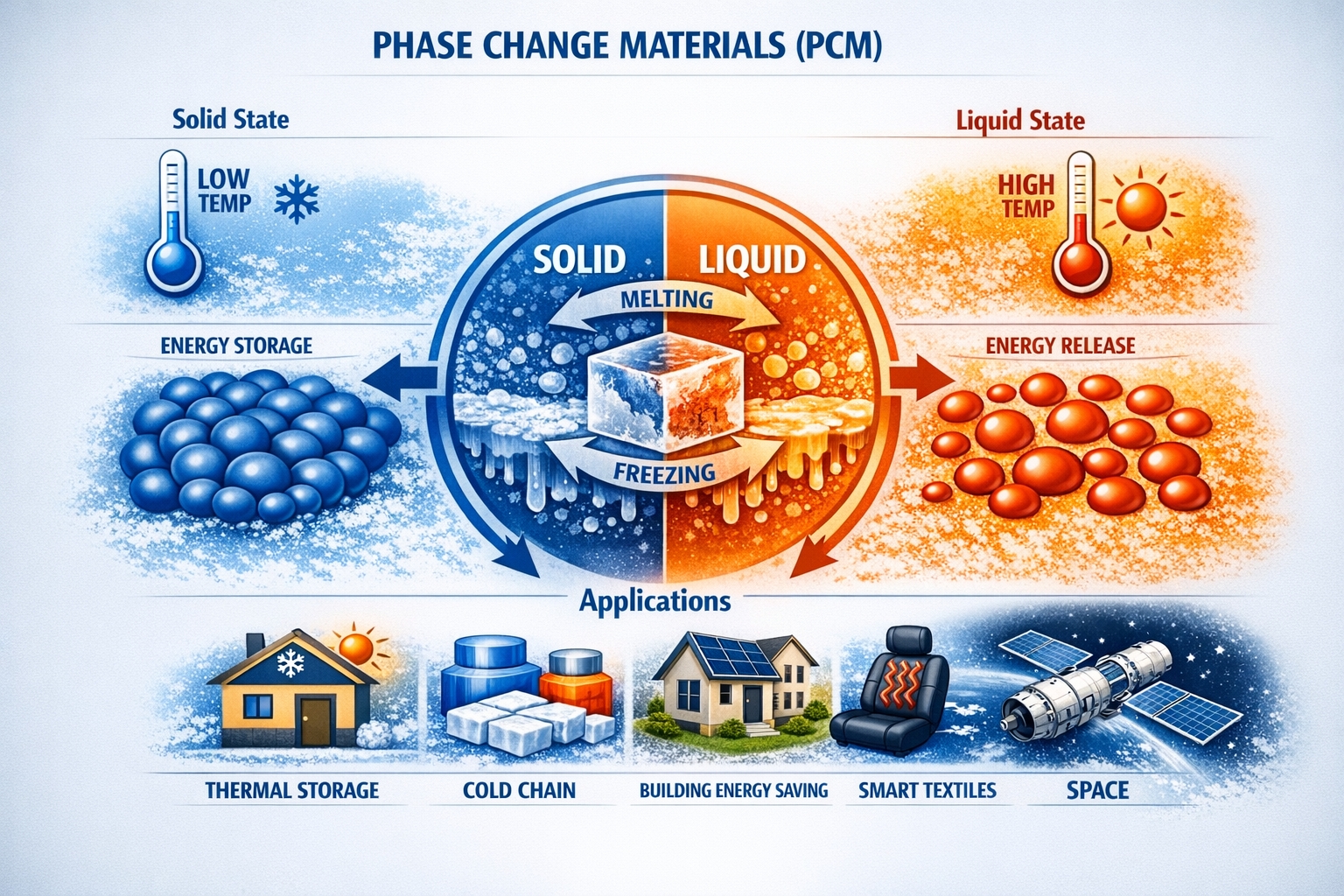



Microgravity Science and Technology opened a new topical collection that aims to advance the fundamental understanding of heat and mass transfer processes in regimes where classical, buoyancy-driven behavior is altered or suppressed.
We particularly encourage contributions that reveal new physical mechanisms, quantify deviations from Earth-based expectations, and establish links between material properties and system performance. Experimental, theoretical, and numerical studies are all welcome. The collection also highlights the growing role of PCMs in space exploration, especially in thermal management and energy systems, and highlights the mutual benefits of space-driven research for terrestrial technologies.
We invite all researchers to submit relevant contributions, original research papers as well as review articles. All submissions are peer reviewed and will be published in this collection as soon as they are accepted. Please see our submission guidelines for further technical details.
Submission deadline: 1 November 2026
Editors: Xinyu Huang (National University of Singapore), Pablo Salgado Sánchez (Universidad Politécnica de Madrid, Spain), Berin Šeta (Technical University of Denmark)

Follow the Topic
-
Microgravity Science and Technology
This is a journal focused on research conducted under conditions of altered gravity.

Related Collections
With Collections, you can get published faster and increase your visibility.
LIFE SCIENCES
The LIFE SCIENCES section of Microgravity Science and Technology aims to publish relevant articles from space biology and space medicine that focus on the effects of altered gravity on:
- human physiology and performance
- cardiovascular physiology
- bone, muscle and immune responses
- brain & nervous system, psychology
- plant biology adaption and response to space
- agriculture and life support systems
- etc.
Publishing Model: Hybrid
Deadline: Ongoing
Phase Change Materials in Altered and Low Gravity: From Principles to Applications in Space and Beyond
This article collection explores the behavior and applications of phase change materials (PCMs) over a broad range of gravitational conditions, from terrestrial to reduced and variable gravity environments. It aims to advance the fundamental understanding of heat and mass transfer processes in regimes where classical, buoyancy-driven behavior is altered or suppressed.
We particularly encourage contributions that reveal new physical mechanisms, quantify deviations from Earth-based expectations, and establish links between material properties and system performance. Experimental, theoretical, and numerical studies are all welcome. The collection also highlights the growing role of PCMs in space exploration, especially in thermal management and energy systems, and highlights the mutual benefits of space-driven research for terrestrial technologies.
We invite all researchers to submit relevant contributions, original research papers as well as review articles. All submissions are peer reviewed and will be published in this collection as soon as they are accepted. Please see our submission guidelines for further technical details.
Publishing Model: Hybrid
Deadline: Nov 01, 2026