Call for papers: Transboundary climate risks
Published in Earth & Environment and Sustainability



Collection Overview
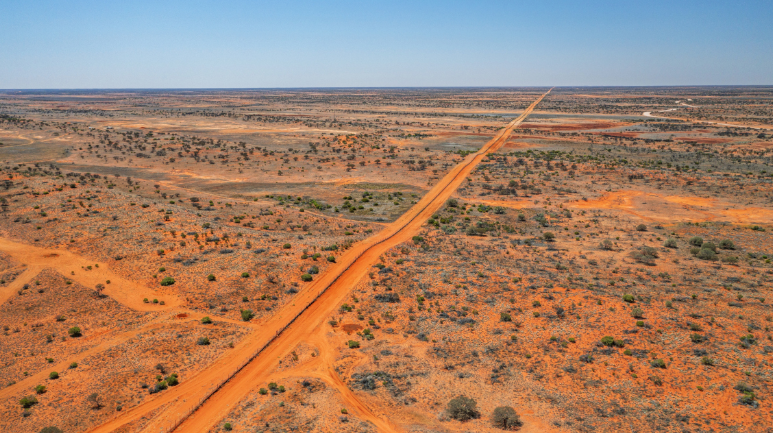
Scientific Reports has launched a Guest-Edited Collection on Transboundary climate risks.
Climate change is a global phenomenon with consequences that go beyond natural and political borders. As a reflection of the interconnection and interdependency between ecosystems and communities, transboundary climate risks, such as food insecurity or decreasing availability of natural resources, can impact regions far from the location of the initial event. Despite their widespread nature, the extent of the risks is not equally perceived and can be exacerbated by socioeconomic disparities. Addressing such events and mitigating their impact will require global co-operation to develop robust and sustainable adaptation strategies.
This will be a Collection of original research papers and will be open for submissions from all authors – on the condition that the manuscripts fall within the scope of the Collection and of Scientific Reports more generally. We are welcoming submissions until 31st July 2026.
Why is this Collection important?
“The situation where climate change in one country can create physical climate risks in other countries, often termed "transboundary climate risks" (TCRs), has received increasing attention in academia but to a lesser extent in policy-making, despite the fact that TCRs will in many cases entail greater negative economic consequences than conventional "local" forms of physical climate risk. We wish to bring forward empirical studies and commentaries that shed light on the question of how to understand, analyze, and address TCRs, preferably also contributions that analyze why the topic has received so little attention so far in the political climate discourse.” - Prof. Carlo Aall
This Collection also supports and amplifies research related to: SDG 13 - Climate Action.
Why submit to a Collection?
Collections like this one help promote high-quality science. They are led by Guest Editors, who are experts in their fields, and In-House Editors and are supported by a dedicated team of Commissioning Editors and Managing Editors at Springer Nature. Collection manuscripts typically see higher citations, downloads, and Altmetric scores and provide a one-stop-shop on a cutting-edge topic of interest.
Who is involved?
Guest Editors:
- Carlo Aall, Western Norway University of Applied Sciences, Norway
- Ho Huu Loc, Wageningen University & Research, Netherlands
Internal Team:
- In-House Editor: Ines Trindade, Scientific Reports, Germany
- Commissioning Editor: Nancy Rogerson, Fully OA Brands, Springer Nature, UK
- Managing Editor: Sarah Jane Hunt, Fully OA Brands, Springer Nature, UK
How can I submit my paper?
Visit the Collection Page to find out more about this Collection and how to submit your article.

Follow the Topic
-
Scientific Reports
An open access journal publishing original research from across all areas of the natural sciences, psychology, medicine and engineering.
-
A Collection of original research articles on the impact of transboundary climate risks on communities and ecosystems, as well as adaptation strategies. Modelling or Econometrics studies, supported by observational data, to predict and understand the non-market impact of such events are welcome.

Related Collections
With Collections, you can get published faster and increase your visibility.
Cancer Prevention and Control
Publishing Model: Hybrid
Deadline: Feb 19, 2027
Healthy Aging
Publishing Model: Open Access
Deadline: Dec 31, 2026