Can We Feed the Future Without Sacrificing Nature? A World Food Day Conversation with Florencia Montagnini
Published in Ecology & Evolution, Sustainability, and Agricultural & Food Science

World Food Day highlights the importance of building agrifood systems that are productive, resilient, and sustainable. As climate change, biodiversity loss, and land degradation increasingly affect agricultural landscapes, agroforestry is attracting growing attention for its potential to address these challenges simultaneously.
We spoke with Dr. Florencia Montagnini, Senior Research Scientist at Yale School of the Environment, Director of the Program in Tropical Forestry and Agroforestry, and Series Editor of Springer's Advances in Agroforestry book series, about the contribution of agroforestry to sustainable food systems, the barriers to wider adoption, and the lessons emerging from her decades of research and editorial work.
- World Food Day focuses global attention on the challenge of feeding a growing population sustainably. In your view, what role can agroforestry play in building more resilient food systems?
Florencia Montagnini: Feeding a growing population requires productive and sustainable agricultural methods that balance yield with conservation, such as Agroforestry Systems (AFS), which integrate trees into farming.
As industrial agriculture expands and fragments landscapes—often growing crops not meant for direct human consumption—AFS are increasingly recognized for supporting food sovereignty. Smallholder farmers produce about 50% of the world's food on roughly 30% of agricultural land, largely through agroforestry.
Beyond food and energy, AFS help restore ecosystems, conserve biodiversity, adapt to climate change, and support rural communities. However, not all systems are equal: complex, multistrata designs offer more ecological benefits than simpler or heavily managed setups. Importantly, AFS should replace or enhance existing agricultural or degraded land, never justify clearing natural areas.
- Many farmers are interested in agroforestry but face barriers to adoption. What do you see as the most important challenges preventing wider implementation, and how can they be overcome?
FM: AFS generate direct economic benefits, but widespread adoption requires additional incentives, local knowledge integration, and robust financing. National legislation promotes AFS adoption in countries such as India, Nepal, and Ghana, while the United States uses preferential property taxes and the USDA's Environmental Quality Incentives Program.
Payments for Ecosystem Services (PES) programs, such as those supporting cacao AFS in Brazil, Costa Rica, and Ecuador, help stimulate landscape conservation. However, PES is not a self-sustaining business model and remains limited by its reliance on vulnerable government or donor funding. To bridge this gap, global nature finance mechanisms like carbon and biodiversity credits allow private investors to purchase credits tied to measurable environmental outcomes.
Beyond financing, successful AFS implementation relies heavily on technical knowledge dissemination and capacity building, which are currently a major focus of the Yale School of the Environment project in Rwanda. Ultimately, these practices must align with the objectives of local and Indigenous communities, as demonstrated in our projects in Misiones, Argentina, and globally in projects of the World Agroforestry Center, where blending Autochthonous Ecological Knowledge with scientific expertise is crucial for success.
- Many agricultural systems are evaluated primarily on yields and productivity. Agroforestry delivers a much broader set of benefits, from biodiversity conservation to climate resilience and ecosystem services. How should policymakers and development agencies measure success if they want to support agroforestry systems that are both productive and socially equitable?
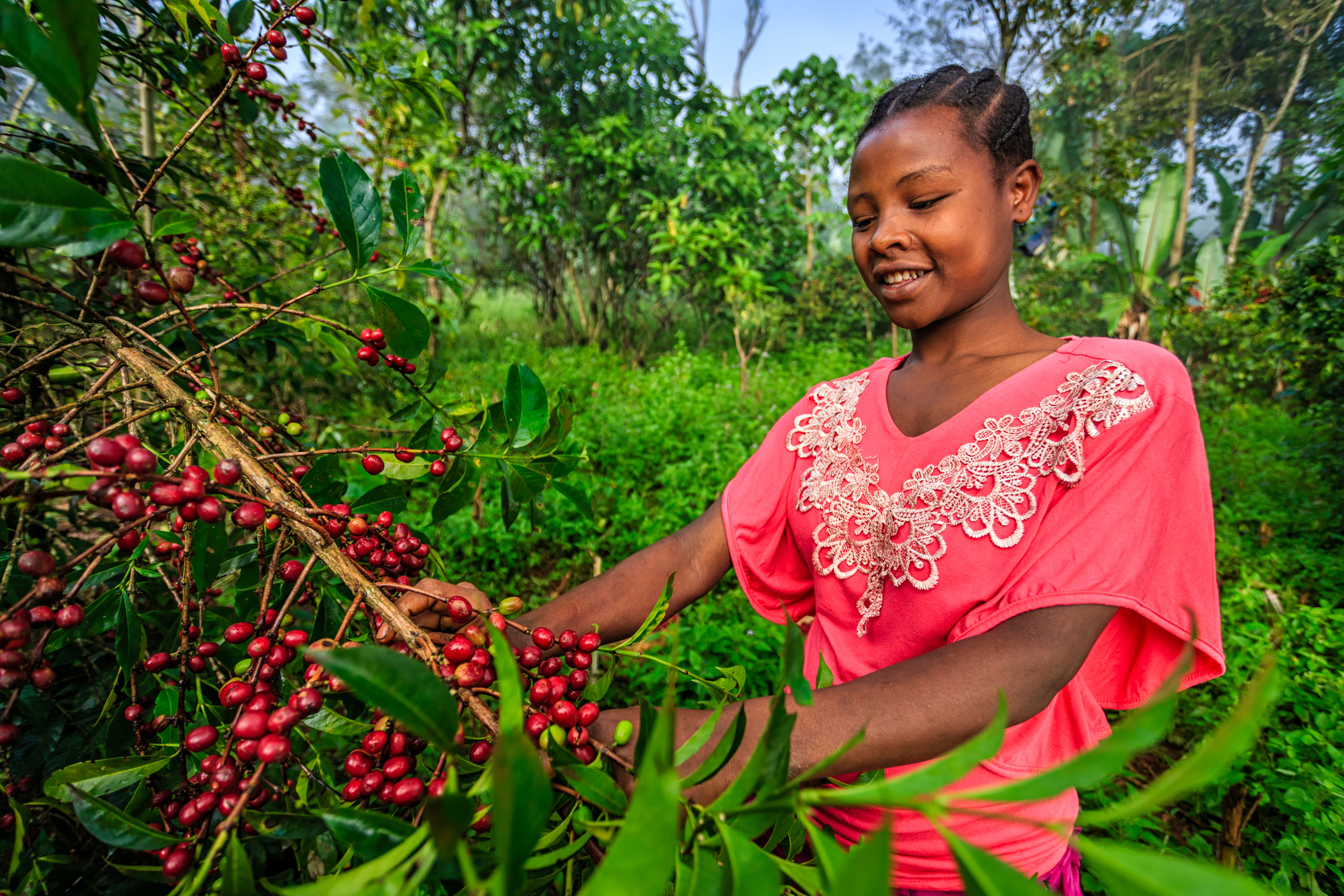
FM: As agroforestry harmonizes productivity and environmental benefits, multiple parameters are needed to assess success. While stakeholders often worry that integrating trees reduces crop yields by taking up space, long-term evidence shows that higher market prices and lower input costs frequently offset these losses. For instance, our long-term research on organic coffee agroforestry in Costa Rica demonstrates that premium prices for shade-grown, biodiversity-friendly crops compensate for lower yields, while shaded systems significantly reduce the need for expensive chemical fertilizers and pesticides. This economic viability is mirrored historically in traditional systems like the Brazilian "cabruca" cacao forests, which have thrived for centuries because they require less management while providing diverse products and ecological services.
Therefore, relying solely on yield to evaluate economic performance is misleading, and true success must incorporate cultural, social, and environmental considerations. Our research on yerba mate systems in Argentina and Paraguay, exploring farmers’ attitudes and interests, highlights that farmers actively track climate changes, pollination shifts, and pest dynamics through their daily practices, demonstrating that their deep ecological knowledge is vital for modern biodiversity monitoring.
- Looking ahead, which emerging areas of agroforestry research and practice do you believe will be most important for advancing sustainable food systems over the next decade?
FM: Global food systems rely heavily on a small number of staple crops like corn, rice, soybeans, potatoes, and wheat, while AFS remain disproportionately focused on non-food commodity crops like coffee and cacao. To build climate resilience and improve nutrition, agricultural research must shift toward neglected and underutilized species (NUS). These crops are considered "neglected" due to a historical lack of research funding compared with that available for major staples, and "underutilized" because their potential to enhance local livelihoods in developing countries remains largely untapped.
Because NUS are frequently well-adapted to local environments, they offer critical advantages in an unpredictable climate. In a chapter from my 2024 book "Integrating Landscapes: Agroforestry for Biodiversity Conservation and Food Sovereignty (2nd ed.)", author Emma Barrett highlights the agroforestry benefits and challenges of six specific NUS—quinoa, teff, cowpea, mung bean, sacha inchi, and moringa—offering a foundational look at a vast group of plants that could significantly diversify and strengthen global food security.
- Your book "Integrating Landscapes" highlights both food security and food sovereignty. In your view, what is the difference between the two, and why is food sovereignty an important consideration when designing sustainable agroforestry systems?
FM: Sustainable Development Goal 2 (SDG 2) focuses on ending hunger, improving nutrition, and promoting sustainable agriculture. While broader food security can be supported by foreign aid and philanthropy, food sovereignty enables people to manage their own food systems through knowledge, infrastructure, and capital. Agroforestry systems help achieve this balance by improving land restoration, water retention, and climate resilience.
In chapter 2 of "Integrating Landscapes" we discuss the characteristics of AFS that contribute to achieving SDG 2, and describe projects that add value to products, increase access to markets and generate attractive retributions for farmers. For example, the Cacao Alliance in El Salvador and the Alternatives to Slash and Burn program under CGIAR demonstrate how sustainable farming practices can increase rural productivity and income without causing deforestation or undermining environmental services.
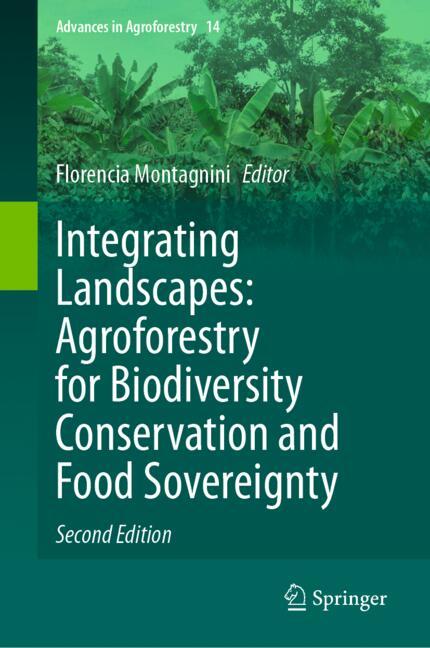
Montagnini, F. (Ed.). (2024). Integrating Landscapes: Agroforestry for Biodiversity Conservation and Food Sovereignty (2nd ed.). Cham: Springer Nature Switzerland. (Advances in Agroforestry, Vol. 14). https://doi.org/10.1007/978-3-031-54270-1 |
|
|

|
Interested in shaping the future of agroforestry research? As Series Editor, Florencia Montagnini continues to guide the Advances in Agroforestry series, bringing together research and practical insights from around the world on topics at the intersection of food production, ecosystem restoration, biodiversity conservation, and sustainable development. The series welcomes propsoals for contributed volumes, as well as single-and multi-authored monographs that provide authoritative perspectives on emerging and established areas of agroforestry research. If you would like to discuss a book idea, please contact eliana.acosta@springernature.com Explore further: Browse the latest volumes in Advances in Agroforestry. |
#WorldFoodDay
Header photo credit: hadynyah, Getty images

I am an Editor at Springer Nature in Heidelberg, Germany, where I manage and develop book programs in Biomedicine and Life Sciences, with a particular focus on Forestry and Biodiversity. My portfolio covers topics such as forest management, agroforestry, tree physiology, forest ecosystems, forest health, and the interactions between forests, society, and the environment—especially in the context of climate change.
In my role, I collaborate closely with authors and editors to conceptualize new projects, acquire leading voices in the field, and oversee the publication process from proposal to print. I also represent Springer Nature at scientific conferences, fostering networks that advance knowledge and innovation.
Before joining Springer Nature, I worked in academia as a PhD student and postdoctoral researcher, followed by roles as a science writer and project manager. In these positions, I led complex international collaborations under the EU Horizon 2020 framework, combining scientific expertise with strategic coordination.
Follow the Topic
What are SDG Topics?
An introduction to Sustainable Development Goals (SDGs) Topics and their role in highlighting sustainable development research.
Continue reading announcement