Cause or consequence? How an “inert control protein” fuels the fire of pathologic inflammation in response to Candida albicans
Published in Microbiology and Immunology


Albumin, the most abundant protein in human blood plasma, is on many levels essential for our physiology. It shuttles different molecular cargo through our vessels, maintains iron and lipid homeostasis, controls fluid balance and oncotic pressure, and even can neutralize toxins.
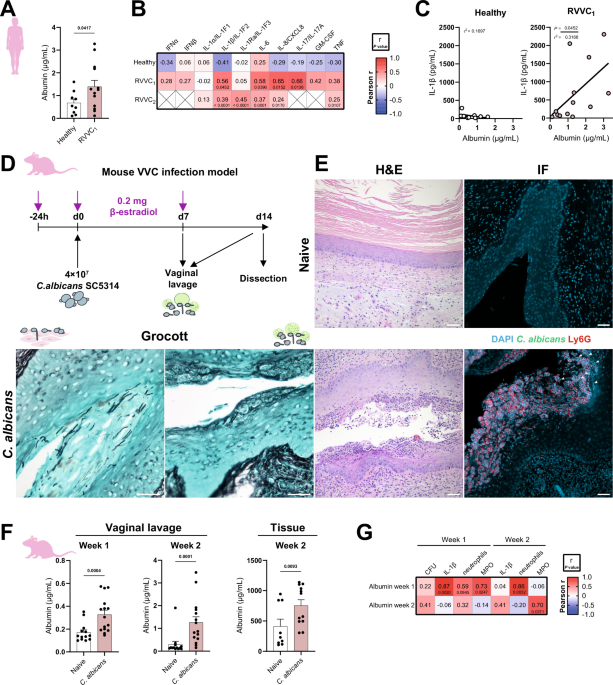
Clinically, intravenous albumin infusions are therefore often applied in critical disease scenarios, such as liver cirrhosis, severe burns and acute nephrosis, to restore blood volume and oncotic pressure by replenishing lost proteins. In response to local inflammation, our blood vessels can become leaky, allowing serum proteins like albumin to leave the vasculature and flood into inflamed tissues. Additionally, hormones like estrogen can increase the vascular permeability. Related to both, we found that women with recurrent vulvovaginal candidiasis (RVVC) had higher albumin levels in vaginal lavage fluids than healthy women. VVC is an extremely prevalent fungal infection of the mucosa of the lower female genital tract. Approximately 75% of women suffer from this infection at least once during their reproductive years, and a subset experiences recurrent infection that drastically impact their quality of life. VVC is caused by Candida species, most commonly Candida albicans. While most humans are colonized with this fungus in their gastrointestinal tract, vaginal colonization is less common, but also there not necessarily leading to disease. Symptomatic disease is driven by fungal virulence factors, in combination with an inflammatory overreaction to the pathogen.
While conducting experiments focusing on responses of C. albicans to human proteins, we were advised to use human serum albumin as an “inert control protein”. However, these experiments revealed that albumin is anything but inert in the context of C. albicans infections. We previously found that candidalysin, an important virulence factor of C. albicans, could be disarmed by albumin. However, we also previously saw that with sufficient time C. albicans would adapt to the initial obstacle of albumin disarming its major virulence factor by rewiring its metabolism and induce an alternative route to damage epithelial cells. Thus, we were initially quite uncertain, what role the elevated levels of albumin in the vagina of RVVC patients could have in the disease pathogenesis.
We then noticed that vaginal albumin levels in RVVC patients positively correlated with several inflammatory mediators, particularly interleukin (IL)-1β, which is viewed as a hallmark cytokine of VVC immunopathology. To understand cause and consequence, we added albumin to the interaction of C. albicans with different mammalian cell types and stumbled upon the fact that specifically macrophages, but neither neutrophils, nor epithelial cells, would release significantly more IL-1β in presence of albumin. That macrophages generally release more IL-1β than the other analyzed cell types, was not entirely unexpected, as they abundantly express IL-1β and the components of its processing machine, the (NLRP3) inflammasome. Even though based on a crystal-clear observation, establishing macrophages as a potential missing link and a plausible source of IL-1β in VVC, made us face some (partially quite fierce) conceptual resistance in the field, as the role of macrophages in inflammation during VVC is a matter of controversy.
Nevertheless, the findings in our study established that elevated albumin levels in vaginal lavages are not only a consequence of inflammation, but can also causally contribute to inflammation. While the canonical NLRP3-inflammasome machinery was needed, for the albumin-enhanced IL-1β response to C. albicans, albumin interestingly acted on this pathway only indirectly.
Reactive oxygen species (ROS) are a very important weapon of our immune cells to clear microbial infections. By both acting as a direct antioxidant and additionally inducing fungal expression of genes for ROS-detoxifying enzymes, albumin helped C. albicans to survive better inside phagosomes of macrophages. This allowed C. albicans to express more of its secreted aspartic protease (Sap) 1 in response to albumin. Sap1 in turn activated the NLRP3 inflammasome. Consistent with this, in vivo a C. albicans Sap1 knockout mutant initially induced less inflammation without a difference in fungal burden.
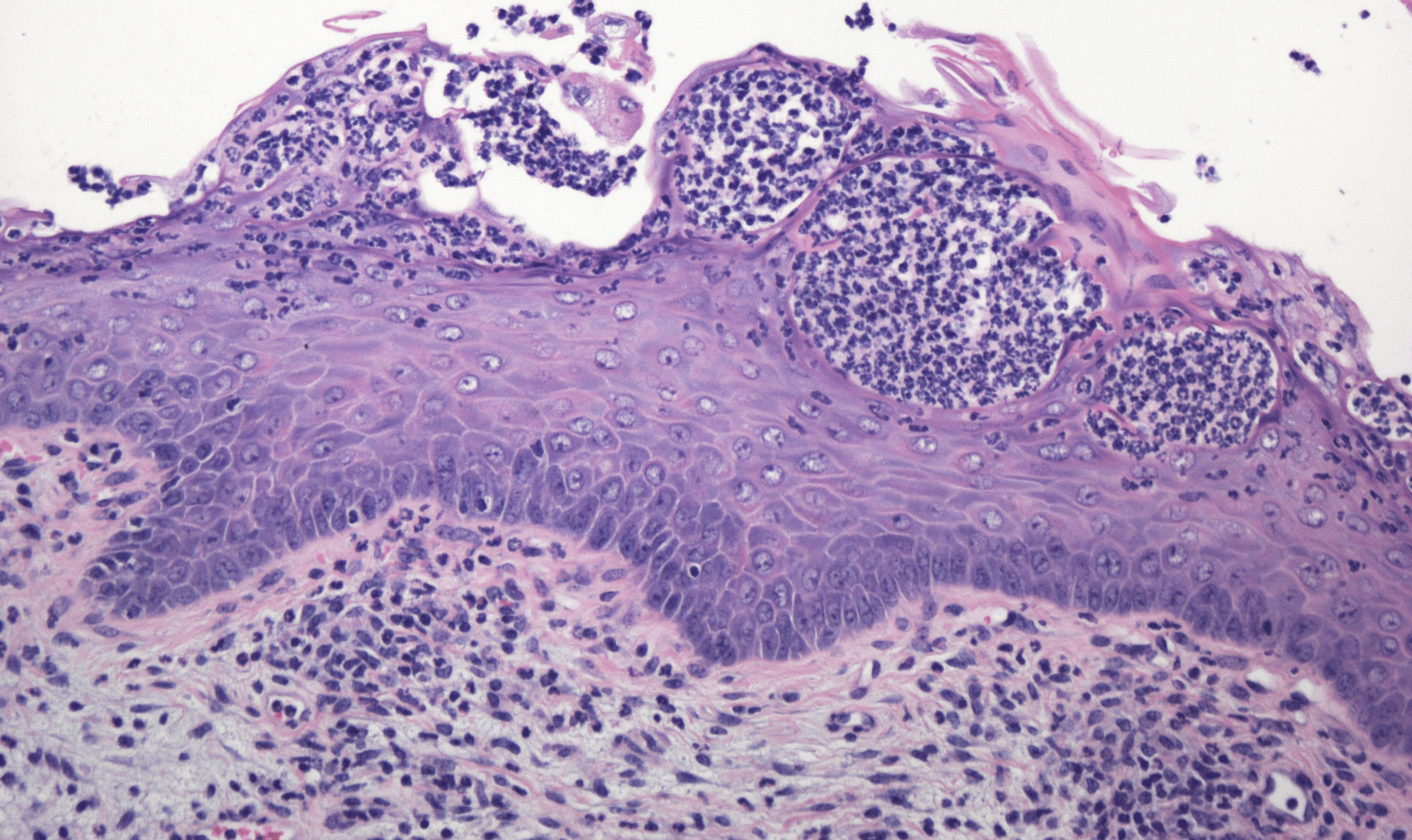
A key aspect of VVC immunopathology is the enormous accumulation of neutrophils in vaginal tissue and lumen. This cell type in other niches and disease manifestations is essential to eradicate fungal pathogens, particularly via the strong capacity to produce ROS. In VVC, however, neutrophils seem to be impaired in their antifungal efficacy, while still contributing to the characteristic hyperinflammatory immunopathology of VVC. Albumin-boosted resistance against ROS also helped C. albicans to survive the interaction with neutrophils, while simultaneously raising their rate of undergoing extracellular trap death (NETosis), particularly when IL-1β was also present. NETosis can serve to entangle and immobilize microbial pathogens, but it is also a highly inflammatory immune cell death process that can further drive immunopathology.
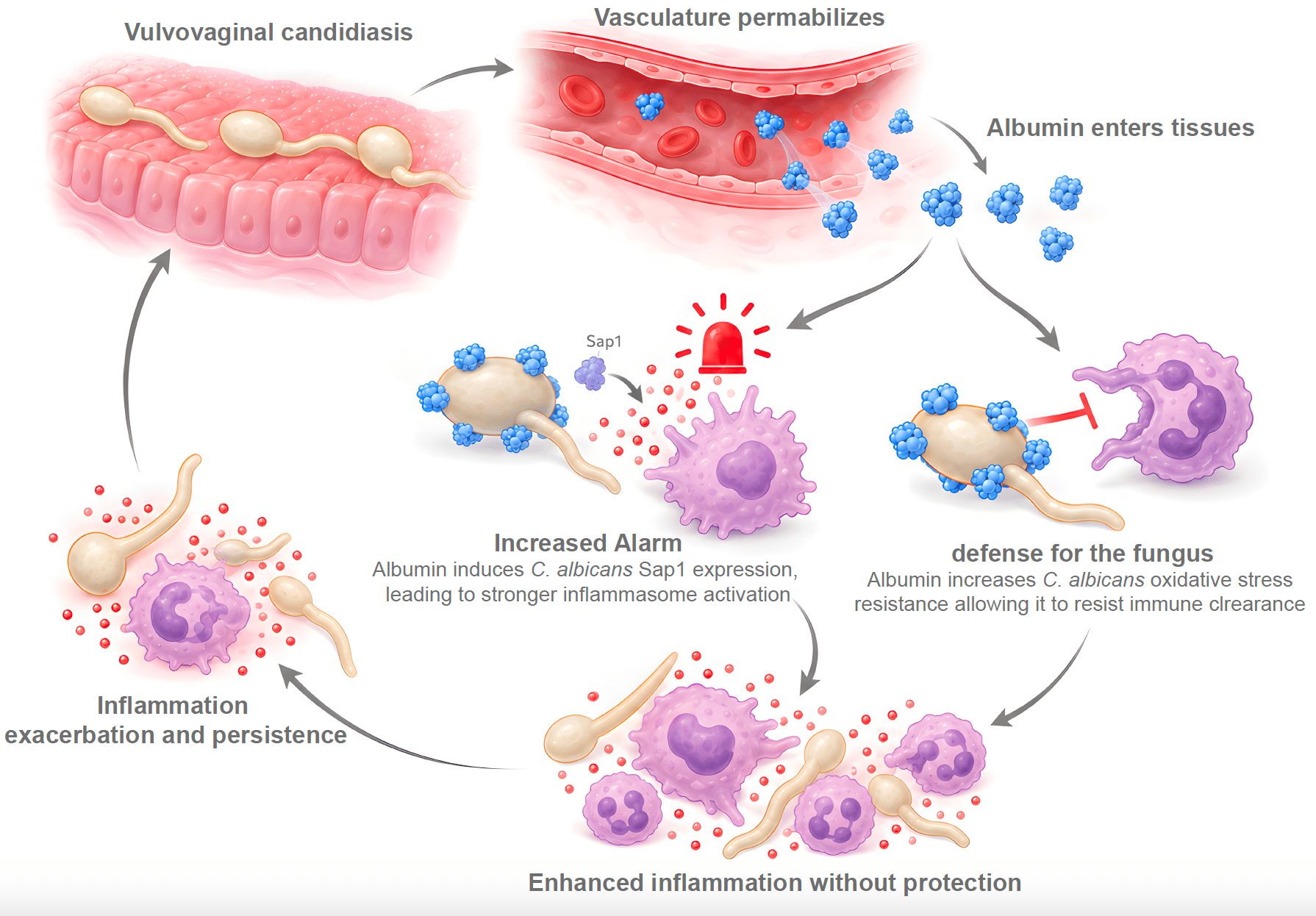
Collectively, our study shows how an overabundance of albumin can help to explain several key features of how the establishment of protective antifungal immunity in VVC is prevented (summarized in Figure 1). Inflammation or estrogen can lead to accumulation of albumin in the vagina, where it elicits fungal adaptations modulating virulence and increasing their stress resistance. The albumin-adapted C. albicans is harder to clear for resident immune cells like macrophages, which thereby have to activate their inflammasome, leading to more IL-1β-driven inflammation. This leads to accumulation of neutrophils, which are ineffective in clearing the pathogen because of albumin. Instead, albumin and IL-1β push them to undergo inflammatory cell death, which thus establishes a vicious circle of overreactive hyperinflammation and continuous tissue damage, but poor antifungal efficacy.
We hope thereby our work can help to lay the ground for establishing new prognostic biomarkers in (R)VVC and inspire new clinical trials with the aim to target and break the inflammatory cycle and restore protective antifungal immunity.
Follow the Topic
-
Nature Communications
An open access, multidisciplinary journal dedicated to publishing high-quality research in all areas of the biological, health, physical, chemical and Earth sciences.

Related Collections
With Collections, you can get published faster and increase your visibility.
Women's Health
Publishing Model: Hybrid
Deadline: Ongoing
Healthy Aging
Publishing Model: Open Access
Deadline: Dec 31, 2026