Comparative Spectrophotometric Analysis of Phytic Acid Quantification in Seeds of Macrotyloma uniflorum, Phaseolus lunatus, and Phaseolus vulgaris
Published in Research Data and Agricultural & Food Science

Measuring What Matters: My Journey into Phytic Acid Quantification in Legume Seeds
Legumes are often celebrated as affordable, protein-rich foods with immense nutritional value. Yet, during my early research work, I learned that nutrition is rarely straightforward. One compound in particular—phytic acid—kept appearing in discussions about mineral absorption, food quality, and dietary balance. That curiosity eventually led me to explore how accurately we measure phytic acid in commonly consumed legume seeds.
This blog post reflects both the science behind our comparative spectrophotometric study and my personal experience navigating the fine line between “anti-nutrient” and “functional compound.”
Why Phytic Acid Deserves Attention
Phytic acid is the main storage form of phosphorus in seeds. From a plant’s perspective, it is essential for germination and growth. From a human nutrition perspective, however, it is more complex.
On one hand, phytic acid can bind minerals such as iron, zinc, and calcium, reducing their bioavailability. On the other hand, it has been associated with antioxidant activity and potential protective effects against certain chronic diseases. Whether phytic acid is viewed as a problem or a benefit often depends on how much is present and how accurately it is measured.
This dual role is what initially drew me to study it more closely.
The Motivation Behind This Study
While reviewing the literature, I noticed that phytic acid quantification is often treated as a routine analytical step, with little discussion of methodological variability. Many studies rely on a single wavelength for spectrophotometric analysis, assuming it provides a complete picture.
As someone working in pharmacognosy and food-related phytochemistry, I found myself asking a simple but important question: Does the choice of wavelength influence how much phytic acid we think is present?
That question became the foundation of this comparative study.
Choosing the Legumes: Familiar Foods, Scientific Questions
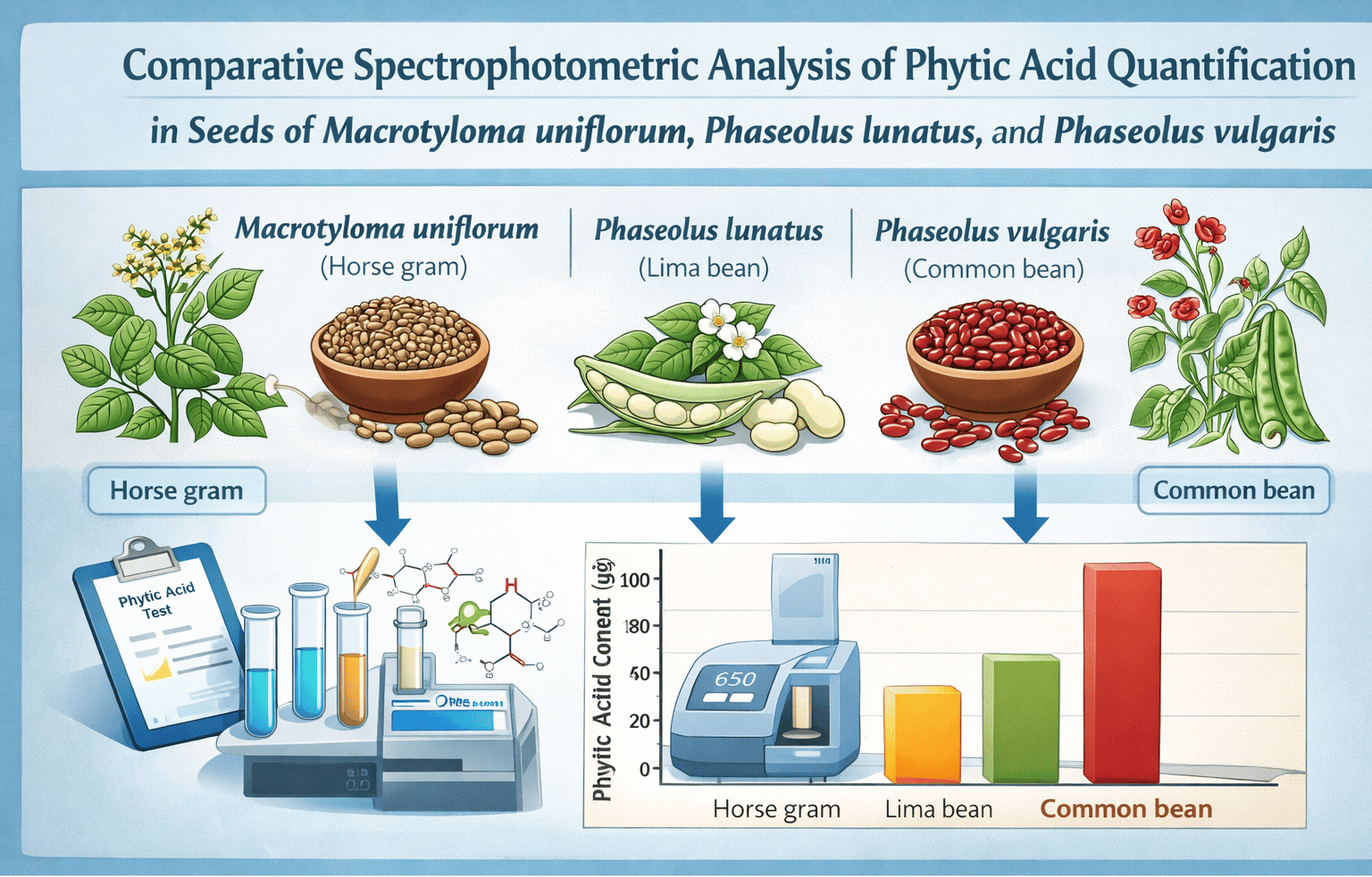
We selected three widely consumed legumes:
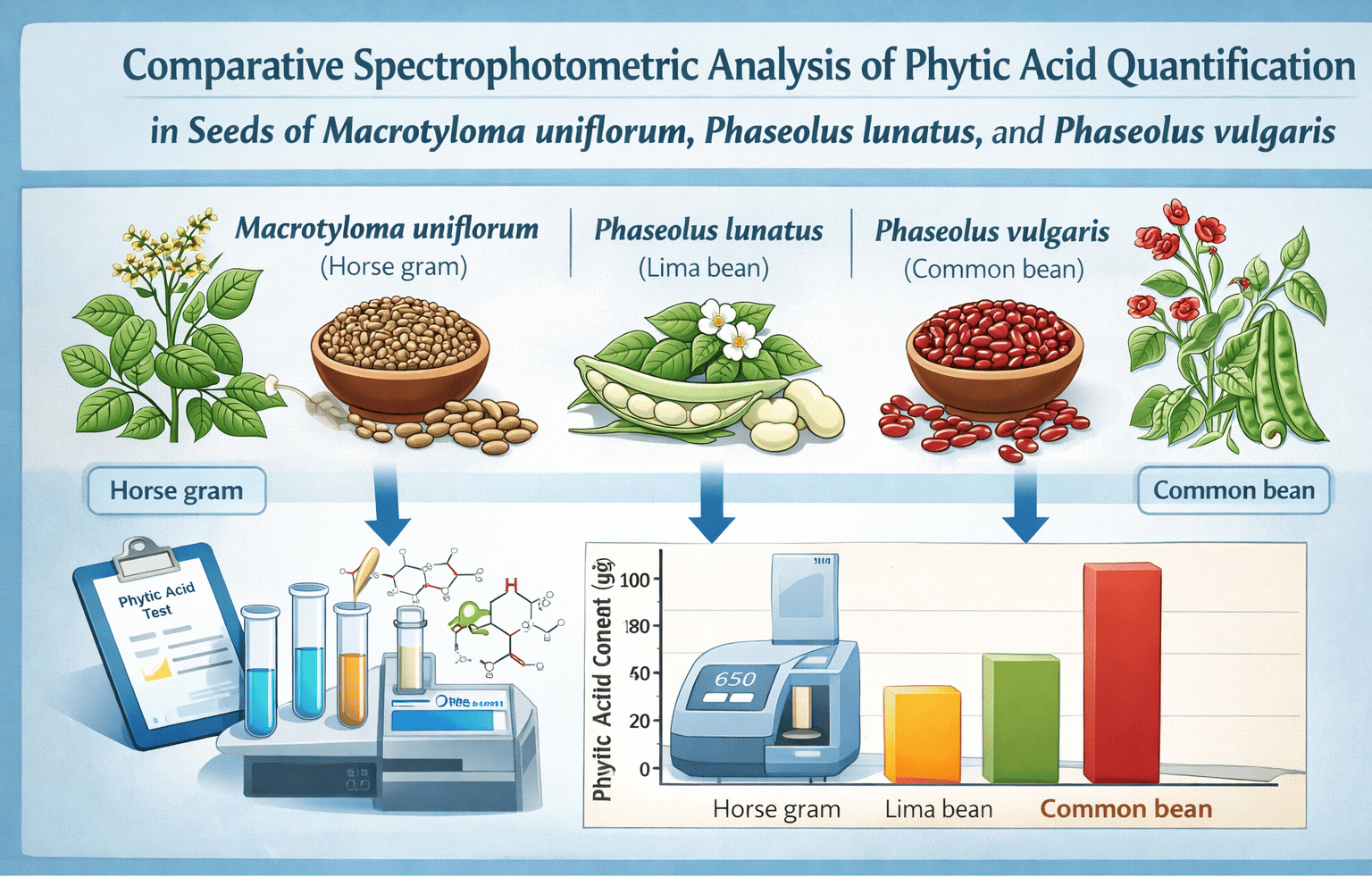
- Macrotyloma uniflorum (horse gram)
- Phaseolus lunatus (lima bean)
- Phaseolus vulgaris (common bean)
These seeds are nutritionally important in many regions and are often recommended for their protein and mineral content. Understanding their phytic acid levels has direct relevance for food science, agriculture, and dietary planning.
From Seeds to Spectra: How We Did the Analysis
The experimental process itself was straightforward but required careful attention to consistency. Seeds were procured, authenticated, and processed under controlled conditions. Phytic acid was extracted using dilute sulfuric acid and quantified using a colorimetric method.
What made this study different was our decision to measure absorbance at two wavelengths—480 nm and 519 nm—instead of relying on just one. Standard curves were prepared to ensure accuracy, and all measurements were performed with the same level of rigor.
As a researcher, I find that these seemingly small methodological choices often have the biggest impact on data interpretation.
What the Results Taught Me
The results were both illuminating and humbling.
At 480 nm, Phaseolus vulgaris showed the highest phytic acid content. However, when measurements were taken at 519 nm, Macrotyloma uniflorum emerged as the seed with the highest value. This shift highlighted how measurement wavelength can influence perceived concentration, even when using the same extraction method.
For me, this was a clear reminder that analytical techniques are not just tools—they shape our conclusions.
Why These Findings Matter Beyond the Lab
These variations are not just academic details. Phytic acid levels influence:
- Mineral bioavailability in diets
- Processing strategies such as soaking, fermentation, and cooking
- Breeding programs aimed at improving nutritional quality
If phytic acid is under- or overestimated, it can affect how legumes are evaluated for human consumption or agricultural improvement. Accurate quantification is therefore essential for making informed decisions in food science and nutrition.
Rethinking the “Anti-Nutrient” Label
One of the most interesting outcomes of working on this study was a shift in my own perspective. Phytic acid is often labeled negatively, but the reality is more nuanced. Its health effects depend on dose, diet composition, and processing methods.
Rather than asking whether phytic acid is “good” or “bad,” I believe the more meaningful question is: How can we manage it intelligently? That starts with measuring it correctly.
Looking Toward the Future
This study opens several avenues for future research. More refined analytical techniques could further improve accuracy and efficiency. At the same time, innovative processing approaches—such as the use of chelating agents, enzymatic treatments, or optimized fermentation—could help reduce phytic acid levels where necessary.
From an agricultural perspective, these insights can guide crop selection and processing strategies aimed at enhancing mineral bioavailability without compromising plant resilience.
Reflections from the Research Journey
Working on this project reinforced a lesson I’ve learned repeatedly: small methodological decisions can have large nutritional and scientific implications. As researchers, we often focus on results, but how we arrive at those results matters just as much.
This study also reminded me why I enjoy research in food and plant sciences. It sits at the intersection of chemistry, nutrition, agriculture, and public health—fields that directly affect everyday life.
Final Thoughts
Phytic acid may be just one compound among many in legume seeds, but understanding it properly can influence how we assess food quality and nutritional value. By comparing spectrophotometric measurements at different wavelengths, we took a small step toward improving reliability in phytic acid analysis.
I hope this work encourages other researchers and food scientists to look more closely at analytical assumptions and to continue refining methods that support healthier, more informed dietary choices.

Salman Ahmed (ORCID: 0000-0003-2033-0181) holds a B.Pharm. degree from the University of Karachi, Pakistan, and a PhD and M.Phil. in Pharmacognosy from the same institution. He has gained valuable experience in the pharmaceutical industry, having worked at Helix Pharma, Pharm Evo (Pvt.) Ltd., and Searle Pakistan Ltd. Currently, he holds the position of Assistant Professor in the Department of Pharmacognosy at the Faculty of Pharmacy, University of Karachi, Pakistan.
Salman Ahmed has made significant contributions to the field with a decade-long career dedicated to teaching Pharmacognosy, also known as Natural Products Sciences. He has authored 125 research papers with an impact factor of 100 with 2297 citations, a h-index of 24, and an i10-index of 59. He has secured multiple research grants in Pharmacognosy (2021, 2018, 2016, and 2014) to study plants traditionally used for analgesic, anti-inflammatory, diuretic, and antidiarrheal purposes and their effects on digestive enzymes. Additionally, he has authored seven books and presented 16 posters at national and international conferences. Salman Ahmed's expertise is acknowledged by various esteemed journals published by Elsevier, Springer Nature, Wiley, MDPI, Hindawi, and Dove Medical Press Limited, as he serves as an invited reviewer for these publishers.
Scientific Achievements (2011–2015): He pioneered a cost-effective copper sulfate-induced chick emesis model for evaluating natural antiemetics. His research explores antiemetic, analgesic, and anti-inflammatory properties in Pakistani plants, herbs, and spices, reporting fixed oil's analgesic effects and discovering Bergenin as an antiemetic. He authored two state-of-the-art reviews on natural antiemetics, "Antiemetic effects of bioactive natural products" and "Natural antiemetics- an overview". He was awarded Nishan-e-Zafar by the University of Karachi in 2014.
Scientific Achievements (2016–2024): Dr Salman Ahmed pioneered glass slide models to grow Whewellite, Brushite, and Urate crystals for the evaluation of antiurolithiatic and anti-gout drugs, presenting key findings at international conferences such as MMDR-7, STEP-5, ISNPC-14, and ISNPF-2. His book “How to Grow Urinary Stone and Gouty Crystals on Glass Slide” provides detailed methodologies for replicating crystal growth in vitro and discusses the implications for understanding crystal morphologies, disease mechanisms and developing herbal treatment strategies.
Dr Ahmed's research highlights the antiurolithiatic potential of pentacyclic triterpenes and polyphenols. These compounds inhibit calcium oxalate crystallization, reduce oxidative stress, and modulate inflammation. They also promote nephroprotection, diuresis, and ACE inhibition, advancing natural therapeutics for kidney stone prevention.
His contributions include “Glossary of Globally Used Herbs and Animals for Urolithiasis” (2024), a comprehensive book exploring medicinal plants covering botanical families from A to Z and animal-based remedies covering their historical use, mechanism of action, and therapeutic spectrum against Whewellite, Brushite, and Urate crystals separately. His research on antiurolithiatic formulations compiles mono- and polyherbal remedies from diverse regions, including Appalachia, Canada, India, and the Middle East. His work provides critical data for future phytochemical, pharmacological, and toxicological studies, aiding in the discovery of safer, more effective treatments for kidney stones.
Additionally, he explores the anticancer potential of marine peptides against breast, ovarian, cervical, malignant melanoma, prostate, neuroblastoma, glioblastoma, leukemia and lymphoma, advancing natural therapeutics for cancer treatment.