Connecting the Dots Between Plants, the Gut, and Mental Health
Published in Plant Science, General & Internal Medicine, and Behavioural Sciences & Psychology
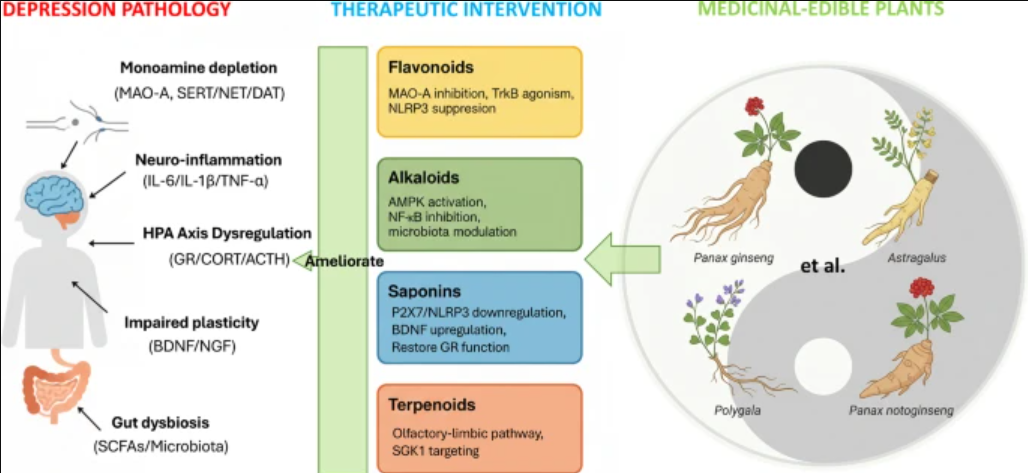
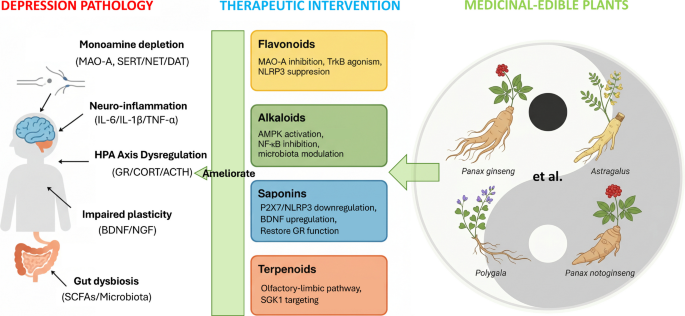

Depression is often discussed in terms of neurotransmitters such as serotonin and dopamine. Yet research over the past decade has revealed a much more complex picture, involving immune signaling, the gut microbiome, stress-response pathways, and the brain's capacity to adapt and reorganize itself. A new review published in Revista Brasileira de Farmacognosia brings these different threads together and examines how medicinal-edible plants may fit into this broader understanding of depression.
The authors focus on four interconnected biological processes that are increasingly linked to depressive disorders: disruptions in monoamine neurotransmission, neuroinflammation, alterations in the gut microbiota, and impaired neuroplasticity. Rather than treating these as separate mechanisms, the review highlights how they influence one another and may collectively contribute to disease development and progression.
Multi-target activity
Against this background, the review maps a wide range of plant-derived compounds—including flavonoids, alkaloids, saponins, terpenoids, and polysaccharides—to these biological pathways. Evidence from the literature suggests that such compounds may influence neurotransmitter availability, inflammatory signaling, stress-related pathways, neurotrophic factors, and gut microbial communities. The picture that emerges is one of multi-target activity rather than a single mechanism of action.
One particularly interesting aspect is the attention given to the gut–brain axis. The review discusses how changes in the gut microbiota can affect barrier integrity, metabolite production, and communication between the digestive system and the central nervous system. Plant-derived compounds are increasingly being studied in this context because of their ability to interact with both host physiology and microbial communities.
At the same time, the authors are careful not to overstate the current evidence. Much of the literature remains preclinical, and important challenges still limit translation into clinical practice. These include poor oral bioavailability for some compounds, an overreliance on studies of isolated molecules despite the traditional use of complex plant preparations, limited pharmacokinetic data, and a shortage of rigorous clinical trials.
For researchers in pharmacognosy, natural products, neuroscience, nutrition, and microbiome science, this review offers a useful overview of how the field is evolving. It also serves as a reminder that understanding depression increasingly requires a systems perspective—one that considers interactions among the brain, immune system, endocrine pathways, and gut ecosystem, alongside the diverse chemistry found in medicinal-edible plants.
Author's note: I used Microsoft Copilot to assist in creating this post.

As a Senior Publisher, I manage a portfolio of Life Sciences journals, including some influential publications in the field. I have over ten years of experience in academic publishing, with a background in neuroscience and science journalism.



Please sign in or register for FREE
If you are a registered user on Research Communities by Springer Nature, please sign in