Cooled MarkII blade surface pressure and temperature distribution by a conjugate heat transfer analysis using Reynolds stress baseline turbulence model
Published in Mechanical Engineering
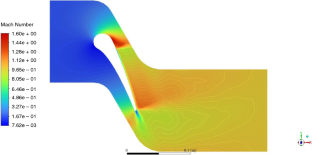
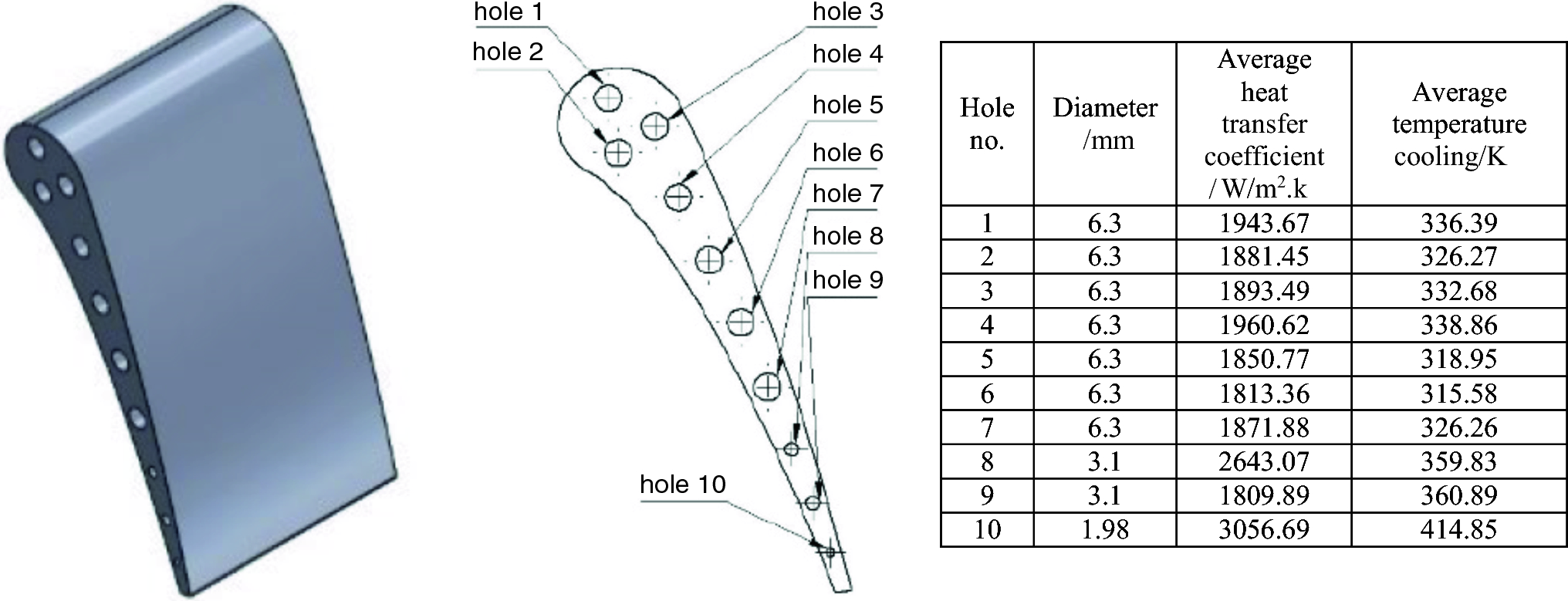

"In this study, we explore the conjugate heat transfer on the MarkII blade surface using the Reynolds Stress Baseline Turbulence Model. The analysis reveals significant insights into the pressure and temperature distribution across the turbine blade, with potential applications in optimizing turbine performance. We used FLUENT and ANSYS software for simulation and validation against experimental results."

Follow the Topic
-
Journal of Thermal Analysis and Calorimetry
Journal of Thermal Analysis and Calorimetry publishes high quality papers covering all aspects of thermal analysis, calorimetry, thermodynamics, heat and energy.

Related Collections
With Collections, you can get published faster and increase your visibility.
Uncertainty Modeling of Thermal Fields in Underground Cable Networks Using Fuzzy Inference Systems
The study titled "Uncertainty Modeling of Thermal Fields in Underground Cable Networks Using Fuzzy Inference Systems" presents a novel approach to analyzing and predicting the thermal behavior of underground power cables in non-homogeneous soils. By employing fuzzy inference systems, this work captures the inherent variability in soil thermal properties, cable loading conditions, and environmental influences. The proposed model integrates expert knowledge and linguistic variables to offer a more flexible and adaptive method for estimating thermal fields around buried cables. This approach enhances the accuracy of temperature predictions and improves the decision-making process for optimizing cable layout and material selection. The fuzzy system accommodates imprecise data without relying solely on deterministic values, enabling more resilient thermal management. Simulation results demonstrate the system’s capability to deliver robust temperature forecasts, aiding in the prevention of overheating and prolonging the operational life of underground electrical infrastructure. This framework is a valuable contribution to smart power grid design and thermal optimization.
The implementation of fuzzy inference systems (FIS) for uncertainty modeling in underground cable networks presents several challenges. One of the primary issues lies in accurately defining membership functions for soil properties, cable loading, and environmental conditions, which are often site-specific and influenced by seasonal variability. Another challenge is the integration of expert knowledge into the fuzzy rule base, which can be subjective and may introduce inconsistencies if not carefully validated. Additionally, the lack of high-resolution field data can limit the calibration and validation of the FIS model, affecting prediction accuracy. Computational complexity also arises when dealing with large-scale cable networks and multiple interacting variables. Moreover, translating the fuzzy model outputs into actionable insights for real-time thermal management can be difficult, especially in systems where quick responses are critical. Finally, aligning fuzzy-based models with conventional engineering design standards and regulatory frameworks remains a key hurdle for widespread adoption in practical underground cable system planning. This theme encompasses advanced fuzzy inference techniques, soft computing approaches, and intelligent systems for addressing uncertainties in the thermal analysis and optimization of underground cable networks. It invites contributions that explore modeling, simulation, predictive diagnostics, and decision support systems under variable soil, environmental, and load conditions. Potential topics included, but not limited to:
1. Fuzzy logic-based thermal simulation for underground power cables in heterogeneous soils
2. Hybrid fuzzy-neural models for predicting cable temperature under load variability
3. Application of type-2 fuzzy systems in soil thermal property estimation
4. Uncertainty quantification in cable ampacity calculations using soft computing
5. Fuzzy rule-based systems for dynamic thermal rating of underground cables
6. Integration of fuzzy inference with finite element models for subsurface heat transfer
7. Modeling the impact of soil moisture uncertainty on cable thermal behavior
8. Fuzzy logic controllers for real-time thermal monitoring of underground cables
9. Multi-criteria decision analysis using fuzzy sets for thermal backfill material selection
10. Risk assessment of underground cable overheating using fuzzy probability models
Publishing Model: Hybrid
Deadline: Nov 30, 2026
Calorimetry and Thermal Characterization of Inorganic, Hybrid, and Nanostructured Materials for Energy and Environmental Applications
The accelerating demand for clean energy, sustainable manufacturing, and environmentally resilient technologies has placed unprecedented emphasis on the thermal behaviour of inorganic, hybrid, and nanostructured materials. Calorimetry and advanced thermal analysis have become indispensable for uncovering the energetic, structural, and kinetic signatures that govern material stability, conversion efficiency, and long-term performance. As next-generation energy systems-from solid-state batteries and hydrogen storage media to catalytic platforms and high-temperature ceramics-grow increasingly complex, understanding heat transfer, phase evolution, interfacial processes, and thermal degradation is crucial for optimizing their real-world functionality. At the same time, environmental applications such as pollutant remediation, CO₂ capture, water treatment, and photocatalysis require materials capable of maintaining robust performance under wide thermal and chemical gradients. Recent advances in nano-engineered architectures, hybrid organic–inorganic frameworks, and multifunctional composites enable unprecedented control over thermal transport pathways and energy exchange mechanisms. Coupled with emerging high-resolution calorimetric tools, machine-learning-driven thermal modelling, and operando characterisation techniques, researchers can now map dynamic thermal events with remarkable precision.
Energy and environmental systems face demanding operational conditions where materials must withstand cyclic heating, reactive atmospheres, nanoscale confinement, and complex multiphase interactions. Correlating calorimetric data with real functional behaviour remains complicated because heat signatures often arise from overlapping chemical, structural, and transport phenomena. Nanostructures further complicates this interpretation by introducing size-dependent thermodynamics and unconventional phase transitions. Environmental materials such as sorbents, catalysts, and adsorbents also exhibit dynamic thermal responses influenced by moisture, pollutant loading, and surface reactions, requiring refined analytical methodologies. Yet the global shift toward renewable energy technologies and circular-material strategies has intensified the need for reliable thermal characterization to guide design decisions. Recent advancements, including micro- and nano-calorimetry, in situ thermal analysis under controlled atmospheres, and high-throughput calorimetric screening, are rapidly expanding the field’s capabilities. Integrating thermal analysis with spectroscopy, electron microscopy, computational simulations, and AI-assisted interpretation is enabling deeper insights into reaction energetics, stability windows, and degradation mechanisms of emerging materials. These developments are critical for optimizing energy storage efficiency, enhancing thermal management in electrochemical systems, improving catalyst lifetime, and designing environmentally compatible materials.
This Special Issue seeks innovative research that tackles emerging scientific and technological challenges while advancing calorimetry and thermal analysis to drive progress in energy conversion, environmental sustainability, and the development of next-generation thermally enabled materials and systems.
• AI-assisted thermal modelling for environmentally resilient and sustainable material design
• Reactive heat signatures and kinetic mapping of inorganic materials under extreme thermal cycling
• Calorimetric profiling of ion transport and redox energetics in solid-state and hybrid electrochemical systems
• Thermo-responsive behaviour of inorganic–organic interfaces in hybrid functional materials
• Heat-flow characterization of nanostructured adsorbents during pollutant capture and release
• Thermal transport modulation in nano-architecture materials for energy harvesting
• Exothermic and endothermic pathways in photocatalytic or electrocatalytic reaction systems
• Calorimetric evaluation of thermal runaway suppression strategies in next-generation batteries
• Thermodynamic assessment of phase stability in multi-component oxide or chalcogenide systems
• Energetics of structural reconfiguration in porous frameworks under gas or vapor uptake
• Coupled thermal–chemical processes in materials for CO₂ conversion and environmental remediation
• Operando calorimetry for monitoring real-time transformations in catalytic or energy devices
• Thermo-oxidative resistance studies on high-temperature environmental barrier materials
• Machine learning-driven prediction of phase transitions in energy materials
Publishing Model: Hybrid
Deadline: Oct 10, 2026