Cracking the Genetic Code of Glioblastoma: The Hidden Role of HOX Genes
Published in Neuroscience and Genetics & Genomics

🔬 Why HOX Genes?
HOX (Homeobox) genes are essential during embryonic development. Like master architects, they determine where the head, tail, arms, and legs form. These genes are highly conserved across species and play a crucial role in organizing the body’s structure along the anterior-posterior axis.
But in recent years, researchers have discovered that HOX genes can be reactivated or dysregulated in cancer—and not just any cancer. In glioblastoma (GBM), one of the deadliest forms of brain tumor, abnormal HOX gene expression has been linked to:
-
Tumor growth
-
Therapeutic resistance
-
Poor survival outcomes
This unexpected connection between developmental biology and cancer progression caught our attention.
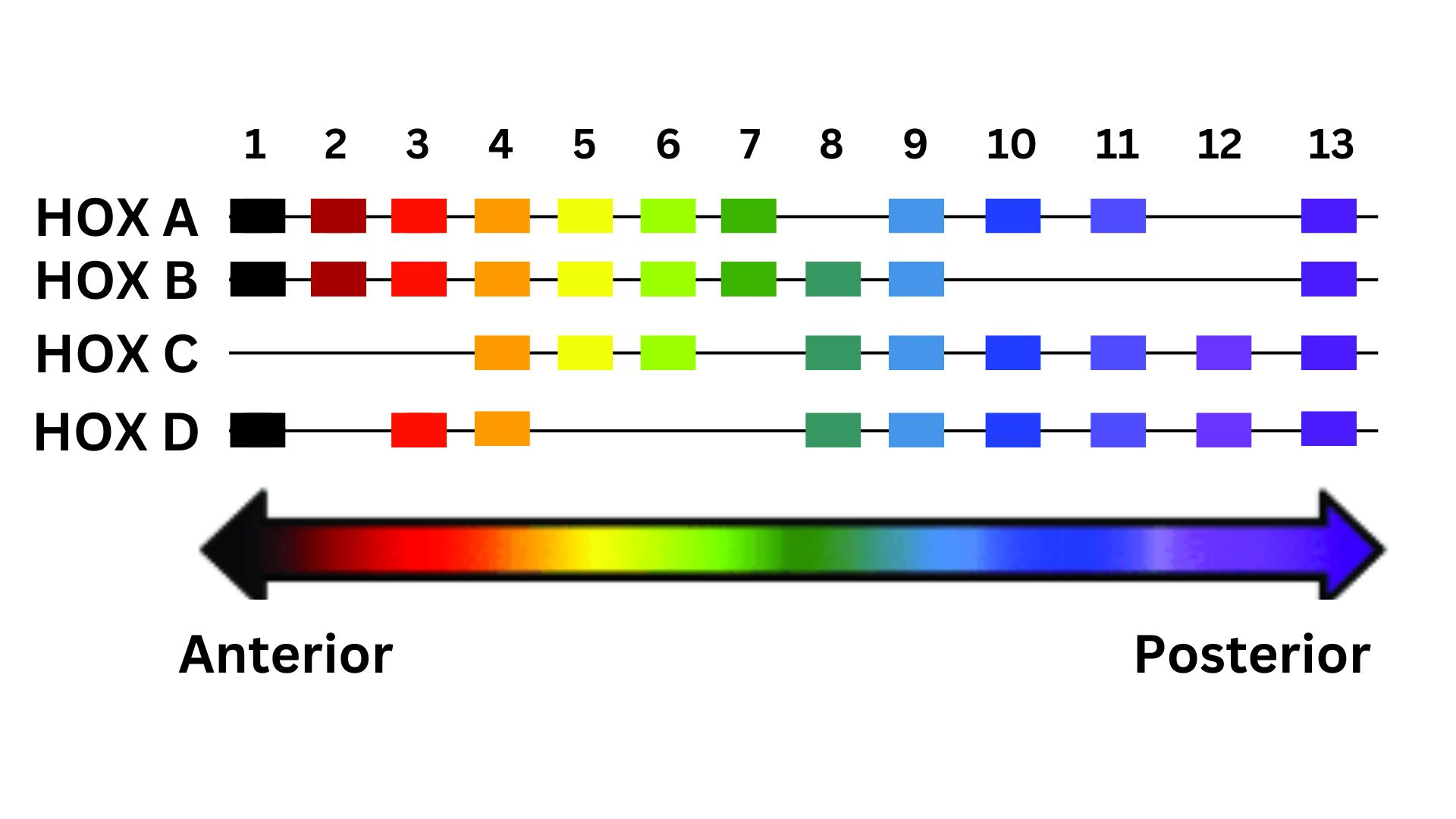
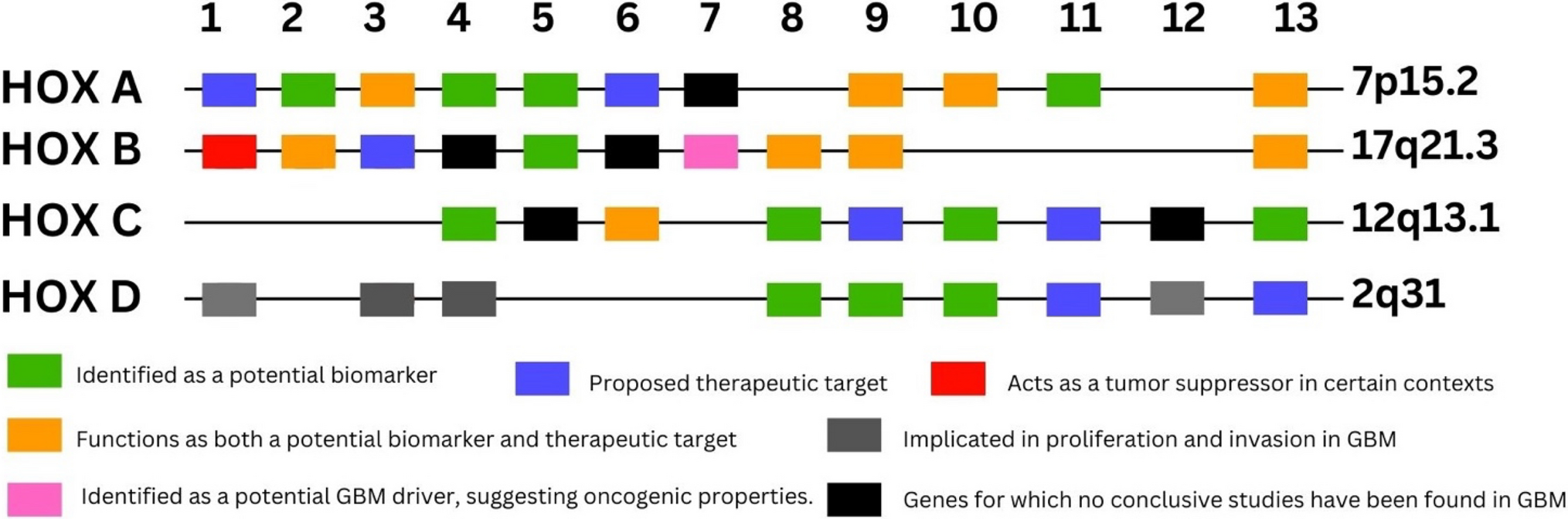
The genomic architecture of the HOX family is present in each of the four loci. Humans have four loci of HOX genes: HOXA contains 11 genes, located in chromosome 7p15.2; HOXB contains 10 genes, located in chromosome 17q21.3; HOXC contains 9 genes, located in chromosome 12q13.3; HOXD contains 9 genes, located in the chromosome 2q31 (p represent the short arm of the chromosome, q represent the long arm of the chromosome). During embryonic development, HOX genes are expressed sequentially in partially overlapping zones along the anterior-posterior axis.
🧠 The Glioblastoma Challenge
Glioblastoma is an aggressive, fast-growing tumor with a notoriously poor prognosis. Despite surgery, radiation, and chemotherapy, the average survival time remains just 12–15 months after diagnosis.
We wondered—could HOX genes be one of the hidden drivers behind glioblastoma’s resistance and rapid progression?
🧾 What We Did?
We conducted an in-depth review of the scientific literature to answer this question. Our article:
-
Summarizes the current knowledge about HOX gene expression in GBM
-
Highlights specific HOX genes (like HOXA9, HOXA10, and HOXD10) that are linked to treatment resistance
-
Explores the connection between HOX gene activity and glioma stem cells, tumor microenvironment, and immune evasion
-
Discusses the implications of HOX genes as biomarkers and therapeutic targets
This is the first narrative review focused specifically on HOX gene dysregulation in GBM.
🚀 Why It Matters
Our findings suggest that HOX genes are more than developmental relics—they may be active participants in the progression and treatment resistance of glioblastoma.
Understanding how and why these genes become dysregulated could lead to:
-
Improved diagnostic tools
-
Personalized treatment strategies
-
New targets for drug development
📖 Behind the Scenes
This project brought together my passion for computational genomics and my fascination with developmental biology. It reminded me how genes that build life can also contribute to its breakdown, depending on the context.
Writing this review wasn’t just an academic task—it was an effort to bridge two fields and encourage researchers to see cancer through a broader genetic lens.

Follow the Topic
-
Discover Oncology
This is a fully open access general oncology journal that aims to provide a unified forum for researchers and clinicians. The journal spans from basic and translational science, to preclinical, clinical, and epidemiology, and welcomes content that interfaces at all levels of cancer research.

Related Collections
With Collections, you can get published faster and increase your visibility.
Advances in Gastrointestinal and Neuroendocrine Malignancies
Gastrointestinal (GI) cancers and neuroendocrine neoplasms (NENs) represent a diverse and clinically challenging group of malignancies with rising global incidence especially among younger individuals. Colorectal, gastric, pancreatic, biliary tract, and hepatocellular carcinomas together account for a major proportion of cancer-related deaths worldwide. Similarly, NENs—once considered rare—are rising in incidence with heterogeneity in biology, clinical course, and response to therapy. Despite major progress in systemic treatments, surgical techniques, and molecular profiling, outcomes remain suboptimal for many patients.
In recent years, comprehensive molecular profiling has not only provided novel insights into tumor biology and resistance mechanisms but also helped uncover several actionable therapeutic targets. Parallel advances in immunotherapy, targeted therapies, and radiopharmaceuticals have reshaped the treatment landscape for select patient populations. At the same time, efforts to better understand tumor–microenvironment interactions, clonal evolution, and mechanisms of therapeutic resistance are yielding new opportunities for translational research.
This Collection aims to highlight recent advances in the biology, diagnosis, and management of GI cancers and NENs. We invite contributions spanning molecular and cellular mechanisms, biomarker discovery, innovative therapeutic strategies, clinical trial design, and translational approaches that bridge the gap from bench to bedside. Together, these works will underscore the evolving paradigms that hold promise for improving outcomes in these complex diseases.
Keywords: Gastrointestinal cancers, neuroendocrine neoplasms, biomarkers, tumor microenvironment, immunotherapy, radiopharmaceuticals, precision oncology, translational research
Publishing Model: Open Access
Deadline: Nov 06, 2026
The Evolving Landscape of Lung Cancer: Advances in Diagnosis, Treatment Strategies, and Simultaneous Care
Lung cancer remains one of the leading causes of cancer-related mortality worldwide, although recent years have seen remarkable progress in its clinical management. This Collection aims to deepen the evolving landscape of lung cancer through a comprehensive lens, including early diagnosis, molecular profiling (through liquid and tissue), therapeutic innovation, and simultaneous care strategies. The Collection will gather original research, reviews, short reports or letters and case studies focused on:
advances in early detection and biomarker discovery and development;
the evolution of precision oncology and molecular profiling;
updates on systemic therapies, including immunotherapy and targeted agents;
novel treatment combination strategies,
the increasing integration of simultaneous care into multidisciplinary models for improving patient outcomes.
Keywords: lung cancer; precision oncology; immunotherapy; molecular diagnostics; simultaneous care
Publishing Model: Open Access
Deadline: Dec 04, 2026