Cytokine profiles and metabolic dysregulation in endometriosis: insights into diagnostic and therapeutic targets LAR ONCOLOGY

Endometriosis is a chronic inflammatory disorder marked by the ectopic growth of endometrial-like tissue, affecting 10–15% of women of reproductive age.

Share this post

Choose a social network to share with, or copy the URL to share elsewhere

This is a representation of how your post may appear on social media. The actual post will vary between social networks

Explore the Research

Springer Netherlands
Springer Netherlands Springer Netherlands

Cytokine profiles and metabolic dysregulation in endometriosis: insights into diagnostic and therapeutic targets - Molecular Biology Reports

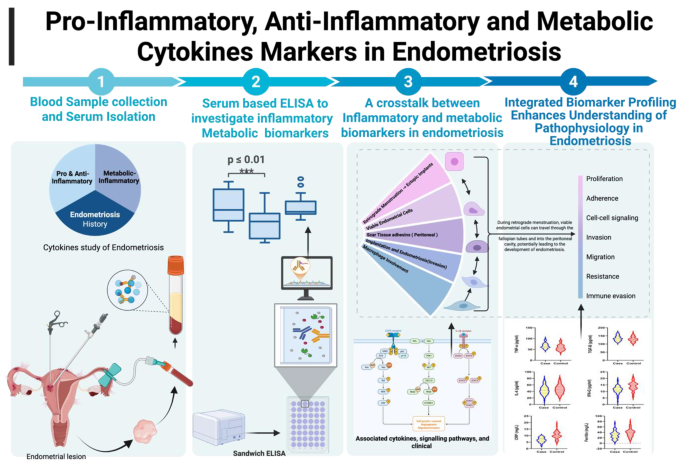
Introduction Endometriosis is a chronic inflammatory disorder marked by the ectopic growth of endometrial-like tissue, affecting 10–15% of women of reproductive age. Pro-inflammatory cytokines (TNF-α, IL-1β, IL-6) drive inflammation and disease progression, while anti-inflammatory cytokines (TGF-β, IL-10) maintain immune balance. Metabolic markers like homocysteine, folic acid, and vitamin B12 may influence immune regulation and contribute to endometriosis pathophysiology. Methodology Serum levels of TNF-α, IL-1β, IL-6, IL-10, TGF-β, CRP, Ferritin, IL-4, IFN-γ, Homocysteine, Folic Acid, and Vitamin B12 were quantified using ELISA kits. Unpaired t-tests and Pearson correlation were used to assess immune-metabolic differences between endometriosis patients and healthy controls. Results TNFα, IL-6, IL-1β, IL-10, homocysteine, ferritin, and reduced IFN-γ and CRP levels in the case group compared to controls (p < 0.05). TNFα (p = 0.0008), IL-1β (p = 0.0005), and homocysteine (p < 0.0001) were notably higher in cases. IFN-γ (p < 0.0001) and CRP (p < 0.0001) were significantly lower in cases. IL-6 (p = 0.0020), IL-10 (p = 0.0051), ferritin (p = 0.0338), and folate (p = 0.0134) also showed significant differences. TGF-β, IL-4, and Vit-B12 levels did not differ significantly (p > 0.05). These findings suggest altered cytokine and biochemical profiles in disease pathophysiology. Conclusion The study highlights significant alterations in inflammatory cytokines and metabolic markers in endometriosis patients compared to healthy controls. Elevated pro-inflammatory and altered anti-inflammatory cytokine levels, along with metabolic imbalance, suggest immune-metabolic dysregulation in disease pathogenesis. These findings may aid in identifying potential biomarkers and therapeutic targets for endometriosis. Graphical abstract

Introduction

Pro-inflammatory cytokines (TNF-α, IL-1β, IL-6) drive inflammation and disease progression, while anti-inflammatory cytokines (TGF-β, IL-10) maintain immune balance. Metabolic markers like homocysteine, folic acid, and vitamin B12 may influence immune regulation and contribute to endometriosis pathophysiology.

Methodology

Serum levels of TNF-α, IL-1β, IL-6, IL-10, TGF-β, CRP, Ferritin, IL-4, IFN-γ, Homocysteine, Folic Acid, and Vitamin B12 were quantified using ELISA kits. Unpaired t-tests and Pearson correlation were used to assess immune-metabolic differences between endometriosis patients and healthy controls.

Results

TNFα, IL-6, IL-1β, IL-10, homocysteine, ferritin, and reduced IFN-γ and CRP levels in the case group compared to controls (p < 0.05). TNFα (p = 0.0008), IL-1β (p = 0.0005), and homocysteine (p < 0.0001) were notably higher in cases. IFN-γ (p < 0.0001) and CRP (p < 0.0001) were significantly lower in cases. IL-6 (p = 0.0020), IL-10 (p = 0.0051), ferritin (p = 0.0338), and folate (p = 0.0134) also showed significant differences. TGF-β, IL-4, and Vit-B12 levels did not differ significantly (p > 0.05). These findings suggest altered cytokine and biochemical profiles in disease pathophysiology.

Conclusion

The study highlights significant alterations in inflammatory cytokines and metabolic markers in endometriosis patients compared to healthy controls. Elevated pro-inflammatory and altered anti-inflammatory cytokine levels, along with metabolic imbalance, suggest immune-metabolic dysregulation in disease pathogenesis. These findings may aid in identifying potential biomarkers and therapeutic targets for endometriosis.

Follow the Topic

Spotlight on Research from India
Research Publishing > Spotlight on Research from India