Deciphering autoimmune susceptibility: a meta-analysis of PTPN22 gene variants

Autoimmune illnesses result from an abnormal immune reaction against the body's tissues. Genetic factors play an important role in determining susceptibility to certain diseases.

Published in Immunology
Deciphering autoimmune susceptibility: a meta-analysis of PTPN22 gene variants
Like

Share this post

Choose a social network to share with, or copy the URL to share elsewhere

This is a representation of how your post may appear on social media. The actual post will vary between social networks

Explore the Research

SpringerLink
SpringerLink SpringerLink

Deciphering autoimmune susceptibility: a meta-analysis of PTPN22 gene variants - Immunologic Research

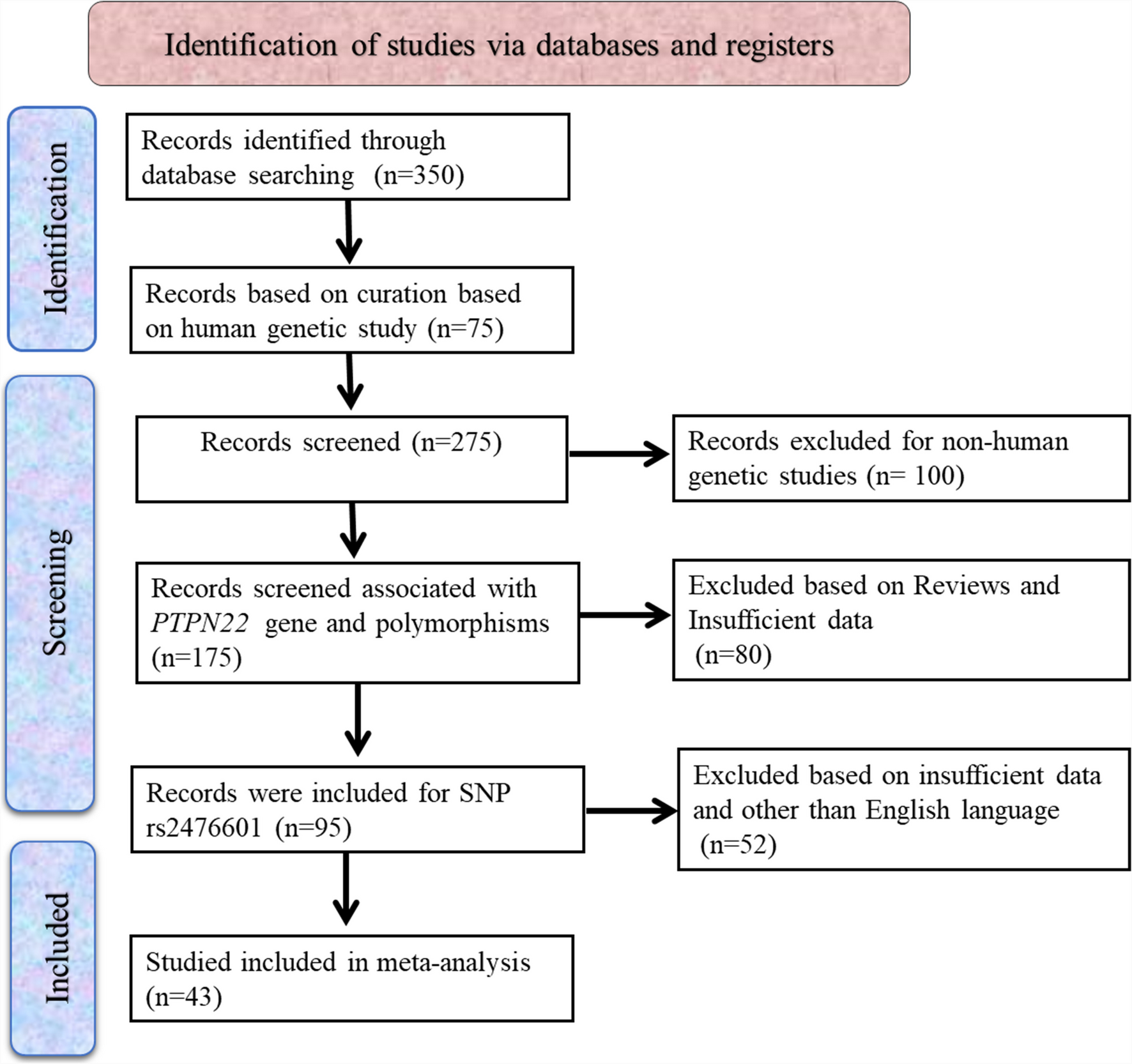
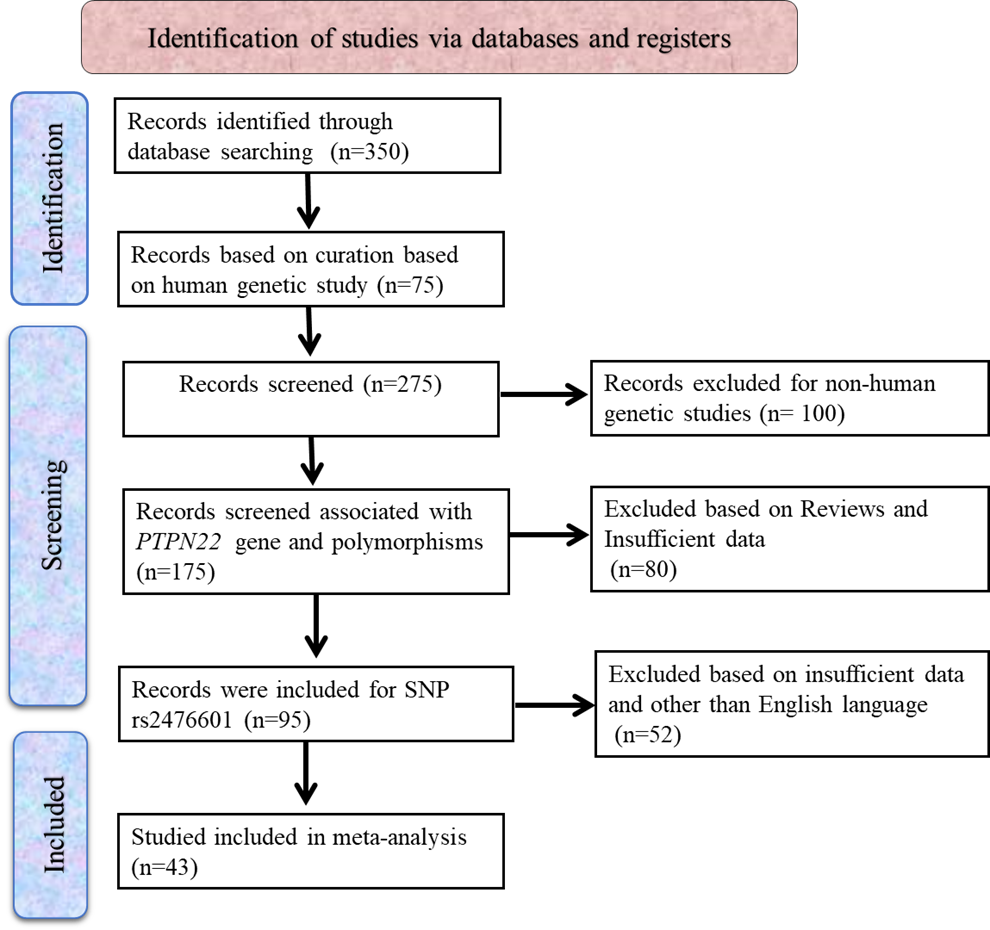
Autoimmune disorders are intricate conditions where the immune system directs its attack towards the body’s tissues. The goal is to perform a thorough meta-analysis focusing on the genetic and epigenetic aspects of autoimmune disorders, specifically examining the role of the PTPN22 gene, particularly the rs2476601 variation, in influencing susceptibility to autoimmune diseases. The study followed PRISMA 2020 guidelines and PROSPERO registration and conducted a comprehensive meta-analysis to explore the association between PTPN22 gene variations and autoimmune disorders. Case–control studies presenting genotype information were included, and quantitative data analysis was performed using MetaGenyo software. The meta-analysis included 43 studies with 20,669 controls and 9,397 cases of autoimmune diseases, focusing on the PTPN22 gene rs2476601 polymorphism. Significant associations were observed between the PTPN22 polymorphisms across multiple genetic models, including allelic, dominant, and recessive models. However, no link was found between the over-dominant model. The obtained p-values were < 0.01 for the allele model (C vs T; OR: 0.63, 95% CI: 0.48–0.81, I2 = 92%), 0.03 for the dominant model (CC + CT vs. TT; OR: 0.47, 95% CI: 0.24–0.95, I2 = 87%), and < 0.01 for the recessive model (TT vs. CT + CC; OR: 0.61, 95% CI: 0.47–0.79, I2 = 89%). However, the over-dominant model (CT vs. CC + TT; OR: 1.68, 95% CI: 1.32–2.15, I2 = 86%) did not show a significant p-value (> 0.05). This meta-analysis emphasizes the significant impact of PTPN22 gene variations on autoimmune diseases, suggesting its potential as a biomarker for assessing risk and guiding targeted interventions.

The meta-analysis indicated a link between certain PTPN22 gene variations, specifically the  rs2476601 polymorphism, and an elevated risk of autoimmune disorders such as rheumatoid arthritis, type 1 diabetes, and systemic lupus erythematosus. The aggregated data showed that those with the risk allele were more likely to acquire autoimmune diseases, particularly in European populations. These results emphasize PTPN22's importance as a key genetic driver in autoimmune pathogenesis, as well as its potential as a biomarker for early detection and targeted treatment.