Deconstructing the Hypothetical Genomic Weapon: Navigating the Dual-Use Dilemma of Nanoplatforms
Published in Bioengineering & Biotechnology and Chemistry




The Hypothetical Framework for a Nanoplatform-Based Genomic Weapon
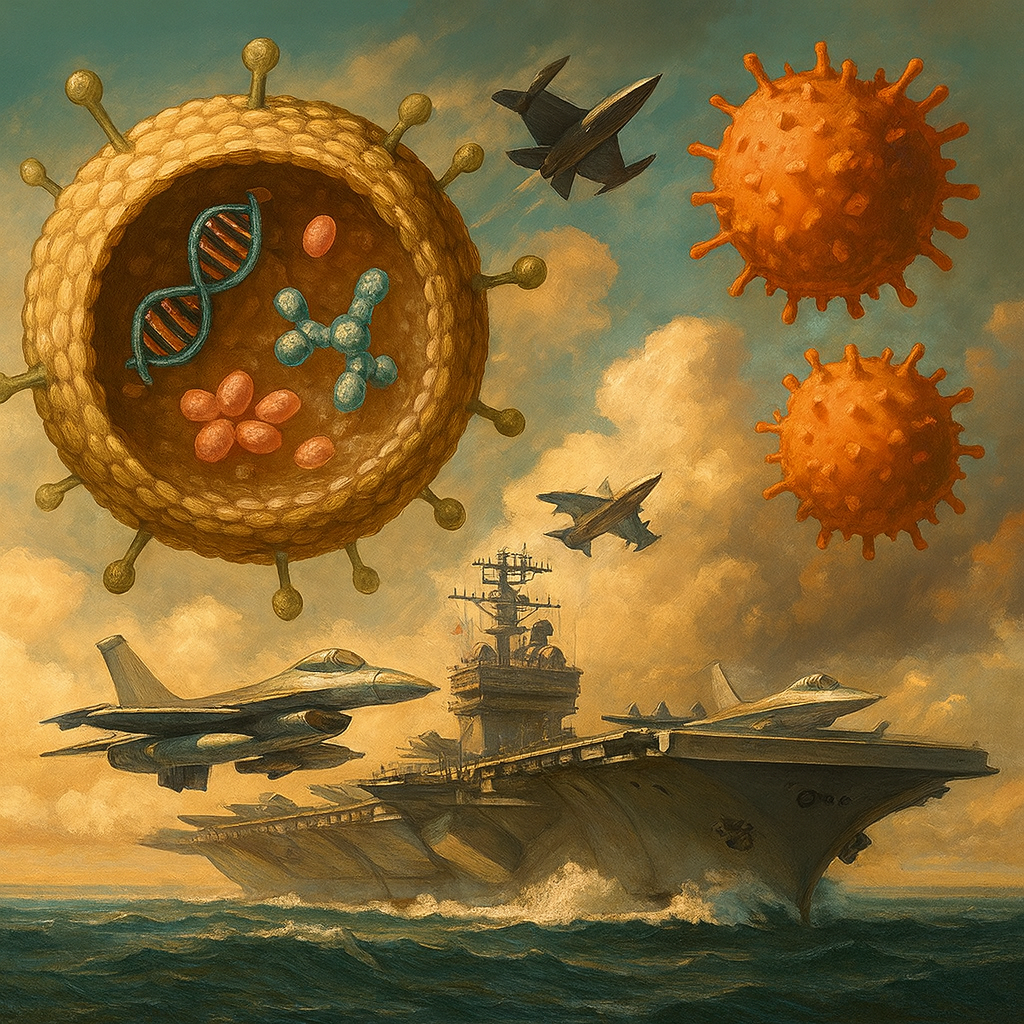
The speculative discourse surrounding the dual-use potential of nanomedicine posits a hypothetical scenario for a genetically selective weapon. This theoretical construct, while lacking empirical support, is predicated on the convergence of three emerging technologies: population-scale genomics, nucleic acid therapeutics, and nano-enabled drug delivery systems.
In this scenario, the weapon's design would theoretically involve several stages.
1. Target Identification:
The foundational premise (and primary flaw) is the identification of a specific genetic marker—such as a single-nucleotide polymorphism (SNP) or a specific allele—that is purportedly unique and exclusive to a target ethnic, cultural, or geographical group.
2. Payload Engineering:
A corresponding nucleic acid payload, such as a CRISPR-Cas9 system or an siRNA (small interfering RNA) agent, would be engineered. Unlike its therapeutic counterpart, this payload would be designed for harm. A CRISPR system, for example, might be programmed to target this "unique" genomic sequence to create a lethal double-strand break in an essential survival gene.
3. Weaponized Nanocarrier:
This genetic payload would be encapsulated within an advanced nanoplatform, such as a lipid nanoparticle (LNP) or a stable polymeric carrier. This vehicle would be hypothetically engineered for military-grade delivery: possessing high environmental stability for aerosol or waterborne dissemination, surface modifications for immune evasion ("stealth"), and functionalization for tissue-specific uptake (e.g., pulmonary or hepatic) to maximize its lethal effect.
4. Selective Dissemination:
Upon dissemination, the agent would be inhaled or ingested by all exposed individuals. However, it would theoretically remain inert in "non-target" populations. In "target" individuals, the nanoplatform would deliver its payload, which would then identify the "unique" genetic marker and execute its lethal function, resulting in selective mass lethality.
Deconstruction of the Scenario: Scientific and Technical Implausibility
While this framework informs biosecurity anxieties, it collapses under rigorous scientific scrutiny. The conceptualized weapon is not operationally feasible due to fundamental, insurmountable barriers in human genetics and nanocarrier biology.
1. The Fallacy of Genetic Essentialism
The primary failure of this scenario lies in its misunderstanding of human genomic diversity. The concept of a "unique" genetic marker for any socially-defined group is a scientific fallacy.
1.1. Human Genetic Variation:
Modern genomics has established that human genetic variation is clinal, meaning allele frequencies shift gradually over geographical distances. There are no sharp, discrete genetic boundaries that align with socially constructed categories of race or ethnicity.
1.2. Shared Ancestry:
Any two humans share approximately 99.9% of their DNA. The variation that does exist is overwhelmingly shared. An allele that is "common" in one population (e.g., 80% prevalence) is almost invariably present at lower frequencies in other populations across the globe.
1.3. Indiscriminate Action:
Consequently, a weapon targeting such an allele would be operationally indiscriminate. It would fail to harm the significant portion of the target population lacking the allele while simultaneously causing mass collateral damage to millions in non-target populations who also carry it.
2. Insurmountable Barriers to Delivery and Biodistribution
Even if a valid genetic target existed (which it does not), the delivery vehicle would fail. The in vivo behavior of nanoplatforms is governed by universal physiological principles, not genomic ancestry.
2.1. Pharmacokinetics is Universal:
The biodistribution of a nanoparticle—where it goes in the body after administration—is determined by its physicochemical properties (e.g., size, charge, surface chemistry) and its interaction with the host's universal biological systems.
2.2. The RES Barrier:
Any nanoparticle introduced into the bloodstream is immediately subject to opsonization (coated by blood proteins) and rapid clearance by the reticuloendothelial system (RES)—primarily phagocytic cells in the liver and spleen. This physiological response is a universal human trait, not a genetically-variable one. A nanoplatform will be cleared by a liver in one individual the same way it is in another, regardless of their ethnic background.
2.3. Environmental and Physiological Barriers:
A disseminated weapon would first have to survive environmental degradation (UV light, desiccation, enzymatic activity). It would then need to bypass formidable physiological barriers (skin, airway mucus, stomach acid) and a multi-layered immune system before it could even reach its target cell. Designing a single platform to overcome all these constraints for mass dissemination is considered technically infeasible.
3. Biological Complexity and Unpredictability
Finally, the "payload" concept oversimplifies complex biology. Traits, disease susceptibility, and survival functions are rarely controlled by a single gene. They are polygenic (influenced by many genes), epigenetic (modified by environmental factors), and stochastic (subject to random variation in expression). Any attempt to impose selective lethality based on a single genetic marker would be confounded by this overwhelming biological complexity.
Conclusion: Reframing the Dual-Use Dilemma
The proposition that nanoplatforms could be engineered into tools of genocide rests on a foundation of scientific implausibility. Authoritative bodies, including the World Health Organization (WHO) and the U.S. National Academies, have consistently affirmed that biological weapons attempting to exploit genomic differences are scientifically and operationally unfeasible.
The true "dual-use" threat is not the weapon's creation but the weaponization of the narrative itself. Such speculative fears, when divorced from scientific reality, can be exploited to erode public trust in legitimate and vital nanomedicines, such as LNP-based vaccines and gene therapies. The ethical imperative for the scientific community is to address these concerns not by validating their premise, but by reinforcing the robust scientific, ethical, and regulatory frameworks (e.g., the Biological Weapons Convention) that ensure nanoplatforms remain instruments of healing.
The true risk lies not in the technical feasibility of such a weapon, but in the weaponization of the narrative. Speculative fears, when detached from scientific reality, can:
-
Undermine public trust in legitimate nanomedical advances (e.g., mRNA vaccines, gene therapies).
-
Divert attention from genuine ethical and regulatory challenges in nanomedicine.
At a conceptual level, the convergence of population-scale genomics, programmable nucleic acid therapeutics, and highly tunable nanocarriers superficially resembles the toolkit required for precision targeting. Genome-wide association studies have indeed catalogued thousands of population-stratified allelic variants, and CRISPR-based systems have demonstrated remarkable sequence fidelity under controlled laboratory conditions. Likewise, nanocarriers—particularly lipid nanoparticles, dendrimers, and polymeric vectors—are increasingly capable of delivering nucleic acids to specific tissues with controlled release kinetics. When viewed abstractly and without integration of real-world physiological complexity, these developments can misleadingly suggest that a genomic “lock-and-key” mechanism is attainable. This is reinforced by the growing sophistication of nanoplatform surface engineering, ligand targeting, and immune evasion strategies, which can convey the impression that biological barriers are now optional rather than determinative. As a result, the hypothetical construct appears scientifically coherent at the level of theoretical architecture, even though it remains invalid when examined through the lens of human genetic diversity, in-vivo pharmacokinetics, and systems-level unpredictability. This tension—between conceptual elegance and biological reality—is precisely what fuels misinterpretations and necessitates strong biosecurity governance.
Follow the Topic
-
Discover Nano
This is an interdisciplinary journal that publishes papers from all areas of nanoscience and nanotechnology.

Related Collections
With Collections, you can get published faster and increase your visibility.
Nanofluid Engineering for Sustainable Energy Systems
Nanofluid engineering is reshaping sustainable energy by mixing highly conductive nanoparticles into standard base fluids—like water or oil—to considerably enhance the heat transfer. Although empirical laboratory characterization demonstrates a 20% to 30% enhancement in thermal performance, commercial scalability remains constrained by critical transport phenomena. The collection will be focused on several aspects, but is not limited to:
- Stability issues: Nanoparticles have a habit of clustering together and settling out of the fluid over time, degrading performance.
- Micro-level behavior: The microscopic motion of nanoparticles enhances energy dispersion and prevents localized thermal bottlenecks.
- Increased pumping power penalties: Introducing these particles thickens the fluid (increasing its viscosity), which demands more energy to keep it moving through a system.
- Technological synergies. Engineers frequently combine nanofluids with passive heat transfer enhancement devices like turbulators.
- AI/ML techniques: To bridge the gap between lab and real-world application, machine learning / AI models can be employed to accurately predict complex fluid behaviors, allowing scientists to perfectly optimize nanoparticle size, shape, and concentration without endless, costly trial and error.
By collecting experimental/theoretical/numerical contributions from leading researchers, this Collection aims to serve as a valuable resource for both researchers and practitioners working in nanotechnology, thermal sciences, and materials engineering. Applications related to and proving improvements related to SDG 7: Affordable and Clean Energy and SDG 9: Industry, Innovation & Infrastructure are encouraged and prioritized.
Keywords: Physics Informed Machine Learning; Heat Transfer; New fluids; Convection; Thermophysical Properties; Phase Change Materials; Energy Efficiency; Sustainability.
This Collection supports and amplifies research related to SDG 7 and SDG 9.
Publishing Model: Open Access
Deadline: Feb 26, 2027
Green Nanomaterials: From Sustainable Synthesis to Eco-Friendly Applications
Discover Nano invites submissions for a Topical Collection focused on the exciting and rapidly evolving field of green nanomaterials. This collection aims to highlight the latest advancements in the synthesis, characterization, and application of nanomaterials that prioritize environmental sustainability and human health. Nanomaterials, with their unique properties, offer immense potential for addressing these challenges. However, the conventional methods for their synthesis and processing often involve hazardous chemicals and energy-intensive processes. This Topical Collection seeks to showcase research that explores alternative, eco-friendly approaches to nanomaterial production and utilization.
Keywords: Nanomaterials; green synthesis; eco-friendly; sustainable synthesis; one health; biogenic synthesis
This Collection supports and amplifies research related to SDG 6, SDG 7, SDG 9, SDG 12, and SDG 13.
Publishing Model: Open Access
Deadline: Nov 30, 2026