Does Aging Really Tame Biochar? A Lettuce Study Says It's Complicated
Published in Plant Science and Agricultural & Food Science


Biochar has earned a reputation as a soil health booster, improving water retention, nutrient availability, and long-term carbon storage. To offset its occasional downsides, letting biochar age in soil before use has become a common strategy, based on the assumption that time smooths out its rougher effects. A new study led by Irina Mikajlo and colleagues, published in the Journal of Soil Science and Plant Nutrition, tests that assumption directly, and the results complicate the picture.
Researchers aged three biochars, produced from beech wood, a hardwood mixture, and a digestate-straw blend, for six months in two contrasting Czech soils: a nutrient-poor Luvisol and a more fertile Fluvisol. Lettuce was then grown in each for 90 days, with measurements spanning biomass, photosynthetic pigments, phenolic compounds, antioxidant enzyme activity, and DNA integrity via the alkaline Comet assay.
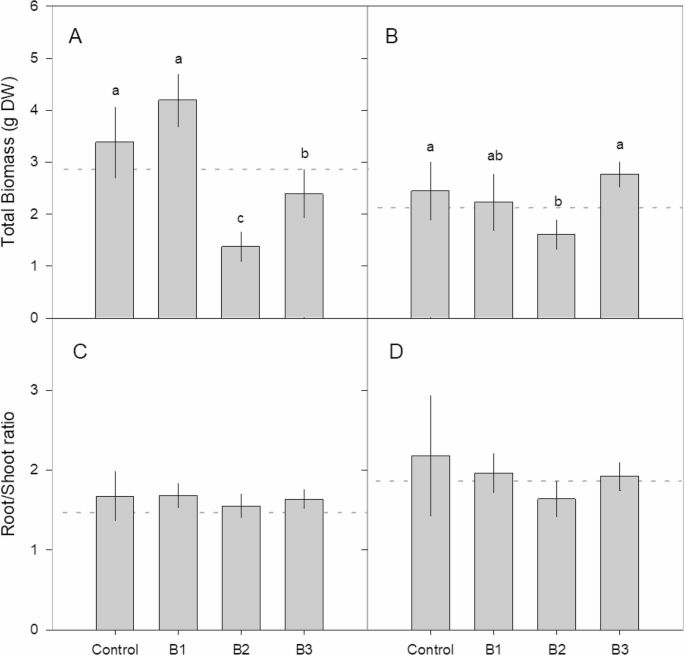
In the Luvisol, aging fell short of full protection. The hardwood biochar cut total biomass by 57%, and the digestate-straw biochar by 29%. Antioxidant enzymes such as superoxide dismutase and peroxidase rose sharply, in some cases fourfold, while DNA strand breakage roughly doubled across all three biochars compared to untreated soil, signaling ongoing oxidative stress.
Limited damage
The Fluvisol responded differently. Its higher cation exchange capacity and nutrient availability limited damage: biomass losses appeared only under the hardwood treatment, and DNA damage rose significantly only with the digestate-straw biochar, by a more modest 20%. Correlations among pigments, enzymes, and biomass were also more consistent here, pointing to a soil system better equipped to absorb the disturbance.
The findings indicate that six months of aging alters biochar's chemistry without neutralizing its effects. Feedstock and pyrolysis conditions continued to shape plant outcomes regardless of aging, with soil type acting as a second, independent variable. For field applications, the study points toward matching biochar selection to soil conditions rather than treating aging as a blanket safeguard, an approach the authors describe as still uncommon in biochar research despite its added diagnostic value.
Author's note: I used Microsoft Copilot to assist in creating this post.
Image: Oregon Department of Forestry

Follow the Topic
-
Journal of Soil Science and Plant Nutrition
The Journal of Soil Science and Plant Nutrition is an international, peer reviewed journal devoted to publishing original research findings in the areas of soil science, plant nutrition, agriculture, and environmental science.



Please sign in or register for FREE
If you are a registered user on Research Communities by Springer Nature, please sign in