Editor Story: Dr. Yuki Yamada
Published in Behavioural Sciences & Psychology


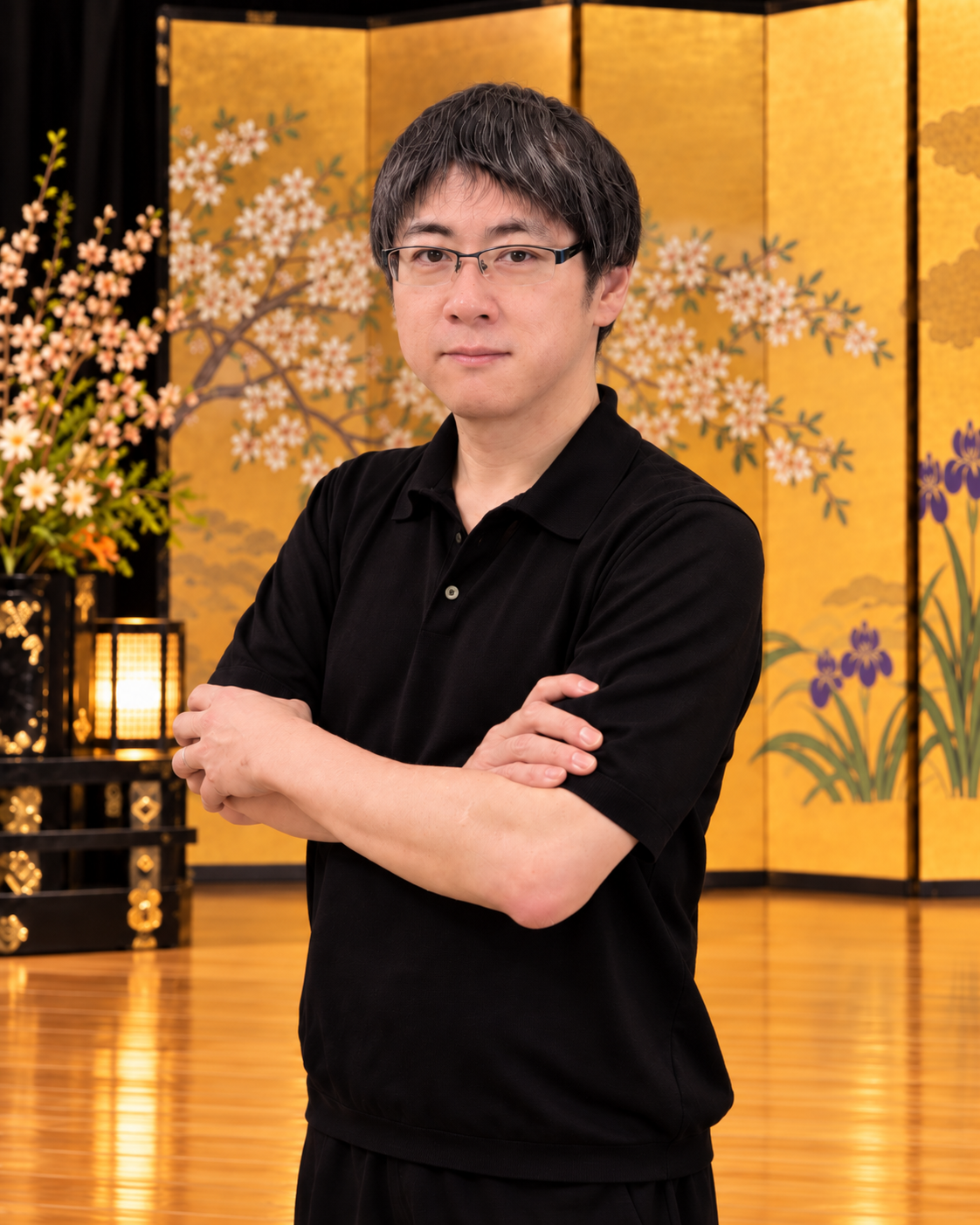
Dr. @Yuki Yamada is an Associate Professor of Psychology at Kyushu University, Japan. He joined the Editorial Board of Scientific Reports in 2021 and has been handling submissions for Registered Reports. His expertise is in the study of emotions, particularly disgust, trypophobia and the uncanny valley, along with embodied cognition, attention and perception. He also studies open science and reproducibility in psychology, including questionable research practices, peer review and publishing, the incentives that shape research careers and Decentralized Science (DeSci). He also takes part in multi-laboratory collaborations such as the Psychological Science Accelerator and serves on the managing board of PCI RR (Peer Community in Registered Reports).
***
In this interview, we asked Dr. Yuki Yamada to talk to us about his work as an Editor at Scientific Reports. Read on to find out more.
What do you like most about being an Editorial Board Member for Scientific Reports?
My research on how science works stops at implications for what journals and reviewers might do. Editing is where I see whether those implications hold up in practice. What I value most is handling Registered Reports. Scientific Reports is one of the few mega-journals to offer the format, and it suits the journal: publication here does not depend on how striking a result is, or even on whether it is statistically significant, and a Registered Report turns that principle into procedure by fixing the decision before the results exist. And at Stage 1, advice can still change the study itself.
What do you like most about handling manuscripts at Scientific Reports?
Watching a manuscript improve is satisfying, but with Registered Reports it is the study that improves. At Stage 1, before any data exists, a request to fix the sampling plan, add a manipulation check, or state what result would count against the hypothesis changes the research that will be done, not just the paper. That feels like a direct contribution to science rather than to its record. The other pleasure is the vantage point: an editor sees the argument about results and literature, between the people defining the frontier of that question.
We know that finding reviewers is one of the hardest parts of an editorial role. Do you have any tricks for finding reviewers?
I start from the reference list and lean towards early-career researchers. Registered Reports change what a good reviewer is. Stage 1 asks someone to judge a design without results, and not everyone can do that well. I look for authors of Registered Reports or preregistered studies, and for people who write review papers, since they routinely read papers the way a reviewer does. Sometimes I invite someone who has criticised the method or failed to replicate the effect, because such people read most carefully. When someone declines, I ask for a name, and I tell them which parts of the manuscript need to be assessed.
If you were to give a piece of advice to other Editors, what would that be?
Much of what I handle is outside my own subfield. That is no reason to defer to reviewers. Problems that matter, such as flexible analyses, small samples, or claims the design cannot carry, look the same everywhere, and an editor who sees them in one field sees them in another. For parts I cannot judge, I split the manuscript into questions and send each to someone who can, such as a Bayesian statistician for whether the analysis is sound and fits the hypotheses. Incidentally, I do not edit reviewers' comments unless abusive or insulting; any necessary corrections or guidance will be provided in my own remarks.
How important is reproducibility in research? As an Editor, how do you help authors report reproducible results?
Reproducibility is what turns an observation into a claim. A single result, even a significant one, is one observation; it becomes a finding when others reproduce it. But reproducibility is not one thing. Whether an analysis can be rerun on the same data, whether a study can be repeated, and whether a conclusion survives alternative analyses are separate questions with separate remedies. Registered Reports settle much of the reporting in advance, because the analysis plan is fixed at Stage 1. At Stage 2 my job is to have every deviation stated, with its reason and effect on the conclusion.
What are the key things journals should do to ensure scientific rigor?
Journals ask authors for rigour; the key is to apply the same standard to themselves. Three things follow. First, treat preregistration as something to check, not a badge: compare the registered plan with the paper, as Registered Reports already do. Second, measure your own output and publish the numbers: how often the data behind a data availability statement can be retrieved, how many papers have been replicated, how many corrected or retracted. Third, commission replications of your own most cited papers, run them as Registered Reports, and grant in-principle acceptance at the design stage, so the outcome cannot affect publication.
Do you think Scientific Reports help reduce publication bias, and if yes – how?
Partly. The journal's criterion removes one filter: the one applied after submission. But most publication bias happens earlier: null results are never written up, because a full paper is a lot of work for a result no one rewards. Whether the policy works is measurable, and worth measuring, by comparing its share of null results with that of selective journals. Two tools reach that earlier stage: Registered Reports, which accept a study before its results exist, and a format it does not yet have, a micropublication section, where a single result or failed replication can be reported in a page.
What would you like to share with your fellow researchers on publishing in an inclusive journal?
Much of the effort in a selective-journal submission goes into making a result look surprising, and that skill is unevenly distributed: it favours those trained in a Western rhetorical tradition. A journal that judges soundness shifts the burden back to the method, where everyone competes on equal terms. In Japan, where you publish still matters more than what, and an inclusive journal does not change that. I would suggest treating it as a showcase for how well you design, analyse and report a study; here, that is all that counts.
You are an Editor handling Registered Reports, please give us a piece of advice on how to approach/assess this type of study, highlighting strengths and limitations of the approach, particularly concerning the specific research question and methods.
Registered Reports work best for confirmatory questions, particularly for replication studies. PCI RR now assesses qualitative studies under the same criteria, so the test is not the study type but whether the plan can be specific enough to be judged before the data exists. At Stage 1 I ask authors for one sentence: what would change your conclusion? If they cannot write it, the design is not ready. Its strength: the main weakness of preregistration, that a plan can be quietly loosened later, largely disappears, because the plan is reviewed and checked. Its limit: it guarantees an informative answer; it cannot make the question important.
Links
Home page: https://sites.google.com/site/yamadayuk/
ORCID: https://orcid.org/0000-0003-1431-568X
Google Scholar: https://scholar.google.com/citations?user=EzRNEkkAAAAJ&hl=en
Follow the Topic
-
Scientific Reports
An open access journal publishing original research from across all areas of the natural sciences, psychology, medicine and engineering.

Related Collections
With Collections, you can get published faster and increase your visibility.
Cancer Prevention and Control
Publishing Model: Hybrid
Deadline: Feb 19, 2027
Healthy Aging
Publishing Model: Open Access
Deadline: Dec 31, 2026