Empowering Families in Palliative Care: The SHIFA-PC Trial
Published in Healthcare & Nursing, Cancer, and General & Internal Medicine






In many parts of the world—and especially across the Middle East—families are not just visitors in the healthcare journey. They are decision-makers, caregivers, and emotional anchors. When a loved one is diagnosed with advanced illness, families often find themselves navigating unfamiliar medical terms, difficult choices, and overwhelming emotions, all at once.
Yet, despite this central role, the support they receive is often unstructured. Information is shared in brief conversations, sometimes fragmented, sometimes too technical, and often delivered at moments of high stress. Over time, this can lead to confusion, anxiety, and a growing sense of burden.
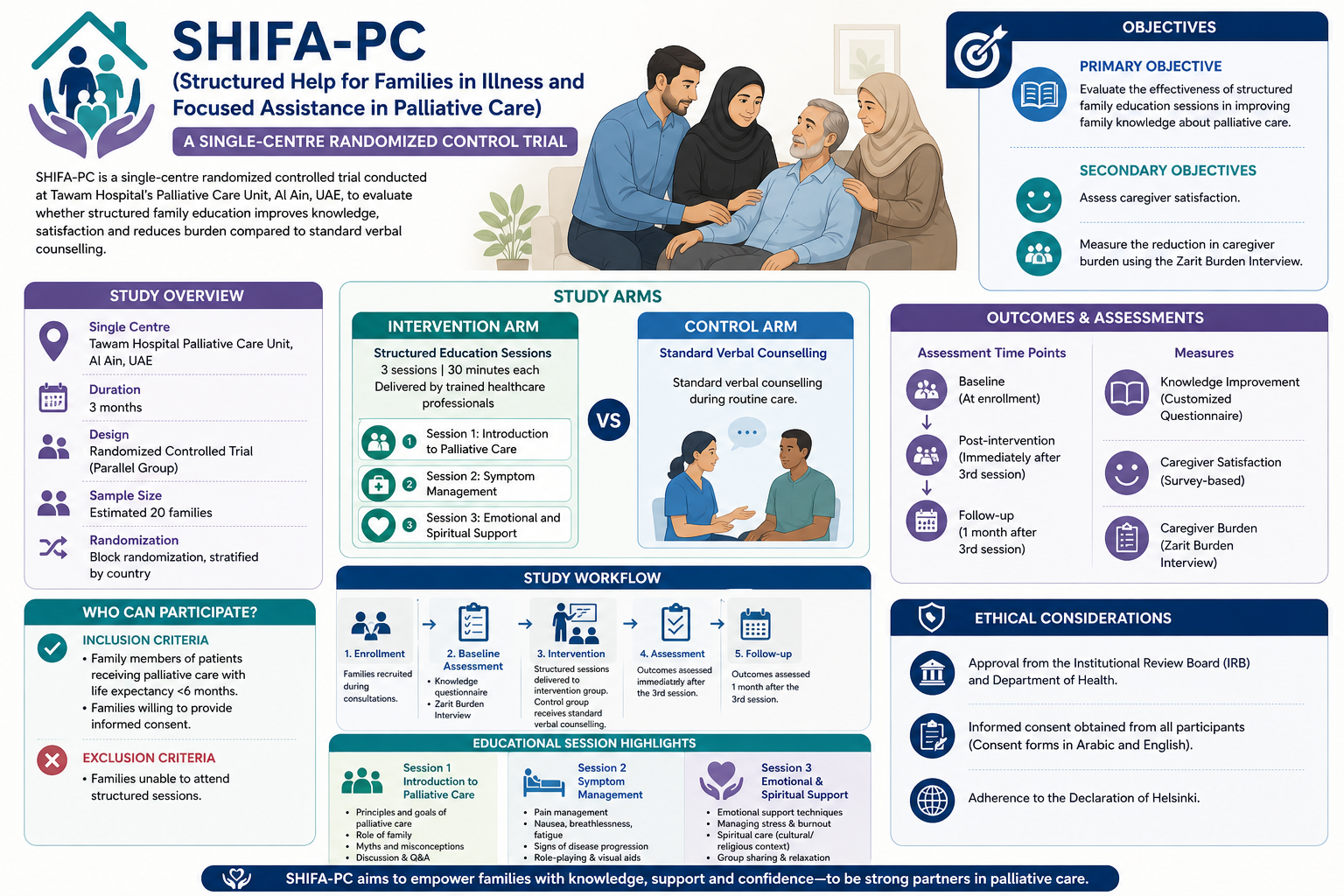
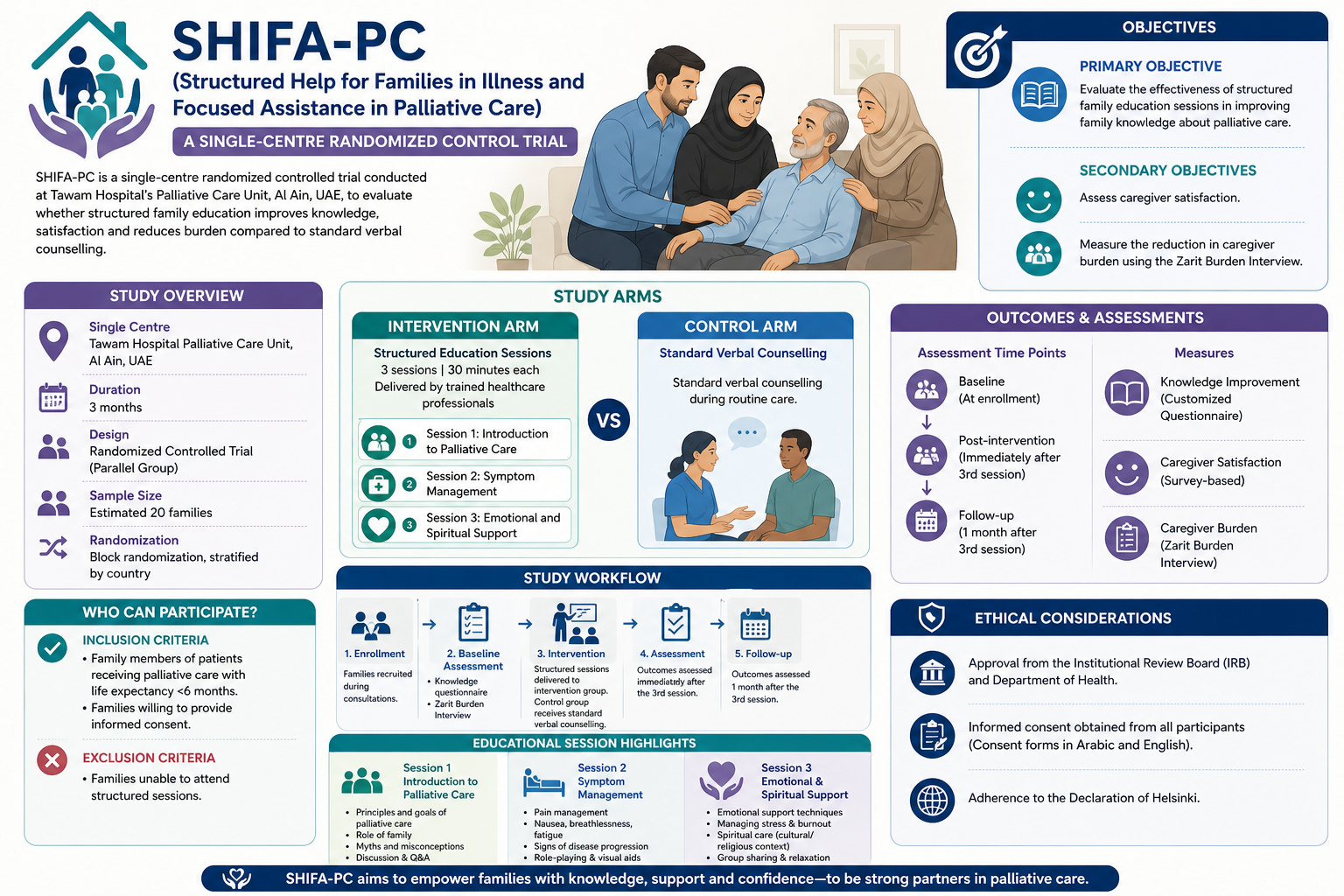
This is where the SHIFA-PC trial—Structured Help for Families in Illness and Focused Assistance in Palliative Care—takes a different approach.
Instead of relying solely on routine counselling, SHIFA-PC introduces a simple but powerful idea: what if we could guide families through palliative care in a structured, step-by-step way?
In this study, families are supported through three focused sessions. The first introduces the principles of palliative care—what it means, what it does, and what it does not mean. The second focuses on symptom management, helping families understand and respond to common challenges such as pain, breathlessness, or fatigue. The third addresses emotional and spiritual aspects, which are often the most difficult to discuss but deeply important in this phase of care.
The goal is not just to provide information, but to create clarity, confidence, and a sense of preparedness.
To understand whether this approach truly makes a difference, SHIFA-PC compares structured sessions with standard care, measuring outcomes such as caregiver understanding, satisfaction, and burden. By doing so, it shifts the focus from treating disease alone to supporting the people who stand closest to it.
At its heart, SHIFA-PC is not just about education, it is about recognising families as partners in care, and giving them the tools to navigate one of the most challenging journeys in medicine with greater understanding and support.

Follow the Topic
-
ISRCTN: The UK’s Clinical Study Registry
A primary clinical trial registry recognised by WHO and ICMJE that accepts studies involving human subjects or populations with outcome measures assessing effects on human health and well-being, including studies in healthcare, social care, education, workplace safety and economic development.