Enhancing Clinical Pharmacology Education: Insights from Medical Students in Saudi Arabia
Published in General & Internal Medicine, Pharmacy & Pharmacology, and Education

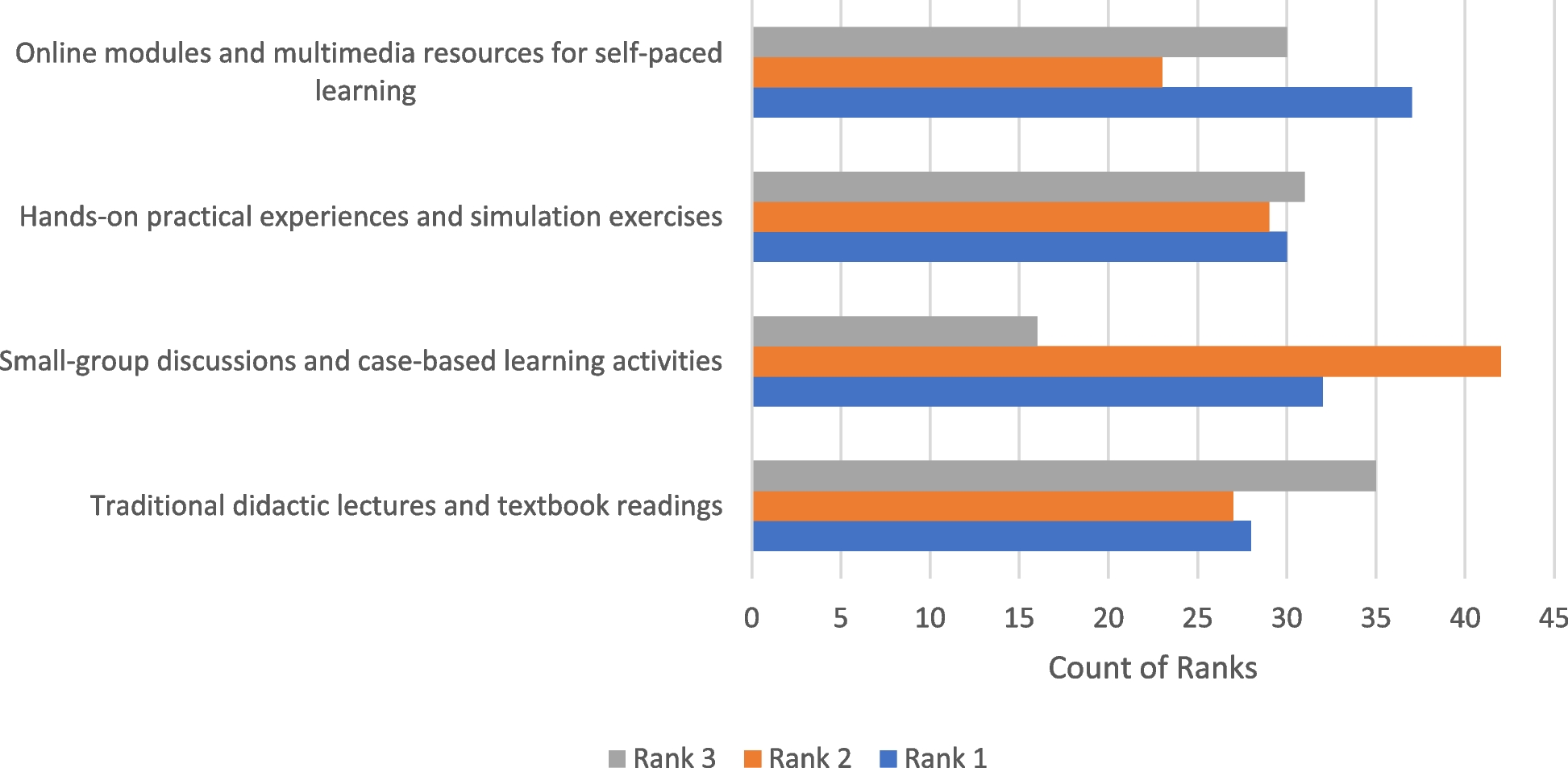

This study explores medical students’ preferences for teaching and learning clinical pharmacology at the University of Jeddah, Saudi Arabia. It identifies key strengths, challenges, and areas for improvement, highlighting the need for a more cohesive curriculum, interactive teaching methods, and better technology integration. Understanding these insights is crucial for enhancing clinical pharmacology education, ensuring students can effectively apply pharmacological knowledge in real-world medical practice.

Follow the Topic
-
BMC Medical Education
This is an open access journal publishing original peer-reviewed research articles in relation to the education and training of healthcare professionals. It welcomes studies on students and professionals across all levels of education; education delivery aspects; and other education-related topics.

Your space to connect: The Primary immunodeficiency disorders Hub
A new Communities’ space to connect, collaborate, and explore research on Clinical Medicine, Immunology, and Diseases!
Continue reading announcementRelated Collections
With Collections, you can get published faster and increase your visibility.
Lifelong learning and patient safety
BMC Medical Education is calling for submissions to our Collection, Lifelong learning and patient safety. As healthcare delivery becomes increasingly complex, shaped by biomedical advances, digital transformation, demographic shifts, and changing patient expectations, so does the potential for errors and adverse events. This phenomenon makes it essential to equip all healthcare professionals with training and tools to prioritize patient safety across different clinical environments.
Patient safety is a global health priority, with the World Health Organization identifying unsafe care as one of the leading causes of avoidable morbidity and mortality worldwide. While traditional models of competence, validated at a single point in time through licensure or certification, can be valuable, addressing this challenge requires a workforce that is continuously learning, adaptive, and equipped to respond to evolving patient safety threats. Lifelong learning in healthcare plays a pivotal role in fostering patient safety by making sure that healthcare professionals remain competent and adaptive to the best practices in the medical field. Outdated knowledge or skills in the medical field can directly jeopardize patient outcomes. Therefore, continuous professional development allows clinicians to update their professional competencies, reducing the risk of errors and adverse events.
This Collection invites research that examines how patient safety, which should be a professional expectation and ethical imperative at all stages of one’s career trajectory, can be enhanced through innovation in health professions education and training. Topics of interest include, but are not limited to:
• Tools and strategies for integrating patient safety into medical and nursing curricula
• Lifelong learning and continuing professional development (CPD) for patient safety and competence
• Simulation for teamwork, inclusion, and communication in diverse healthcare teams to enhance patient safety
• Interprofessional and collaborative safety culture
• Infection prevention and medication safety practices
• Learning from errors, near-misses, and real-time decision-making in clinical teams
• Strategies and policies for enhancing lifelong learning for patient safety
All manuscripts submitted to this journal, including those submitted to collections and special issues, are assessed in line with our editorial policies and the journal’s peer review process. Reviewers and editors are required to declare competing interests and can be excluded from the peer review process if a competing interest exists.
This Collection supports and amplifies research related to SDG 3: Good Health and Well-Being and SDG 4: Quality Education.
Publishing Model: Open Access
Deadline: Aug 18, 2026
Gamification and virtual reality in medical education and related healthcare professions - Part II
BMC Medical Education calls for submissions to our Collection, Gamification and virtual reality in medical education and healthcare professions - Part II. Fueled by the COVID-19 pandemic, digital teaching formats enhanced by interactive elements have received growing attention from higher education institutions worldwide. While the inclusion of game-based elements (‘gamification’) appears feasible in a number of contexts other than the healthcare sector, virtual reality appears to be especially appealing to medical educators. At the same time, given the potential cost, the use of gamification elements as well as sophisticated software and hardware in order to simulate clinical environments needs to be justified, particularly on the basis of concepts in learning psychology to suggest that these elements will be superior to traditional instructional formats or that they can help achieve learning outcomes that have not been covered in the past.
Most studies on gamification and virtual reality in medical education that have been published to date merely represent descriptions of innovations, and only a few present a thorough rationale for their use or present results of prospective, controlled effectiveness trials with meaningful endpoints (i.e., objective performance indicators linked to the intended learning outcomes). There is a lack of justification and clarification studies, and evaluations of innovations going beyond mere student satisfaction are needed. In order to be able to decide in favor or against the integration of game-based formats and virtual reality sessions in formal curricula, educators need to have access to original studies, reviews, and recommendations on when and how these elements should be employed.
Articles can cover the entire range of health-profession education, including but not limited to undergraduate and postgraduate medical education, nursing, midwifery, physiotherapy, pharmacology, public health, and related fields.
Key themes include:
- Application of concepts from learning psychology to medical education with a focus on gamification and/or virtual reality
- Comparison of traditional instructional formats to innovative approaches including gamification and/or virtual reality with regard to meaningful educational outcomes
- Cost-effectiveness assessments for innovative technology-based solutions compared to a traditional approach
- Constructive alignment between intended learning outcomes, use of gamification and/or virtual reality elements, and formative/summative assessments.
- Added value of gamification/virtual reality elements if used as a supplement to or as a replacement for traditional teaching; effects on curriculum structure and student workload
- Sustainability of new technologies with regard to computing power and waste management of virtual reality devices
All manuscripts submitted to this journal, including those submitted to collections and special issues, are assessed in line with our editorial policies and the journal’s peer review process. Reviewers and editors are required to declare competing interests and can be excluded from the peer review process if a competing interest exists.
This Collection supports and amplifies research related to SDG 3: Good Health and Well-Being.
Publishing Model: Open Access
Deadline: Jan 11, 2027


Please sign in or register for FREE
If you are a registered user on Research Communities by Springer Nature, please sign in