Exploring the possible link between e-cigarettes and erectile dysfunction
Published in Biomedical Research and General & Internal Medicine


Review Article
E-cigarettes and erectile dysfunction: biological mechanisms and research challenges
Why we decided to write this review
As researchers studying the health effects of cigarette and e-cigarette use, we noticed that discussions around vaping and sexual health were becoming increasingly common. Patients, clinicians, and even the general public often ask whether e-cigarettes are safer than conventional cigarettes when it comes to sexual function.
While the association between cigarette smoking and erectile dysfunction is well established, the evidence for e-cigarettes appeared fragmented and scattered across different fields, including vascular biology, endocrinology, toxicology, and public health. We wanted to bring these pieces together and evaluate what is actually known.
What we found
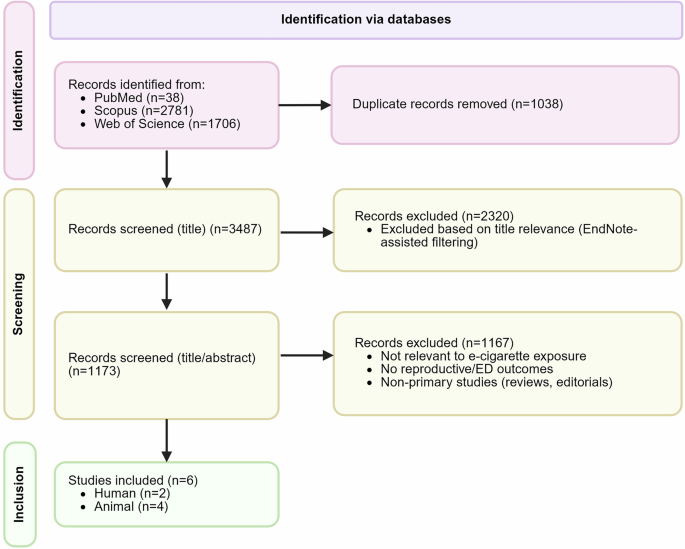
One of the most striking findings was how little direct human evidence currently exists. Despite the rapid growth of e-cigarette use worldwide, only a small number of human studies have investigated erectile dysfunction specifically.
The strongest available evidence comes from a large cross-sectional study reporting higher odds of erectile dysfunction among daily e-cigarette users. However, because these studies are observational and cross-sectional, they cannot determine whether e-cigarette use causes erectile dysfunction.
Following the biological clues
Although direct evidence remains limited, several biological pathways suggest that an association is plausible.
Many of these pathways converge on vascular health. Erectile function depends heavily on healthy blood vessels and adequate nitric oxide signalling. Experimental and acute human studies indicate that e-cigarette exposure may impair endothelial function, increase oxidative stress, reduce nitric oxide bioavailability, and promote inflammation.
We also reviewed evidence relating to autonomic nervous system activity, sleep disruption, hormonal regulation, and exposure to aerosol-derived toxicants such as aldehydes and metals. While the strength of evidence varies considerably between mechanisms, together they provide a biologically plausible framework that deserves further investigation.
The challenges in studying e-cigarettes
One of the biggest obstacles facing researchers is that e-cigarettes are moving targets.
Devices, nicotine concentrations, flavourings, and user behaviours continue to evolve rapidly. Many users also switch between products or use both cigarettes and e-cigarettes simultaneously. These factors make exposure assessment difficult and complicate attempts to identify long-term health effects.
As we discuss in the review, these challenges help explain why there are currently no longitudinal studies examining the relationship between e-cigarette use and erectile dysfunction.
Where research needs to go next
The most important next step is prospective longitudinal research. We need studies that follow users over time, carefully measure vaping behaviour, distinguish exclusive users from dual users, and evaluate erectile function using validated clinical tools.
Only then will we be able to determine whether the observed associations represent causation, identify potential dose-response relationships, and understand whether any effects are reversible after cessation.
Final thoughts
At present, the evidence linking e-cigarette use to erectile dysfunction remains preliminary. Nevertheless, the biological signals are strong enough to justify further investigation. As e-cigarette use continues to increase globally, understanding its potential effects on sexual health will become increasingly important for clinicians, researchers, and public health professionals alike.
Reference
Sailis AB, Noh MAM, Leo BF, Faruqu FN, Yow HY, Yee A, Sim MS. E-cigarettes and erectile dysfunction: biological mechanisms and research challenges. International Journal of Impotence Research. 2026. https://doi.org/10.1038/s41443-026-01300-0
Full text available here: link

Ardie Barry Sailis is a PhD candidate in Pharmaceutical Sciences at Universiti Malaya, specializing in toxicology, pharmacology, and molecular systems biology.
His research focuses on the toxicological effects of e-cigarette exposure, particularly on reproductive health.
He is also developing a conceptual program, Cellular Signaling as Dynamic Regulatory Circuits, which frames biological pathways as control systems.
Follow the Topic
-
International Journal of Impotence Research
This journal addresses sexual medicine for all sexes and genders as an interdisciplinary field.