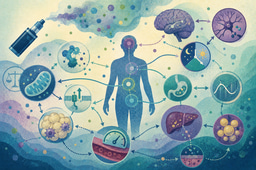
From AI Efficiency to Human Dignity: A Research Perspective on Magnifica Humanitas
Published in Arts & Humanities and Philosophy & Religion

Artificial intelligence is usually discussed in the language of performance: accuracy, speed, productivity, scalability, and cost reduction. These metrics matter. Researchers need tools that work, systems that are reliable, and methods that can improve discovery and care. But performance alone is not enough.
A system can be efficient while concentrating power. A model can be accurate while still reproducing exclusion. A platform can accelerate research while depending on opaque data extraction, hidden labor, and weak accountability.
This is why Pope Leo XIV’s Magnifica Humanitas is worth reading beyond its theological setting. The title is Latin for “magnificent humanity.” Although the encyclical is written from within the Catholic social tradition, the question it raises is one that researchers, clinicians, data scientists, and policy-makers should also take seriously. In the era of artificial intelligence, the text states that “ours is the pressing duty to remain profoundly human.”
That line captures the central challenge well.
What kind of human future are we building through AI?

As a Catholic student working in biomedical and pharmaceutical life sciences, I read Magnifica Humanitas not as a rejection of science, but as an invitation to ask whether our scientific tools remain accountable to the people they are meant to serve.
For me, the most useful contribution of the text is not that it rejects artificial intelligence. It does not, and this is important to emphasize. Instead, it asks us to think more carefully about the human purpose of AI. It insists that technology should remain ordered toward the human person, the common good, justice, and shared responsibility. That concern is directly relevant to biomedical science, digital health, pharmacology, public health, and other data-intensive fields.
Health research now depends heavily on large datasets such as clinical images, genomic sequences, electronic health records, epidemiological data, behavioral signals, and patient-generated information. These data can support diagnosis, drug discovery, precision medicine, public health surveillance, and better resource planning. Used responsibly, they can improve lives.
But they also raise questions that cannot be answered by technical performance alone. Who contributes the data? Who governs it? Who benefits from the models built from it? Can patients or communities understand, contest, or refuse secondary uses? Are low-resource populations treated as partners in knowledge production, or mainly as sources of extractable data?
This is where Magnifica Humanitas becomes useful as a research ethics lens. It frames data, algorithms, platforms, and technological infrastructure not only as private assets, but also as goods with social consequences. In global health research, that distinction matters. Data may be collected from underserved populations, while the resulting tools, patents, products, or academic prestige accumulate elsewhere. The ethical problem is not data sharing itself. The problem is asymmetry: data flow upward, benefits flow outward, and accountability often remains unclear.
A dignity-centered approach to AI should therefore begin before deployment. It should shape research questions, data collection, model development, validation, publication, and post-deployment monitoring. In practice, this means asking whether an AI system improves outcomes for underserved groups, or mainly optimizes services for populations already well represented in existing datasets. It means testing models across differences in geography, sex, age, disease burden, socioeconomic status, and health system capacity. It also means creating mechanisms for appeal when AI-supported decisions affect access to care, insurance, employment, or public services.
I'm not alone with this perspective as it aligns with existing global AI ethics frameworks. The World Health Organization emphasizes autonomy, safety, transparency, accountability, equity, sustainability, and public benefit in AI for health. UNESCO’s Recommendation on the Ethics of Artificial Intelligence similarly places human dignity, human rights, fairness, transparency, and human oversight at the center. Magnifica Humanitas adds a distinct moral vocabulary to this same conversation. It reminds us that AI should be evaluated not only by what it can do, but by what kind of society it helps construct.
This means AI governance cannot be left only to technical teams or private actors. It requires interdisciplinary oversight involving scientists, clinicians, ethicists, legal scholars, patients, communities, and policy-makers. Technical expertise is essential, but it is not sufficient when AI systems affect rights, health, labor, access, and social trust.
As AI companies compete to release faster, more capable, and more profitable tools, ethical reflection can easily fall behind. The pace of innovation often moves faster than the institutions, regulations, and public understanding needed to guide it responsibly.
Another important issue is labor. AI is often presented as if it were immaterial intelligence, floating above the world of ordinary work. In reality, it depends on material and human infrastructures: data annotation, model training, content moderation, semiconductor production, mineral extraction, server maintenance, and energy consumption. A responsible research culture should account for these hidden layers. Ethical AI cannot be limited to model outputs. It must also include supply chains, working conditions, environmental impact, and the distribution of benefits.
For health and biomedical research, several practical steps follow:
First, ethics review should expand beyond individual consent to include social, institutional, and population-level harms. Second, data governance should include transparency, benefit-sharing, and meaningful participation by affected communities. Third, AI validation should include equity audits, not only aggregate performance metrics. Fourth, institutions should require explainability, contestability, and human responsibility when AI affects clinical or public decisions. Fifth, journals and funders should ask whether AI research has considered labor, environmental, and global justice implications.
These steps are not barriers to innovation. They are conditions for trustworthy innovation. Scientific progress loses moral credibility when it treats people as data sources, labor inputs, risk categories, or passive recipients of decisions made elsewhere.
My concern is not that AI is becoming too powerful for research, but that research culture may become too comfortable measuring progress only by speed, scale, and output. This does not mean opposing science or technology. Catholic teaching recognizes science and technology as precious resources when they serve the human person and promote integral development for all (CCC 2293). The ethical question is therefore not whether research should use AI, but whether AI is being used in ways that protect human dignity, justice, and the common good.
The central lesson I take from Magnifica Humanitas is that technological progress is not self-justifying. AI can support research, improve diagnosis, accelerate drug discovery, and expand access to knowledge. But without clear ethical and institutional safeguards, it can also intensify exclusion, concentrate power, and reduce human beings to profiles or predictions.
For research communities, the question is not simply whether AI should be used. The more important question is: under what conditions does AI remain genuinely human-centered?
Human dignity is not an obstacle to scientific progress. It is the standard that makes progress worth pursuing.
Ardie Barry Sailis
May 29, 2026

Ardie Barry Sailis is a PhD candidate in Pharmaceutical Sciences at Universiti Malaya, specializing in toxicology, pharmacology, and molecular systems biology.
His research focuses on the toxicological effects of e-cigarette exposure, particularly on reproductive health.
He is also developing a conceptual program, Cellular Signaling as Dynamic Regulatory Circuits, which frames biological pathways as control systems.