Every research paper has two versions
Published in Computational Sciences
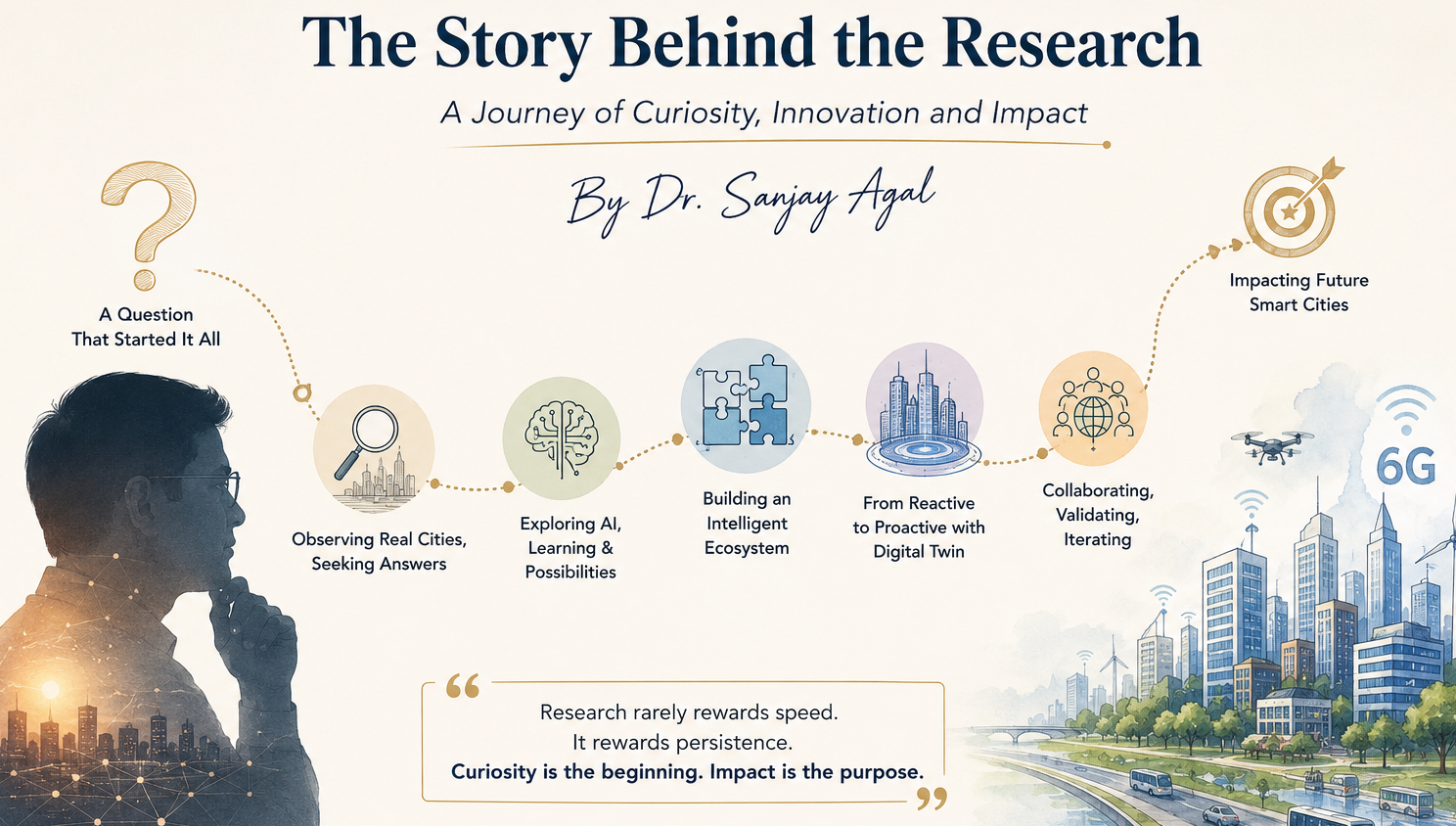
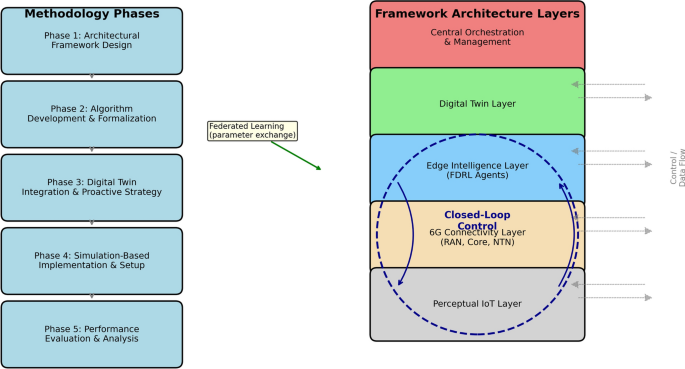

Every research paper has two lives. One is the published version that readers see structured into sections, enriched with figures, supported by equations, and concluded with carefully interpreted results. The other is invisible. It exists in the countless hours of thinking, questioning, rewriting, and doubting. It is built on curiosity rather than citations, and persistence rather than publications. This paper belongs to that invisible story. While it introduces a machine learning enabled IoT framework for intelligent resource management in 6G-enabled smart cities, for me it represents something far more personal—a journey of asking questions that refused to leave my mind.
I have always believed that the most meaningful research begins not in a laboratory, but in observation. Every day I watched technology evolve at an extraordinary pace. Cities were becoming increasingly connected, artificial intelligence was becoming more capable, and communication networks were moving steadily toward the era of 6G. Yet despite these remarkable advances, many urban systems still waited for problems before taking action. Traffic management reacted after congestion appeared. Emergency communication improved only after failures occurred. Resource allocation responded to demand instead of predicting it. The contradiction fascinated me.
"An intelligent city should not merely react to the future it should be prepared for it."
That single thought became the seed from which this entire research grew.
As I immersed myself in the literature, I realized that brilliant ideas already existed everywhere. Researchers had developed powerful reinforcement learning algorithms, privacy-preserving federated learning models, sophisticated Digital Twins, and advanced edge computing architectures. Each technology was impressive on its own. However, they often worked like individual instruments playing different melodies. I wanted to know what would happen if they performed together as an orchestra. Could they create a truly autonomous system capable of learning, predicting, adapting, and optimizing simultaneously?
Finding that answer proved much harder than I expected. The first architectural designs looked elegant until I began testing their practical implications. Improving one component often weakened another. Increasing intelligence sometimes reduced scalability. Strengthening optimization occasionally affected privacy. There were days when entire sections of the framework had to be discarded and redesigned from the beginning. Those moments were frustrating, yet they became the most valuable part of the journey because they reminded me that research is not about protecting ideas it is about improving them.
"The first solution is rarely the best solution. Research is the courage to rewrite your own thinking."
Slowly, the framework started taking shape. Federated Deep Reinforcement Learning emerged as the learning engine capable of making distributed decisions while preserving data privacy. The Digital Twin evolved into far more than a simulation environment; it became a predictive companion capable of testing future decisions before they reached the real world. Suddenly, the framework was no longer reacting to network events it was anticipating them. Watching this transition from reactive intelligence to proactive decision-making remains one of the most satisfying moments of my academic career.
Throughout this work, I repeatedly returned to one personal belief that has guided my research for years. Artificial intelligence should never exist merely to improve benchmark scores or produce better graphs. Its true purpose is to solve meaningful problems that improve people's lives. Every optimization algorithm should ultimately make systems more reliable. Every predictive model should contribute to safer infrastructure. Every intelligent network should make cities more sustainable, resilient, and prepared for the unexpected.
"Technology earns its value not by becoming smarter, but by making society stronger."
Of course, every research journey has moments when confidence quietly disappears. There were simulations that produced disappointing outcomes, hypotheses that failed despite weeks of effort, and revisions that seemed endless. More than once I wondered whether the framework had become too ambitious. Yet every obstacle reinforced a lesson I have learned repeatedly throughout my academic career: persistence is often a more valuable research skill than brilliance.
"Research rarely rewards speed; it rewards those who refuse to stop asking questions."
One aspect of this journey that I deeply value is collaboration. Scientific progress is never built in isolation. Constructive discussions, thoughtful criticism, and shared academic commitment transformed many early ideas into stronger contributions. My co-author's insights added depth to the work, and together we continually challenged each other's assumptions until the framework reflected not only technical innovation but also practical relevance. Research, at its finest, is a conversation between curious minds rather than a competition between individuals.
Looking back today, I realize I remember very few of the long nights spent writing equations or refining simulation parameters. Instead, I remember the excitement of discovering a connection that had previously gone unnoticed, the satisfaction of seeing an experiment finally validate a hypothesis, and the quiet confidence that comes when an idea gradually matures into knowledge. Those moments remind me why I chose research as a lifelong pursuit.
This publication is not the destination. It is another milestone on a journey that continues to evolve with every new question. Technologies such as artificial intelligence, Digital Twins, federated learning, and 6G will undoubtedly transform the future, but they will also create new challenges waiting to be explored. I hope this work contributes, even in a small way, to that future by encouraging researchers to think beyond individual algorithms and toward intelligent ecosystems that serve society.
As I close this story, one thought remains closest to my heart.
"Every published paper is simply curiosity that survived every obstacle placed before it."
If readers remember anything beyond the algorithms, architectures, or performance metrics presented in this work, I hope they remember that research is ultimately a deeply human journey. Behind every figure lies a failed experiment, behind every equation lies a difficult question, and behind every publication lies a story of persistence. This paper is my story a story of curiosity transformed into research, research transformed into knowledge, and knowledge shared with the hope of building a smarter, more sustainable world.
—Dr. Sanjay Agal
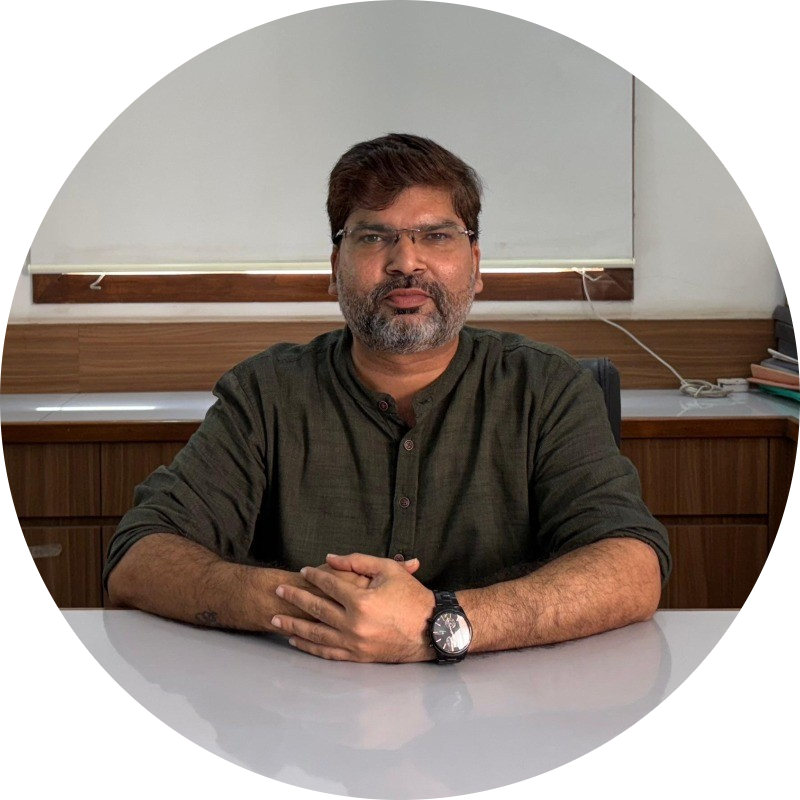
I am Dr. Sanjay Agal, an educator, researcher, and academic leader dedicated to advancing the frontiers of knowledge and shaping the future of engineering education. Currently, I serve as Professor and Head of the Department of Artificial Intelligence and Data Science at Parul University, Vadodara, India. My professional journey also includes serving as the Principal of Dr. V. R. Godhania College of Engineering & Technology, Porbandar an opportunity I was formally endorsed for by Gujarat Technological University (GTU) in 2023.
My career has been guided by a deep commitment to innovation-driven learning and impactful research. Over the years, I have authored sixteen books and published numerous research papers in reputed international journals. I have also secured several patents, reflecting my sustained efforts to bridge theoretical understanding with meaningful real world applications.
With a vision to inspire and empower the next generation of thinkers, innovators, and problem solvers, I strive to foster an environment where curiosity, creativity, and academic excellence thrive. Whether through teaching, research, or academic leadership, my mission remains the same: to contribute to a transformative educational ecosystem that benefits students, faculty, and society at large.
Follow the Topic
-
Discover Internet of Things
This is an open access, community-focussed journal publishing research from across all fields relevant to the Internet of Things (IoT), providing cutting-edge and state-of-art research findings to researchers, academicians, students, and engineers.

Related Collections
With Collections, you can get published faster and increase your visibility.
Blockchain, Differential Privacy, and Federated Intelligence for Secure Internet of Things Systems
The Internet of Things (IoT) has revolutionised modern society by connecting billions of devices across various sectors, including smart homes, healthcare, transportation, and industrial systems. However, this connectivity introduces critical security and privacy challenges. This Topical Collection focuses on three transformative technologies—blockchain, differential privacy, and federated intelligence—that address these challenges.
Blockchain provides decentralized, tamper-proof infrastructures for IoT data integrity and device authentication. Differential privacy offers mathematically rigorous privacy guarantees for IoT data analytics while preserving utility. Federated intelligence enables collaborative machine learning across IoT devices without requiring centralization of sensitive data.
This collection aims to showcase cutting-edge research that integrates these technologies, addresses implementation challenges such as energy efficiency and scalability, and explores real-world applications in smart cities, Industrial IoT, healthcare, and vehicular networks. It will serve as a comprehensive resource for researchers and practitioners developing secure, privacy-preserving IoT ecosystems.
This Collection supports and amplifies research related to SDG3, SDG 9 and SDG11.
Keywords: Blockchain for IoT; Differential Privacy; Federated Learning; IoT Security; Privacy-Preserving IoT; Distributed Ledger Technology; Edge Intelligence; Secure Smart Systems; Federated Intelligence; IoT Data Privacy
Publishing Model: Open Access
Deadline: Dec 09, 2026
Emerging Frontiers in Technological Integration for Health, Agriculture, and Urban Sustainability
The goal of this Topical Collection is to investigate the novel ways that the Internet of Things (IoT), artificial intelligence (AI), machine learning (ML), cyber-physical systems, CPS, smart cities, 5G, and Internet of Vehicles (IoV) can be used to address problems and promote sustainable development in the fields of urban sustainability, health, and agriculture. The aim of this showcase is to provide innovative research, techniques, and case studies that illustrate how technology integration can significantly improve human well-being, food security, and environmental sustainability.
This Topical Collection is significant because it has the potential to further research, spur innovation, and motivate action in support of sustainable development objectives. This Topical Collection can accelerate the integration of diverse developing technologies and their applications for smart cities by uniting interdisciplinary viewpoints and presenting best practices. Sub-themes or topics mapping to the scope of the Topical Collection proposal include but are not limited to the following:
• 5G and IoT Integration and Interoperability and Standards in IoT
• Agri-Tech Solutions for Sustainable Agriculture & Precision Agriculture
• AI and Machine Learning in Cyber-Physical Systems
• AI Enabled Smart Health Solutions
• Blockchain for IoT Security and Trust
• Edge Computing in IoT Systems
• Health and Wellness in Urban Environments
• Intelligent Transportation Systems using Internet of Vehicles (IoVs) and Vehicular Networks
• IoT and AI based Smart Home Innovations for Health and Comfort
• IoT and AI Enabled Smart City Infrastructure and Urban Development
• Medical Technology Advancements Using IoT and AI
• Pervasive and Ubiquitous Computing
• Security and Privacy in IoT Networks
• Sensors and Devices for IoT and CPS
• Smart Environmental Monitoring and Conservation using IoT sensors, satellite imagery, and data analytics
• Sports Science and Performance Enhancement using Data Analytics and AI
• Virtual Reality, Augmented Reality and Mixed Reality in Industry
Keywords:
Internet of Things (IoT); Artificial Intelligence (AI); Emerging Technologies; Smart Cities; Cyber Physical Systems
Publishing Model: Open Access
Deadline: Sep 30, 2026