Evolution In The Lab: Anti-Inflammatory Peptide Development Inspired By Ticks
Published in General & Internal Medicine, Immunology, and Anatomy & Physiology


The concept: can we stop harmful immune cells from reaching inflamed tissues?
At the start of my DPhil (traditionally called a PhD, but called a DPhil at the University of Oxford), I wanted to learn how we could block harmful immune cells from attacking healthy tissue. This would have to be specific. Otherwise, you would also suppress parts of the immune system that are needed for fighting infections.
Our immune systems are incredibly complex, and they rely on getting immune cells to the right place at the right time. When you have an infection or an injury, your body releases small signalling molecules called chemokines at the damaged site. These signalling molecules act as signposts for immune cells, guiding them to where they are needed. Chemokines are critical for immune function and help ensure that immune cells travel to the right site at the right time to do their job. However, in inflammatory diseases, this system can be hijacked. This causes harmful immune cells to travel to and attack healthy tissue. For example, a type of immune cell called a T cell can contribute to tissue damage and disease in type 1 diabetes, rheumatoid arthritis, and cardiovascular diseases, including atherosclerosis.
If we could prevent these harmful T cells from travelling to and attacking healthy tissue, we could treat these inflammatory diseases in a new way. But the science is not that simple! The hard part is that the human body has dozens of chemokines with overlapping functions, and damaged tissues can produce dozens of them at one time. Researchers have previously tried targeting chemokines in inflammatory diseases with limited success. This is because most treatments target only one or two chemokines. We needed a way to target multiple chemokines.
Tick-inspiration!
An unlikely source for a solution to our problem came from the tick. Ticks are blood-sucking parasites that can remain attached to their hosts for days to feed. To do so, ticks have evolved clever ways to evade their hosts’ immune system. Their saliva contains special proteins called evasins, which target chemokines and prevent their activity. This means chemokines can’t signal immune cells to travel to the tick's bite site, masking it from the immune system. Incredibly, evasins can bind to dozens of chemokines at once.
Our laboratory previously used a small section of an evasin protein from one family of evasins and found that it could inhibit several chemokines. This small section of the evasin protein is called a peptide. My project began by investigating another family of evasins, and I first tried to determine whether it could produce chemokine inhibitors with different properties.
The first discovery
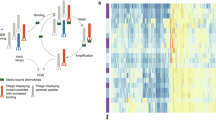
I started with 29 different tick evasin proteins. We split these large proteins into thousands of peptides and identified the peptides that bound multiple chemokines using a technique called phage display, which allowed us to screen thousands of peptides at once.
From this screening, one peptide stood out: EB429. Excitingly, EB429's activity was confirmed using human T cells. I completed experiments in which T cells migrated across a membrane toward chemokines. However, when EB429 was included, fewer T cells migrated, showing that EB429 inhibits chemokine-induced migration. Importantly, these experiments also showed that the EB429 peptide could inhibit multiple chemokines. I remember being in the first year of my DPhil, watching this data come through on our specialist cell-counting machine, a flow cytometer, and squealing with excitement! A senior scientist in the lab soon told me not to get too excited until I saw that the data repeated a few times, which is sage advice. The data did repeat, and I squealed again.
Next steps
Finding EB429 was only the beginning. We wanted to make it work better! We systematically changed each building block and identified changes that improved its ability to work against several chemokines. We then combined the most promising changes in every possible way. This produced 3,777 different possible versions of the original peptide. These phage display libraries were very difficult to make, and I struggled for many months to ensure that as many of these mutants as possible appeared in our library for screening.
We wanted to identify mutant peptides that could inhibit multiple chemokines at once, to target the chemokine network, not just one specific target, as is common in drug discovery. Using a process we termed network-level directed evolution, we tested these peptide mutants and selected those that performed best across dozens of chemokines.
Unfortunately, several peptides that looked very promising turned out to be toxic to cells, so we had to discard them. My family and friends can attest to how stressful this was, but good science requires patience and perseverance.
Finally! One peptide appeared very promising, was not toxic to cells, and was much better than the original EB429 peptide at inhibiting chemokine-induced T cell migration. This peptide was named EB429CM1629.
Unexpected results
We had set out to identify a mutant peptide that was a better chemokine inhibitor, but something interesting had happened alongside this.
EB429CM1629 blocked chemokines that attracted T cells, but did not impact the migration of another immune cell called a monocyte. This was a completely new result for us, and at first I was disappointed that the mutant didn’t work as intended! But targeting T cells and leaving other immune cells unaffected could be very useful in certain inflammatory diseases. By selectively blocking chemokines that attract T cells, we could potentially target harmful immune responses without unnecessarily interfering with the broader immune system. This was the real turning point of the project.
We then created mixtures of chemokines found in tissues affected by type 1 diabetes, rheumatoid arthritis, and atherosclerosis. Some contained more than 40 different chemokines. We did this to better mimic the chemokine combinations found in disease, rather than testing chemokines individually. Despite this complexity, our evolved peptide EB429CM1629 still reduced T cell migration while leaving monocyte migration largely unaffected.
Trying to understand why
We used computer modelling to explore how our peptides might interact with chemokines. The models suggested that the peptides bind to regions that chemokines normally use to interact with immune cells. Essentially, the peptide gets in the way, preventing the chemokine from delivering its message.
The models also suggested a difference between the two peptide families: EB429CM1629 and the previously identified peptide, which could inhibit chemokines that attract multiple types of immune cells. The parts of our newer peptides that appeared important for binding were clustered more closely together in three-dimensional space. In the older family, they were more spread out. Experiments in which we altered these parts of the peptides supported their importance for activity.
We do not yet know whether this structural difference causes the selectivity we observed. That will require further experiments. But we think this suggests that the molecule we choose at the start of laboratory evolution may help determine the biological properties that emerge at the end of the process.
What I learnt from the project
I truly loved my DPhil, and while research papers make science look more orderly than it is, this project had many twists and turns. I built troublesome libraries, narrowed down thousands of candidate peptides, tested molecules that looked promising but failed, and had results that changed the project's direction. The most interesting finding was not something we had deliberately engineered at the outset – T cell selectivity was simply something we discovered. Science is challenging, difficult, and requires resilience. But I hope this unique peptide discovery story shows how perseverance can be rewarded.
Follow the Topic
-
Communications Biology
An open access journal from Nature Portfolio publishing high-quality research, reviews and commentary in all areas of the biological sciences, representing significant advances and bringing new biological insight to a specialized area of research.