Experience of the Muslim Community Resistance During COVID-19 in Moluccas, Indonesia
Published in Philosophy & Religion
Explore the Research

27%20JSSH-8473-2021.pdf?utm_campaign=related_content&utm_source=HEALTH&utm_medium=communities
Pertanika J. Soc. Sci. & Hum. 30 (4): 1991 - 2011 (2022)
This article presents an interpretation of the religious attitudes and experiences of resistance expressed by Muslim communities in Moluccas, Indonesia during the COVID-19 pandemic. The study examines how the subjective experiences of these communities have shaped the meaning and motives behind their resistance to pandemic-related policies and health protocols. The research draws on a phenomenological perspective to understand how the communities' religious beliefs, communication with authorities, and local religious leadership have influenced their responses. The findings indicate that resistance has taken various forms, including violations of health protocols, and has been driven by factors like fatalistic and theocentric interpretations of the pandemic. The article highlights the importance of understanding the subjective experiences and meaning-making processes of religious communities in developing effective public health management strategies. 1. The article presents an interpretation of the religious attitudes and experiences of resistance expressed by Muslim communities in Moluccas, Indonesia during the COVID-19 pandemic.2. The study examines how the subjective experiences of these communities have shaped the meaning and motives behind their resistance to pandemic-related policies and health protocols.3. The research draws on a phenomenological perspective to understand how the communities' religious beliefs, communication with authorities, and local religious leadership have influenced their responses.4. The findings indicate that resistance has taken various forms, including violations of health protocols, and has been driven by factors like fatalistic and theocentric interpretations of the pandemic.5. The article highlights the importance of understanding the subjective experiences and meaning-making processes of religious communities in developing effective public health management strategies.
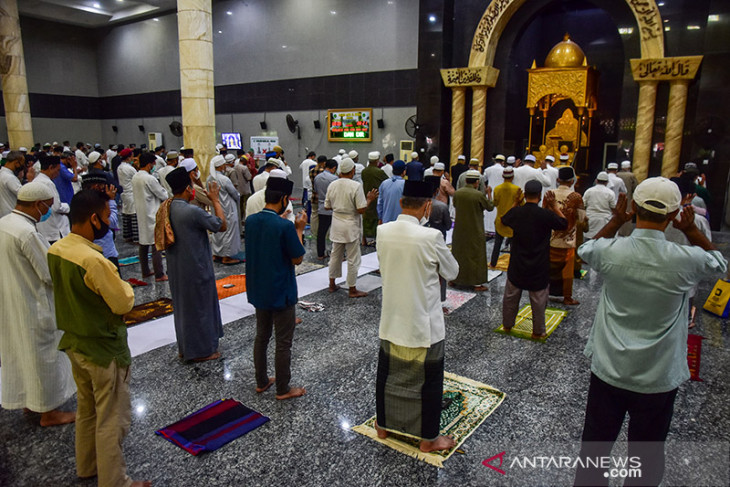
The public and the religious community commit several violations of health protocols during the pandemic. There are still many violations of the protocol to resist COVID-19 countermeasures. Studies show that resistance can be expressed openly (visible) and closed (invisible) social space by holding mass activities that do not meet the standards of COVID-19 health protocols. The state of resistance is expressed secretly through statements describing mindsets, life attitudes, and beliefs. Meanwhile, the resistance factor can be seen in religious understanding and the influence of religious leaders. Some religious communities are driven to resist COVID-19 protocols for various motives: distrust, lack of fear, the desire to leave matters of life and death in the hands of Allah, hoaxes and information uncertainty, political polarization, minor adaptation, and cultural shock. These motives are grouped as the “in-order-to” motive, to use Schutz’s (1972) terminology, because “motive” refers to the religious communities’ subjective experiences, while the “in-order-to” motive is oriented toward resistance during the COVID-19 pandemic. The process of interpreting religious communities occurs because of the relationship between each element of their resistance; they interpret COVID-19 as related to panic, anxiety, and fear. It is necessary to embrace and involve traditional religious leaders in overcoming COVID-19, as religious leaders are in direct contact with their followers. Existing studies have shown that religion plays an important role in COVID-19 countermeasures. However, this research shows that religion and its devotees, if not managed properly, will develop resistant attitudes toward these countermeasures.
This article has discussed several aspects of the subjective experiences of Muslim communities in Moluccas, Indonesia, particularly their resistance to health protocols during the COVID-19 outbreak. However, further research needs to be carried out to explore other elements, one of which is the communication experiences of religious resistance to policies and the pandemic health protocols. The cooperation of all parties is needed; only by accommodating various elements in society in an integrated manner through the involvement of religious and community leaders from central and regional, local, and national levels can the COVID-19 response be thoroughly coordinated throughout a society.

Communication Sciences, Media Studies, Culture Studies, Ritual Communication, Health Communication, and Journalism.
Follow the Topic
Introducing: Social Science Matters
Social Science Matters is a campaign from the team at Palgrave Macmillan that aims to increase the visibility and impact of the social sciences
Continue reading announcement