Fibroids: The Reality Behind the Diagnosis
Published in Sustainability and Public Health

This Q&A accompanies Fibroids: The Research Behind the Disparity
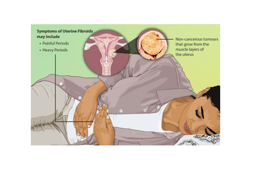
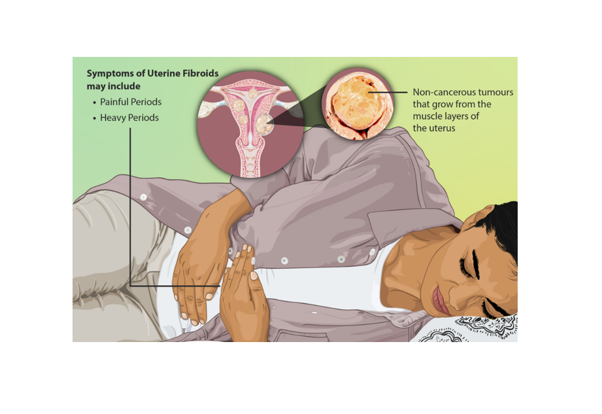
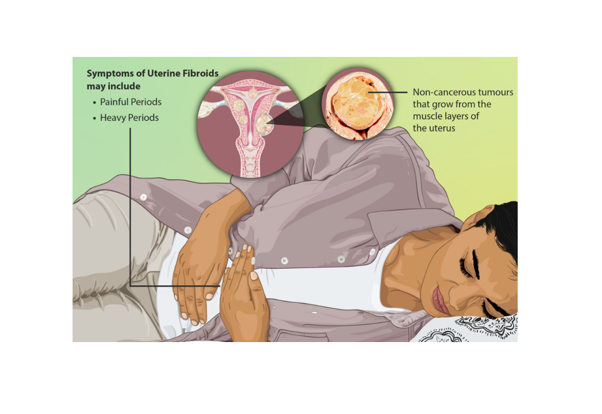
Cover image: Depiction of a lady who has Uterine Fibroids MyUpchar CC BY-SA 4.0
Can you tell us about your experience of first discovering that you had fibroids, and what led you to seek medical help?
I first discovered I had fibroids after a missed miscarriage. I was having scans to check whether the miscarriage had cleared when I was told I had a 5 cm fibroid. At that point, I had no symptoms or other problems, so I had no need to seek help. However, I later returned to the doctor after experiencing unbearable cramps at different points in my cycle, outside of my period.
What has living with fibroids been like for you day to day?
I experience constant back pain and pelvic pressure, and my lower abdomen protrudes. The fibroid is now 10 cm and presses on my bladder, meaning I need to use the bathroom frequently. I work in the fitness industry, and the changes to my body have made me more self-conscious. Due to the fibroid’s size, type and location, my womb has enlarged to the size typically seen at 14 weeks of pregnancy.
How have fibroids affected your periods and your physical health? How do they affect your quality of life?
I’m constantly tired and have become self-conscious about my appearance. My periods are painful and heavy on the first day, although they tend to be quite short overall.
What was your experience of getting a diagnosis? Did you feel that your symptoms were taken seriously by healthcare professionals?
Initially, I felt that my concerns were taken seriously. However, miscommunications with hospital staff along the way meant there was no follow-up or discussion about surgery, further delaying the process of exploring my options and accessing treatment.
How have fibroids affected your emotional and mental wellbeing? How have you learned to cope with these challenges?
I worry that I won’t be able to shrink or remove the fibroids. I’m also concerned about the implications of surgery and how recovery could affect my body, particularly as I work in an industry where physical fitness is a requirement.
What treatment have you received, and what has your experience of treatment been like?
I was prescribed Ryeqo, but only for three months. Ryeqo is a hormonal medication designed to control fibroid symptoms by lowering the hormones that help fibroids grow. It can reduce heavy menstrual bleeding, pelvic pain and pressure, and may also shrink fibroids. However, it doesn't remove them, and symptoms can return after stopping treatment. Once I stopped taking it, my symptoms returned. Ryeqo reduced the pelvic pressure and pain, but the menopausal side effects were really difficult to manage. It alleviated one problem while creating others.
Have you experienced challenges in accessing the care you need? For example, have waiting times, cost, access to specialists, work commitments, cultural attitudes or difficulties being believed or listened to affected your treatment? How do you think these experiences relate to SDG 3 (Good Health and Well-being) and SDG 10 (Reduced Inequalities)?
Waiting times have been very long. It took nearly six months to see a consultant, and almost as long to be seen again due to miscommunications. I recently found it really upsetting to be asked if I was sure about my symptoms, as though I hadn’t been living with them myself.
The doctor who discussed my MRI results with me hadn’t been informed that the scan was intended to provide a better understanding of the fibroid and help determine the most appropriate surgery. When I tried to explain this, she was extremely dismissive and told me that surgery wouldn’t solve the problem. She then prescribed tranexamic acid, which suggested that she hadn’t taken the time to read my notes or listen to me, as I was taking Ryeqo, which had stopped my periods.
Initially, I felt listened to and taken seriously, but I can no longer say the same. My experience has left me feeling that my health and well-being are not being adequately considered.
What would you like healthcare professionals to do differently, and what information or support do you wish had been available when you were first diagnosed? How does this connect to SDG 5 (Gender Equality) and ensuring women's health is taken seriously?
I would like healthcare professionals to show greater empathy and understand the significant impact fibroids can have on people’s lives.
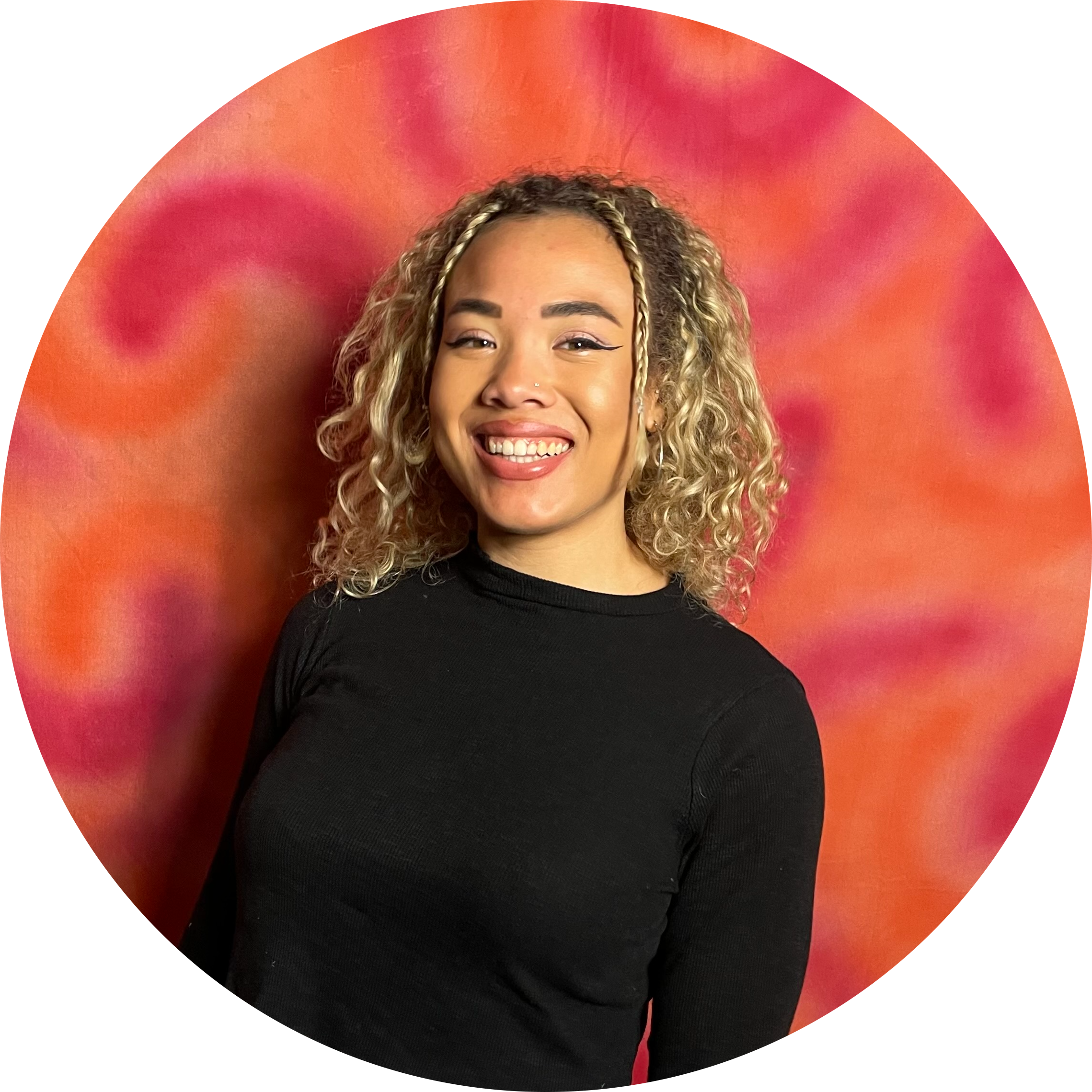
India completed her BA in Classics (Latin and Greek) in 2019, graduating with First Class honours. She then pursued a postgraduate MA, which she completed in 2020 with Distinction. In 2021, she joined Springer Nature as an Editorial Assistant, progressing to Production Editor in 2022, an Associate Publisher in 2023 and Publisher in 2025. She is also the UK Global Chapter Lead for Springer Nature's Black Employee Network (SN BEN).
Follow the Topic
📢 Introducing: # Mental Health
Mental Health is a Topic created to increase visibility and impact of research in this area and facilitate exchange amongst researchers.
Continue reading announcement