Finding the missing link in glioblastoma's signaling network
Published in Cancer, Neuroscience, and Cell & Molecular Biology

Glioblastoma remains one of the most lethal human cancers despite decades of intensive research. Although many of its major oncogenic drivers have been identified, understanding how these molecules cooperate to sustain tumor growth remains an important challenge. Increasingly, it has become clear that glioblastoma cannot be explained by individual signaling pathways acting in isolation. Instead, tumor progression emerges from highly interconnected molecular networks that support the survival and plasticity of resistant tumor cells.
Our study began with a question arising from our previous work on the Oncostatin M receptor (OSMR). We previously established that OSMR is a central regulator of glioblastoma stem-cell biology and is known to cooperate with the constitutively active receptor tyrosine kinase EGFRvIII, one of the most common oncogenic alterations in glioblastoma. Together, these receptors activate signaling programs that promote tumor maintenance and therapeutic resistance. However, the molecular mechanisms that coordinate their interaction as well as OSMR’s diverse functions remained poorly understood.
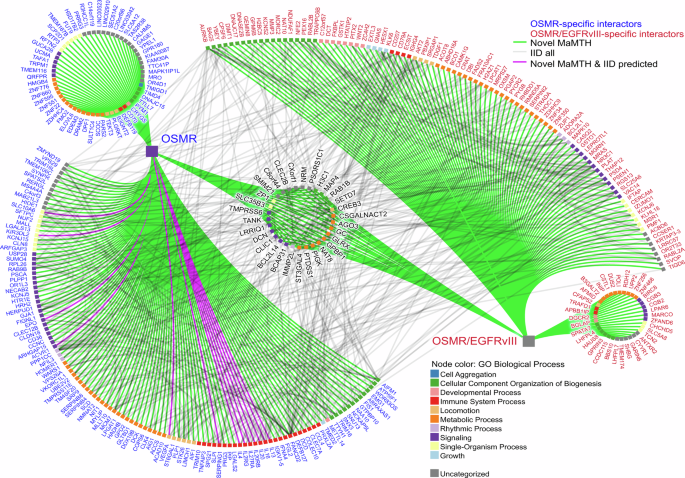
We hypothesized that OSMR signaling might depend on previously unrecognized protein partners capable of organizing oncogenic signaling complexes. To address this possibility, we first employed Mammalian Membrane Two-Hybrid High-Throughput Screening (MaMTH-HTS) to systematically define the OSMR interactome. Rather than focusing on a single candidate pathway, we adopted an unbiased strategy designed to capture the broader molecular landscape surrounding OSMR. Analysis of MaMTH data presented a long-standing challenge for us, and the counter-screening in glioma cells took several years of work, given that the screen was done in HEK293T cells, a system not closely relevant to glioblastoma cell characteristics or even glioma stem cell behaviour.
Following intense experimentation on hundreds of screened interactions, however, one candidate repeatedly emerged from the analysis: The chloride intracellular channel 1 (CLIC1).
At first glance, CLIC1 was an unexpected finding. The protein is primarily known for its role in ion transport and membrane conductance and has been implicated previously in glioblastoma stem-cell maintenance. However, our results suggested that its contribution to glioblastoma biology extends well beyond its known roles as an ion channel in cancer.
Through a combination of biochemical, electrophysiological, molecular, and in vivo approaches, we found that CLIC1 physically associates with both OSMR and EGFRvIII and stabilizes the OSMR/EGFRvIII signaling complex, and sustains downstream oncogenic signaling. Genetic disruption of CLIC1 or its pharmacological inhibition by a therapeutic monoclonal antibody destabilized this signaling network, reduced STAT3 activation, impaired extracellular vesicle-associated EGFRvIII transfer, and suppressed glioblastoma progression.
One of the unexpected aspects of the work was the discovery that the relationship between OSMR and CLIC1 is bidirectional. While CLIC1 promotes OSMR-mediated signaling, OSMR also contributes to the regulation of CLIC1-dependent membrane currents. This reciprocal relationship revealed a previously unrecognized coupling between receptor signaling and ionic homeostasis in glioblastoma stem cells. Rather than operating as separate biological processes, signal transduction and ion channel activity appear to function as components of a coordinated oncogenic program.
These findings contribute to a growing appreciation that many proteins possess functions extending beyond their classical biological definitions. The traditional view of proteins as discrete entities performing singular tasks is increasingly being replaced by a network-based perspective in which proteins adopt context-dependent roles within dynamic signaling assemblies. More broadly, while genomic and transcriptomic analyses have transformed our understanding of glioblastoma, they often provide limited insight into how signaling pathways are physically assembled and regulated within cells. Interactome-based approaches offer an additional layer of biological information capable of revealing therapeutic vulnerabilities that may not be evident from genetic analyses alone.
Challenges behind discovery
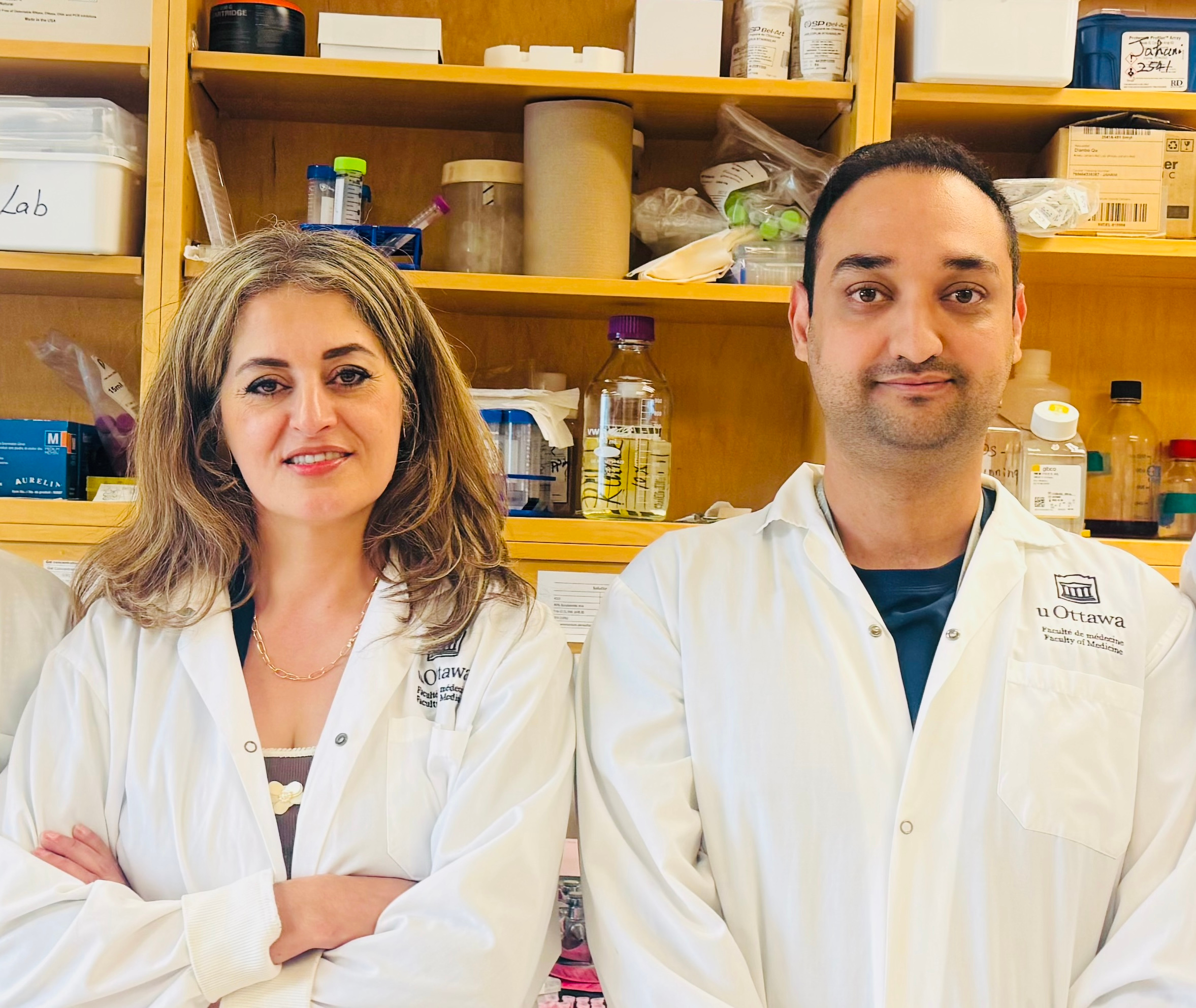
A significant challenge throughout the project was maintaining continuity during a period of substantial laboratory transition. As team members graduated or relocated, preserving expertise across technically demanding experiments required careful coordination, training, and knowledge transfer. These transitions were further compounded by the need to sustain momentum across an extensive international collaborative network, adding complexity to both experimental execution and project management. Importantly, this project unfolded during a period of major structural change. Midway through the study, Dr. Jahani-Asl relocated her laboratory from McGill University to the University of Ottawa during the COVID-19 pandemic, requiring the transfer and re-establishment of personnel, infrastructure, experimental models, and ongoing workflows, at a phase where completion of everything took exceptionally longer than usual. An additional challenge for the first author, Dr. Mansourabadi, was coordinating the consolidation of data generated over the course of a long-term. As team members transitioned to new positions, substantial effort was required to retrieve experimental records, verify datasets, and integrate information from both current and former contributors to ensure a complete and accurate representation of the work. Progress was further complicated by international shipping disruptions that delayed or compromised critical reagents shared by collaborators, necessitating the repetition and revalidation of key experiments. Together, these circumstances extended the timeline of the project and underscored the resilience required to sustain complex, collaborative cancer research.
Concluding Remarks
Glioblastoma remains extraordinarily difficult to treat because of its cellular heterogeneity, plasticity, and ability to adapt to therapeutic pressure. Understanding how oncogenic signaling complexes are assembled and maintained may therefore be as important as identifying the signaling molecules themselves. By uncovering the OSMR–CLIC1–EGFRvIII axis, we provide evidence supporting the design of novel therapeutic interventions. Ultimately, this work underscores a broader principle in cancer biology: important discoveries are not always new genes or new pathways. Sometimes they arise from understanding familiar molecules in entirely new ways.
Follow the Topic
-
Signal Transduction and Targeted Therapy
This is an international, peer-reviewed, open-access journal publishing articles related to signal transduction in physiological and pathological processes, alongside signal transduction-targeted therapeutics in the form of biological agents and small molecular drugs used to treat human diseases.

Your space to connect: The Psychedelics Hub
A new Communities’ space to connect, collaborate, and explore research on Psychotherapy, Clinical Psychology, and Neuroscience!
Continue reading announcement

Please sign in or register for FREE
If you are a registered user on Research Communities by Springer Nature, please sign in