Food and Mood: the ENERGISE-BD Trial
Published in Protocols & Methods, General & Internal Medicine, and Anatomy & Physiology


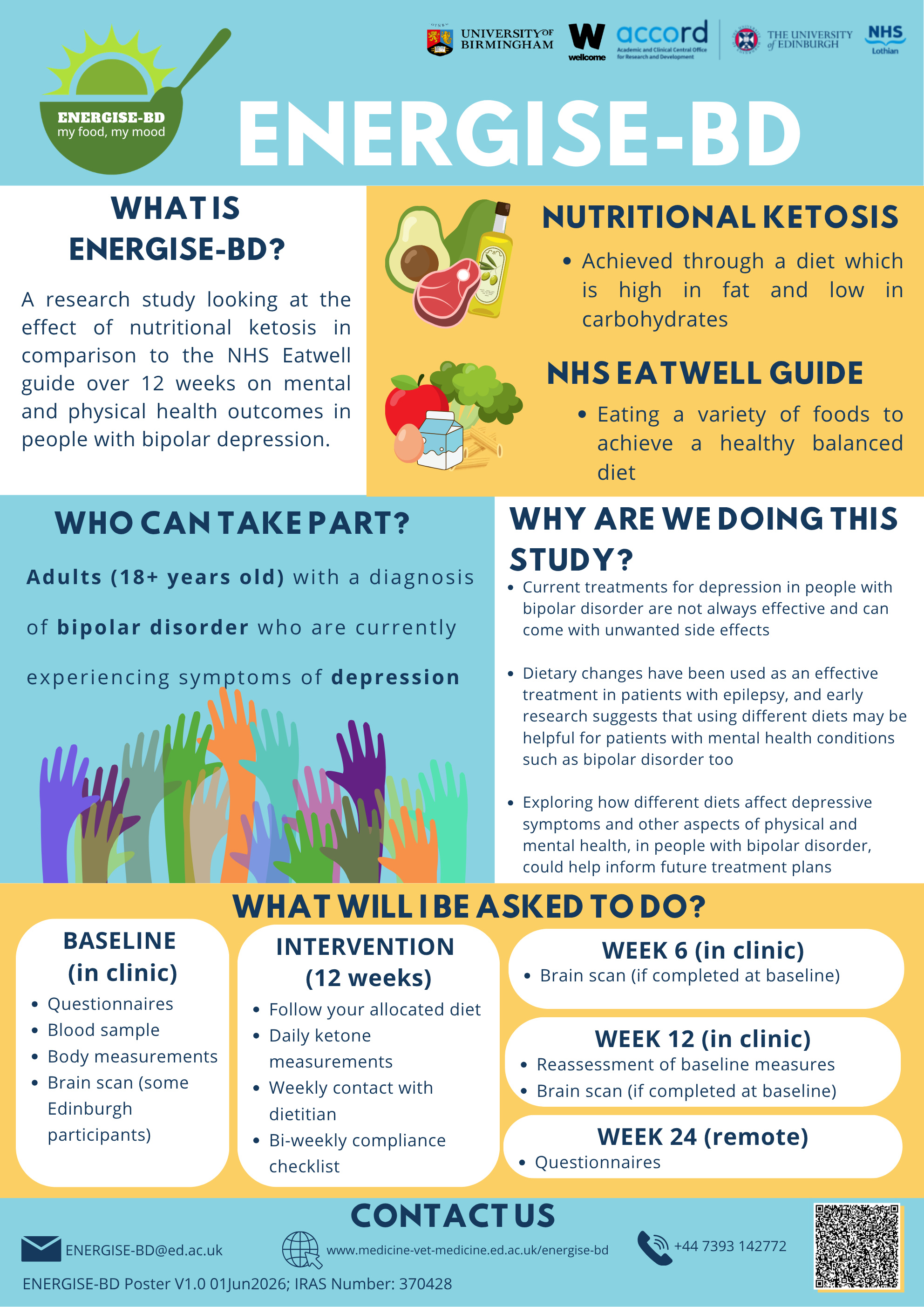
What is ENERGISE-BD?
ENERGISE-BD is a research study investigating how different diets affect feelings of low mood (depression) in people living with bipolar. Some research suggests that changes in diet might help these depressive symptoms, so we are doing a trial to further investigate this theory.
ENERGISE-BD will compare the effect of two different diets on symptoms of bipolar depression. These two diets are nutritional ketosis (achieved by following a modified ketogenic diet, which is high in fat and very low in carbohydrates, so the body switches to burning fat for energy) and the NHS EatWell guide (which advises eating a variety of different food groups to achieve a healthy balanced diet).
We will also investigate whether these diets affect other aspects of mental and physical health, if they are easy for people to follow, and if they are cost-effective options for people with bipolar which might be used within the NHS.
Why are we doing this study?
Current treatments for depression in people with bipolar (such as antidepressants) might not always be effective and may have unwanted side effects, including negative effects on physical health and an increased risk of abnormally high mood. So, we need to develop and test new treatments for bipolar depression. Dietary changes have been used as an effective treatment for patients with other conditions such as epilepsy and using different diets may be helpful for patients with mental health conditions such as bipolar too.
The development and delivery of the ENERGISE-BD study is shaped by people with personal experience of bipolar, through our Lived Experience Advisory Panel. Their involvement ensures that our research focuses on the priorities of people living with bipolar.
What will the study involve?
We aim to start recruiting participants for the study in October 2026.
The study will be carried out in two places, Edinburgh and Birmingham. We aim to recruit a total of 206 adults with bipolar depression. Each participant will be randomly assigned to follow one of the two diets for 12 weeks, meaning that they have an equal chance of being assigned to either the nutritional ketosis or the NHS EatWell diets. Participants will be informed about which dietary intervention they have been assigned to.
Participants will continue their usual treatment for bipolar at the same time, including continuing to take any prescribed medication and attending appointments with their usual clinical teams.
We will assess participants’ mental health before and after the diet. We will also monitor participants’ physical health through blood tests, weight and blood pressure measurements, to see if the dietary changes have any impacts on physical health too. Participants will receive regular support from specialist research dietitians throughout this period, to help them with the dietary changes.
Participants who are based near the Edinburgh study site will undergo three Magnetic Resonance Spectroscopy scans of the brain. These scans use magnet and radio waves to measure the levels of certain chemicals in the brain, so we can look for any changes in the way the brain meets its energy demands as a result of the dietary changes.
We are also carrying out a process evaluation study as part of the ENERGISE-BD trial. The aim of this is to understand how the trial is delivered, the experience participants have of taking part, and whether any improvements can be made for the future. This process includes interviews with the participants and different staff members.
What might the impact of the ENERGISE-BD study be?
Potential benefits for participants include learning more about how their mood relates to changes in diet and receiving education and advice on dietary interventions from a qualified dietitian. On a wider scale, the results of this trial may then help us to improve treatments for people with bipolar depression in the future, depending on how each diet is found to impact people’s mental and physical health.
Authors' bio:
Dr Morven Baker is a psychiatrist working as a clinical research fellow, and Dr Victoria Linsley is a postdoctoral research associate. Both work at the University of Edinburgh on the ENERGISE-BD trial, examining the impact of two dietary interventions on people with bipolar depression.
Follow the Topic
-
ISRCTN: The UK’s Clinical Study Registry
A primary clinical trial registry recognised by WHO and ICMJE that accepts studies involving human subjects or populations with outcome measures assessing effects on human health and well-being, including studies in healthcare, social care, education, workplace safety and economic development.