Future challenges and how to address climate change
Published in Earth & Environment
Citation: Kioumarsi, H., Güneş, A., Erdoğdu,A., & Ganji, F. (2026). Future challenges and how to address climate change. Springer Nature Communities. https://go.nature.com/4t72VbK
Abstract
Climate change is rarely phrased in terms that are wholly human, yet the challenges that it will introduce over the coming decades are fundamentally social and interhuman. They are not constrained by shifts within the environment alone, because they encompass economic systems, political structures and quotidian ways of living. Increasing global temperatures, more regular extreme weather events and the slow erosion of biodiversity are already shifting ecological balances in ways that may be impossible to see and fully predict. At the same time, population growth continues to grow global demand for energy, food and material.This increasing strain on natural resources comes at a time when societies still grapple with internal divides racial, cultural and religious tensions that often distract attention from the shared responsibility of protecting Earth, the one place we all call home. Urbanization is getting into another layer of challenges. Cities are expanding fast, pulling millions of people into densely built environments that depend on energy hungry infrastructure. A lot of that power is still produced by fossil fuels, and greenhouse gas emissions remain at historic highs, even with decades of warnings from the scientific community. The path forward, therefore, cannot rely on a single solution or discipline. Addressing climate change requires an approach that blends technological innovation with thoughtful policy design and, perhaps just as importantly, gradual shifts in human behavior. Transitioning energy systems toward renewable sources solar, wind, and other low-carbon technologies remains one of the most widely recognized strategies, but it is only part of the picture. Improvements in energy efficiency, climate-resilient infrastructure, and the wider adoption of nature-based solutions also play an important role in strengthening environmental resilience.Still, technical measures alone are not enough. Yet technical measures alone will not do the trick. The world is interconnected, and the climate crisis transcends borders so cooperation across countries and regions is a necessity. Education, public awareness and access to reliable information can help communities leverage both the risks and opportunities associated with climate action. Equitable climate finance mechanisms, especially for vulnerable regions that experience the worst impacts while contributing least to global emissions, are also critical. Policies that have integrated climate mitigation with wider issues like poverty reduction, food security and protection of biodiversity generally prove more effective in the long run and socially inclusive.Advances in digital technologies and environmental data analytics may also support more accurate climate monitoring and better risk assessment, allowing decision-makers to respond with greater precision.Yet progress rarely unfolds in a smooth or predictable way. Ongoing geopolitical tensions, economic inequalities, and conflicts continue to complicate international cooperation. These obstacles can slow the kind of large-scale transformation that scientists argue is necessary. Even so, the overall direction is becoming clearer. Confronting climate change in the decades ahead will require adaptive thinking, steady innovation, and a willingness to collaborate across borders and disciplines. Early, decisive actions guided by scientific evidence and aligned with global climate agreements remain essential if the goal of limiting warming and securing a stable, sustainable future is to remain within reach.
References
Intergovernmental Panel on Climate Change. (2021). Climate Change 2021: The Physical Science Basis. Working Group I contribution to the Sixth Assessment Report of the Intergovernmental Panel on Climate Change. https://www.ipcc.ch/report/ar6/wg1/
Kioumarsi, H., Ali Doust, M., & Allen, S. C. (2022). Sustainable Development, Avaye Ostad, ISBN: 978-622-94990-2-3.
Kioumarsi, H., Naseri Harsini, R., Özbey, B. G., Rafiei, B., Alidoust Pahmedani, M., Shariman Yahaya, Z., & Rosen, M. A. (2026). Wildlife, biodiversity, and the United Nations Sustainable Development Goals: Synergizing conservation and development for a sustainable future. European Journal of Sustainable Development Research, 10(2), Article em0367. https://doi.org/10.29333/ejosdr/17816
Kioumarsi, H., Amrulloh, H., Sarsozo, M., Fatiqin, A., Shariman, Z. (2025). Addressing Climate Change Requires a Multidisciplinary Approach. Journal of Biotropical Research and Nature Technology, 4 (1). https://scholar.google.com/citations?hl=en&user=Zeee2yQAAAAJ&view_op=list_works&sortby=pubdate
Mahdavian, S. M., Askari, F., Kioumarsi, H., Naseri Harsini, R., & Dehghanzadeh, H. (2024). Modeling the Linkage Between Climate Change, CH4 Emissions, and Land Use with Iran’s Livestock Production: A Food Security Perspective, Nat. Resour. Forum, vol. 47, pp. 1477-8947, Jun. 2024, doi: 10.1111/1477-8947.12532
Rosen, A. R., Kioumarsi, H., & Gholipour Fereidouni, H. (2025). Climate action and net-zero emissions. European Journal of Sustainable Development Research, 9(4), em0334. https://doi.org/10.29333/ejosdr/16864
United Nations Framework Convention on Climate Change (UNFCCC) Technology Executive Committee (TEC). (2025). AI and climate action: Opportunities, risks and challenges for developing countries. https://unfccc.int/news/ai-and-climate-action-opportunities-risks-and-challenges-for-developing-countries
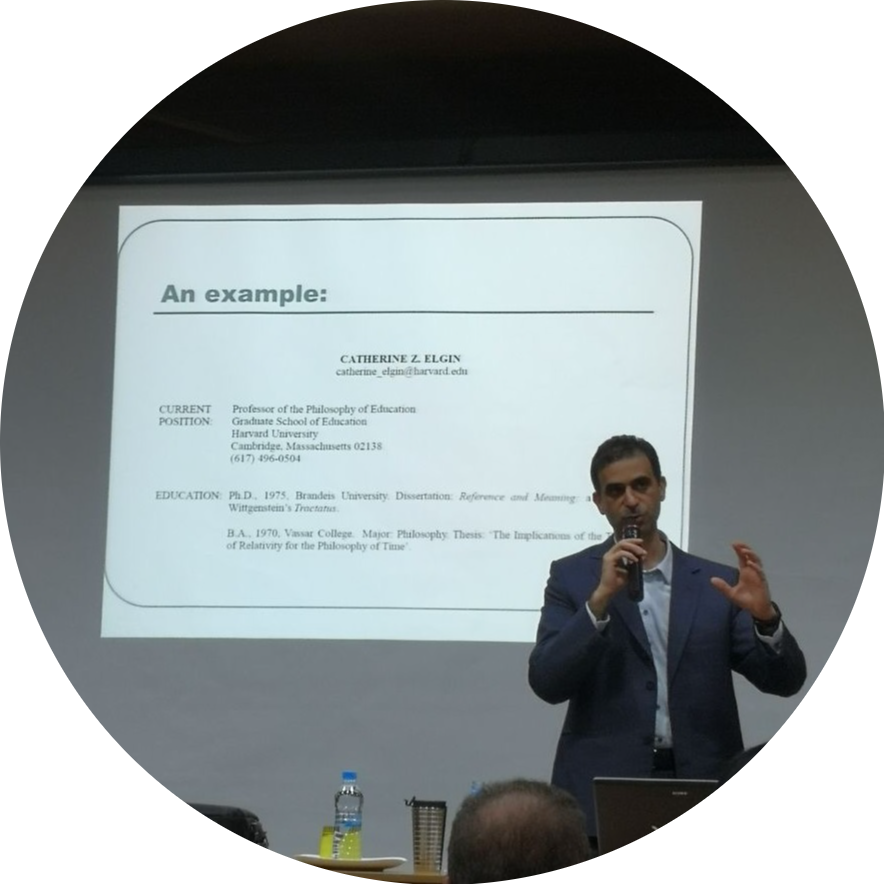
Hamed Kioumarsi, PhD, is an award-winning scientist and author with more than 200 scientific papers and 10 books. His international work spans agriculture, biological sciences, climate change, sustainability, and education, with a strong focus on scientific excellence and international collaboration.
He collaborates with leading Springer Nature–affiliated journals, including Environment, Development and Sustainability, Hereditas, Nutrition Journal, and Biological Procedures Online, among others. He serves as Associate Editor of Environment, Development and Sustainability (Q1) and Associate Editor of Hereditas (Q2), as well as holding editorial roles with several leading Scopus-indexed journals.
He is also Editor-in-Chief of the Indonesian Journal of Biotropical Research and Nature Technology (JBRNT) and Editor-in-Chief of the Brazilian journal NexusSDGs, and has served as Co-Editor-in-Chief of Pandawa Publishing House, Indonesia.