GRIN Europe´s mission to foster family support, clinical care and research engagement in rare, GRIN-related disorders
Published in Neuroscience and Genetics & Genomics





Explore the Research

 Grin Europe
Home Page – Grin Europe
THE FIRST PATIENT HAS BEEN DOSED WITH RADPRODIL IN THE BEELINE TRIAL! We are a member of
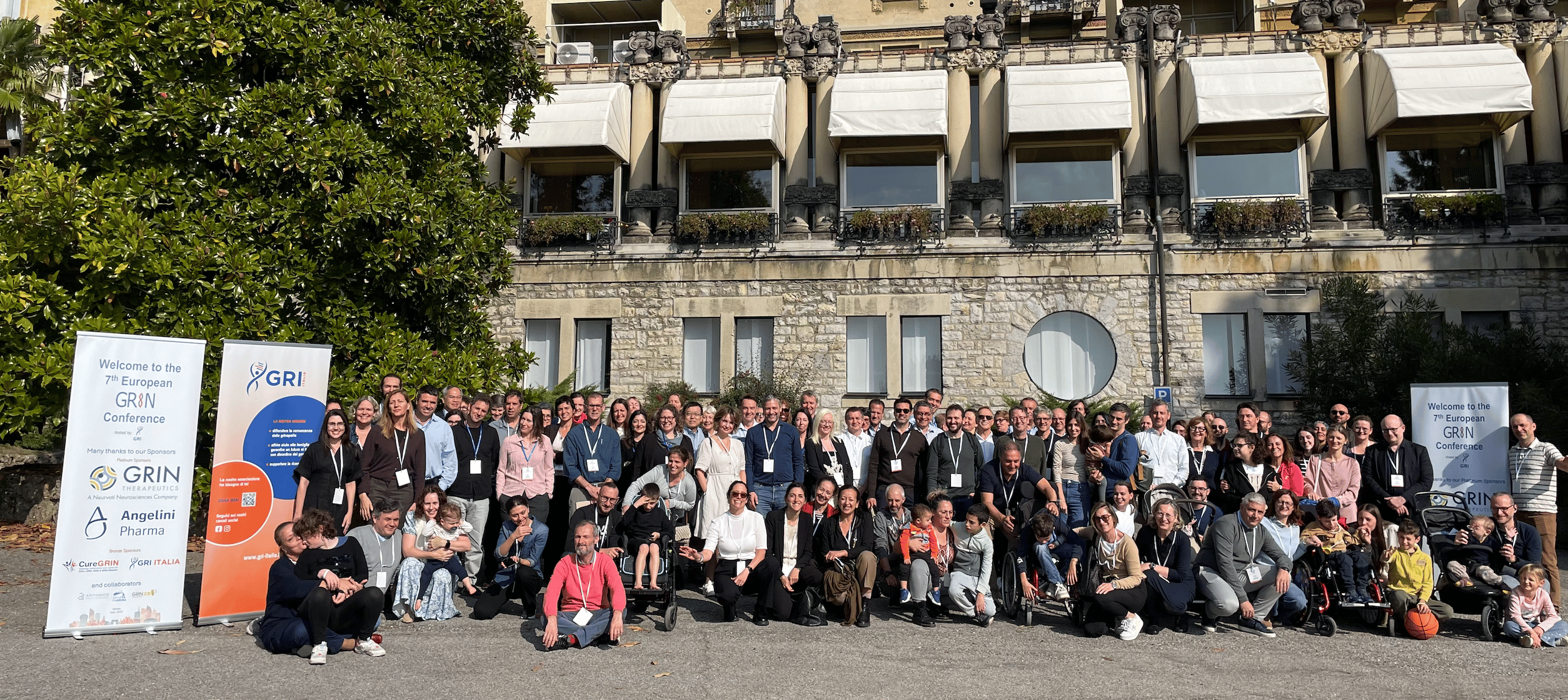
Rare Disease Day, observed annually at the end of February, serves as a global initiative to raise awareness of rare diseases and is a stark reminder of the relentless efforts of patients, their caregivers and families to do anything in their power to ensure adequate clinical care and to improve the quality of life of affected individuals. Rare GRIN related disorders (GRD) are no exception to this. They represent a complex group of neurodevelopmental disorders that present with a wide range of symptoms that reach from mild autism spectrum disorder to severe intellectual disability, hypotonia and in some cases drug-resistant epilepsy. For this reason, the diagnostic odyssey of some patients can be excessively long, while treatment options remain very limited. The GRIN Europe association (https://www.grineurope.org/) was founded to help bridge these gaps, to improve the understanding and care of GRD by promoting an intensive exchange between patients, caregivers, researchers and local public health agencies.
What are GRI(N) related disorders ?
GRIN-related disorders are a group of rare, genetic, neurodevelopmental disorders caused by mutations in the GRIN1, GRIN2A, GRIN2B, or GRIN2D genes, which affect NMDA receptor function. The NMDA receptor is the main glutamate receptor in the brain, facilitating synaptic plasticity, memory formation, and excitatory neurotransmission. GRIN patients primarily present with intellectual disability and often show signs of hypotonia, movement disorder and complex epilepsy, causing highest levels of dependence in many patients. The NMDA receptor has also been linked to neurodegenerative diseases, such as Alzheimer's, Parkinson's, and Huntington's Disease, as well as neuropsychiatric disorders like schizophrenia.
Most GRIN gene variants described to date are broadly classified as loss of function (LoF) or gain of function (GoF), determined by the electrophysiological changes caused by the mutated proteins. However, not all variants can be classified that way, as some of the mutations interfere also with other proteins found on the neurological synapse, but their importance is still unknown. Since inclusion criteria for early clinical trials for GRIN therapies still depend on this “Loss versus Gain” of function classification, many patients with mixed or uncertain functional mutations are currently not eligible for participation and more refined, functional characterization of GRIN mutations is urgently needed.
The wider view at the neurological synapse
NMDA receptors do not act in solitude at the neurological synapse, but depend on other receptors to be activated, such as AMPA receptors and the interaction with other proteins found in the synapse, such as CAMK2. The interaction of these and many other proteins is necessary for the proper functioning on the firing neurons. However, the effect of many GRIN mutations on the interaction with these additional molecules and on the overall synaptic activity has not been studied thoroughly, and a better understanding of the molecular interactions at the synaptic level is needed. For this reason, GRIN Europe aims to foster close collaborations with researchers investigating other genes involved in synapse pathologies (synaptopathies) in order to identify potential therapeutic interventions that target non-GRIN components of the dysfunctional synapse. Importantly, this also highlights the need for “single gene” patients´ associations to seek strong interactions with other patients´ groups that are focused on genes of functionally related proteins. To support these interactions, GRIN Europe recently also joined the board of a new alliance representing complex and rare epilepsies (E+ Alliance, https://epilepsyplus.org/)
Closing the gaps in diagnosis and access to care
For families living with rare disease patients, the diagnosis often marks the beginning of a complex and demanding journey. Unfortunately, this journey is filled with many unknowns due to the lack of properly defined diagnostic tools, and expertise in the treatment and care of GRIN patients. This uncertainty can last for years and places a considerable emotional and psychological burden on parents and caregivers. Beyond the medical challenges, families must also navigate oftentimes overloaded and fragmented healthcare systems, adding further anxiety.
Nonetheless, parents and caregivers are central actors in the rare disease ecosystem. Their role extends far beyond caregiving and includes advocacy, coordination of care, and active participation in scientific research. In many cases, parents become highly knowledgeable about the disease affecting their child, sometimes even surpassing available medical expertise. This lived experience positions them as indispensable partners in research efforts. Their involvement shapes research priorities by ensuring that scientific efforts address outcomes that matter most to patients and families. Also, while traditional research may focus on measurable clinical indicators, parents emphasize quality of life, functional abilities, and long-term support needs. This patient-centered approach can lead to more relevant and impactful research outcomes and helps bridge the gap between scientific discovery and everyday reality. Furthermore, because rare diseases affect, by definition, small patient populations, progress in research depends even more on this patient and caregiver engagement, including participation in clinical studies, data sharing, and the development of patient registries.
Patient registries and natural history studies for GRIN disorders are being developed, but there is still a large range of complex symptoms that have not been properly identified, and their cause and treatment options are still hard to find. This is particularly critical for small and diverse patient groups, which are often fragmented into small national groups. Transnational patient-led organizations play therefore a crucial role in organizing and amplifying these national efforts. It is GRIN Europe´s mission to help families to connect across national boundaries, fostering a transnational community grounded in shared knowledge and mutual support (https://www.grineurope.org/). Such networks are particularly valuable in rare disease contexts, where geographical dispersion and language barriers can otherwise hinder collaboration. Through organizations like GRIN Europe, parents also have more opportunities and weight to contribute directly to scientific advancement, by supporting research initiatives, collaborating with academic institutions, and facilitating communication between researchers and families. At the same time, this helps to empower families by providing education, resources, and a collective identity. The increasing success of the Annual European GRIN Conferences organized by GRIN Europe (https://www.grineurope.org/grin-events/) underscores both the need for, and the value of, bringing together diverse stakeholders, including parents and caregivers. It also highlights the importance of making the lessons learned accessible to the wider community, for example through initiatives such as the upcoming topical collection of meeting reports in specialized, peer-reviewed journals such as the Orphanet Journal of Rare Diseases (https://link.springer.com/journal/13023).
The importance of Rare Disease Day
Despite their significant cumulative number, rare diseases remain underrepresented in research agendas, healthcare systems, and public policy. Therefore, the formation of cohesive rare disease communities also has significant implications in all these areas. Individually, families may struggle to be heard, but collectively they can exert meaningful influence. Patient organizations advocate for increased research funding, improved access to diagnostics and therapies, and the inclusion of rare diseases in national and international health strategies. Rare Disease Day provides a critical platform for these advocacy efforts, enabling stakeholders to engage with policymakers and raise public awareness.
Rare Disease Day highlights the interconnected roles of families, researchers, and patient organizations in advancing rare disease understanding and care. For affected families, it offers recognition and solidarity; for research, it promotes collaboration and patient-centered innovation; and for policy, it underscores the need for inclusive and sustainable healthcare solutions. Organizations such as GRIN Europe demonstrate how parent involvement can transform individual challenges into collective progress, ensuring that rare diseases receive the attention and action they urgently require.
Follow the Topic
-
Orphanet Journal of Rare Diseases
An open access, peer-reviewed journal that encompasses all aspects of rare diseases and orphan drugs and publishes high-quality reviews on specific rare diseases.

Related Collections
With Collections, you can get published faster and increase your visibility.
The Emerging Frontiers of Genetic Screening in Inherited Disorders
The core challenge of modern preventive medicine is the accurate and timely identification of individuals at risk for genetic disorders. For decades, genetic testing has been gated by restrictive clinical criteria and "phenotype-first" models, which often rely on family history or specific symptoms to trigger a diagnostic workup. However, emerging evidence highlights a significant diagnostic gap: a substantial proportion of individuals carrying clinically actionable pathogenic variants are currently missed because they do not meet traditional testing guidelines or lack a documented family history of disease.
This Collection focuses on how the next generation of screening technologies can expand diagnostic capacity and maximize diagnostic yield. We are moving toward a "genome-first" era, in which criteria-independent testing and the integration of multimodal data enable the identification of individuals at risk who were previously undetected within the healthcare system. By leveraging advanced sequencing technologies and computational infrastructures, we can shift from reactive diagnostics to proactive, large-scale screening strategies that improve clinical outcomes across multiple medical disciplines.
Key Areas of Interest
We invite original research, reviews, and clinical perspectives that explore the technological and clinical pathways to increasing diagnostic sensitivity and specificity:
- Expanding the Diagnostic Net: Evaluating the clinical utility of criteria-independent or universal screening to identify high-risk individuals who would otherwise remain undetected under standard guidelines.
- Genome-First Implementation: Analysing the impact of population-based genomic screening in uncovering hereditary diseases or pathogenic variants associated with inherited diseases before the onset of clinical symptoms.
- Synergistic Diagnostic Modalities: The integration of DNA sequencing with other high-resolution markers, such as biochemical profiling or functional assays, to refine risk assessment and increase diagnostic precision.
- Opportunistic Screening and Secondary Findings: Best practices for managing and reporting actionable genetic findings discovered during routine clinical sequencing.
- Scalable Screening Architectures: Innovative approaches to integrating large-scale genetic data into healthcare systems, including the use of electronic health records to support automated risk identification.
- Overcoming Implementation Barriers: Strategies to mitigate disparities in access to screening, focusing on populations in which reliable family history information is limited.
All submissions in this Collection undergo the journal’s standard peer review process. Similarly, all manuscripts authored by a Guest Editor(s) will be handled by the Editor-in-Chief. As an open access publication, this journal levies an article processing fee (details here). We recognize that many key stakeholders may not have access to such resources and are committed to supporting participation in this issue wherever resources are a barrier. For more information about what support may be available, please visit OA funding and support, or email OAfundingpolicy@springernature.com or the Editor-in-Chief.
Publishing Model: Open Access
Deadline: Jan 16, 2027
European Reference Networks: Advancing Collaboration and Care for Rare and Complex Diseases
This Collection highlights the core activities and strategic impact of the European Reference Networks (ERNs) in addressing the challenges of rare and complex diseases. Contributions will explore the ERNs' roles in cross-border healthcare, clinical expertise sharing, care pathway development, patient registry advancement, training, and research coordination. Emphasis is placed on collaborative models, digital tools, and patient-centered approaches that are transforming diagnosis, care, and innovation across Europe.
Please note that this Collection accepts submissions ONLY from authors invited by the Guest Editors.
All submissions in this collection undergo the journal’s standard peer review process. Similarly, all manuscripts authored by a Guest Editor(s) will be handled by the Editor-in-Chief. As an open access publication, this journal levies an article processing fee (details here). We recognize that many key stakeholders may not have access to such resources and are committed to supporting participation in this issue wherever resources are a barrier. For more information about what support may be available, please visit OA funding and support, or email OAfundingpolicy@springernature.com or the Editor-in-Chief.
Publishing Model: Open Access
Deadline: Dec 31, 2026




Please sign in or register for FREE
If you are a registered user on Research Communities by Springer Nature, please sign in