Highlights of the BMC Series - August 2025
Published in Healthcare & Nursing, Public Health, and Zoology & Veterinary Science

BMC Public Health - Peer bullying victimization, psychological distress, and the protective role of school connectedness among adolescents

Klaus Vedfelt via Getty Images
Bullying is a widespread challenge with long-term consequences that can be severe or even fatal, yet strategies to mitigate its risks remain underdeveloped. Children spend a significant amount of their formative years in school and if we view a school as an ecosystem where students should thrive, then addressing bullying requires a holistic approach.
A recent study in BMC Public Health examined data from 2,175 adolescents in the Future of Families and Child Wellbeing Study. Among participants, 39.4% reported no experience with bullying, 43.0% had experienced it in the past, 5.7% reported recent bullying, and 11.9% experienced long-term bullying. The results show that repeated or prolonged victimization has a compounding effect, placing adolescents at higher risk of anxiety and depression compared with those who were never bullied or only exposed once.
The study also emphasises the importance of school connectedness, meaning students feel supported and cared for by both adults and peers in their learning and wellbeing. Strong school connectedness can act as a buffer against depression symptoms that is linked to bullying. The authors emphasise that creating a positive school climate and strengthening relationships can reduce bullying and promote healthier adolescent development.
BMC Medical Ethics - Motivations, acceptability and ethical considerations for interventional HIV cure research at the end of life: perspectives from long-term survivors of HIV in the United States

Westend61 via Getty Images
Antiretroviral therapy has transformed the lives of people with HIV, allowing many to live long enough to share their stories and contribute to the pursuit of a cure. For long-term survivors, this journey is deeply personal, shaped by the loss of loved ones, especially during the height of the epidemic. While interventional end-of-life research holds promise for advancing HIV cure efforts, it remains hypothetical. Understanding how long-term survivors view this type of research is essential to ensure studies are ethical, inclusive, and responsive.
A qualitative study published in BMC Medical Ethics, conducted in the United States, interviewed 16 long-term HIV survivors from across regions to explore their perspectives on hypothetical interventional HIV cure research at the end of life. Participants expressed broad willingness to contribute, motivated by altruism and a commitment to advancing science. At the same time, they stressed the importance of robust ethical safeguards, thorough informed consent, and careful measures to prevent discomfort or harm.
As HIV research progresses, involving long-term survivors in decision-making about interventional cure studies is critical. Their perspectives help ensure that research is conducted responsibly, ethically, and in a way that respects the experiences and priorities of those who have lived experience of HIV.
BMC Primary Care - Exploring healthcare providers’ perspectives on the factors that facilitate primary health care access among Aboriginal and Torres Strait Islander young people: a qualitative study in Southeast Queensland

Medicare, Australia’s universal health insurance scheme, guarantees access to health services for all Australians. Yet avoidable disparities persist, with Aboriginal and Torres Strait Islander young people less likely to access primary healthcare compared with non-Indigenous peers. Healthcare providers have a responsibility to address the unique cultural and health needs of Aboriginal and Torres Strait Islander communities, which have been shaped by colonisation.
A recent study published in BMC Primary Care synthesised thirteen research yarns to explore barriers and enablers to healthcare access from the perspective of providers working in urban Aboriginal and Torres Strait Islander community-controlled health organisations (ATSICCHOs). Using inductive thematic analysis, the study identified factors that facilitate access across three overarching strength-based themes. First, systems and organisation: ATSICCHOs’ model of care addresses the specific needs of young Aboriginal and Torres Strait Islander people. Second, family and community: the involvement of family and community supports young people in seeking care. Third, individual: personal characteristics of young people that promote health-seeking behaviour.
The study highlights ATSICCHOs as optimal sites for delivering culturally safe, holistic, and comprehensive primary healthcare. Strategies to improve access should prioritise collaboration between healthcare providers and Aboriginal and Torres Strait Islander young people, ensuring interventions are culturally informed.
BMC Nutrition - Youth exposure to unhealthy digital food marketing in relation to race/ethnicity and income adequacy in Canada

Access to adequate nutrition is a fundamental human right, closely linked to the right to health. Diets of lower nutritional quality increase the risk of obesity and non-communicable diseases such as type 2 diabetes and cancer. In Canada and the US, poor-quality diets are more common among racial and ethnic minority youth and those from lower-income households. With digital platforms increasingly used by adolescents and marketing becoming more pervasive, understanding how digital food marketing contributes to nutrition disparities is critical.
A study published in BMC Nutrition analysed data from an observational cross-sectional survey conducted in April 2024, including youth aged 10 to 17 years living in Ontario and Quebec. The study found that racial and ethnic minority youth were more frequently exposed to digital marketing of unhealthy foods compared with White youth. Similarly, youth from lower-income households encountered more marketing of unhealthy foods. The reasons for these differences are not fully understood but may relate to patterns of digital device usage, use of ad blockers, or subscription-based streaming without ads.
With digital platforms becoming more accessible and increasingly integrated into everyday life, there is a need for regulations to limit youth exposure to unhealthy food marketing, particularly for minority groups and socioeconomically disadvantaged families.
BMC Zoology - New Miocene litoptern remains from Colombia and ecological structure of American Neogene herbivore guilds
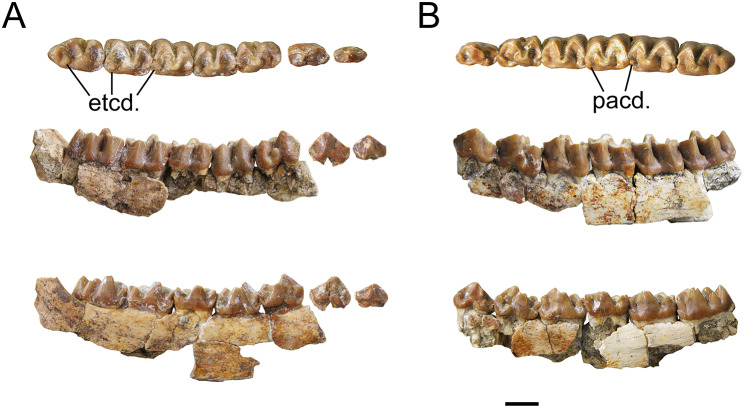
La Venta in Colombia is one of the richest fossil sites in tropical South America. Its Middle Miocene fauna, which lived about 16 to 11.6 million years ago, provides insight into ecosystems while South America was isolated, before the Great American Biotic Interchange (GABI). GABI occurred after North and South America became connected by a land bridge around 3 million years ago.
In BMC Zoology, researchers describe new fossil remains of three litopterns from La Venta: Villarroelia totoyoi, Mesolicaphrium sanalfonense, and Theosodon sp. Litopterns are an extinct group of South American hoofed mammals. The material reveals previously unknown details of their tooth and jaw anatomy. The study provides the first description of the deciduous dentition of M. sanalfonense and the most complete adult dentition of V. totoyoi, improving understanding of the group, though evolutionary relationships remain unknown.
The study also conducted a comparative ecomorphological analysis of 11 North and South American herbivore faunas before and after GABI, examining body size, tooth morphology, and feeding height. Pre-interchange South American faunas were more ecologically diverse, including small arboreal browsers and species with ever-growing teeth, largely absent in North America. After GABI and later Pleistocene extinctions, many niches disappeared. Some larger herbivores persisted, but modern South American herbivore communities are less ecomorphologically diverse than their Miocene ancestors.
Fossils from La Venta are therefore crucial for tracing ecological loss and understanding long-term biodiversity patterns in South American mammals.

Anastasia joined BMC in May 2022. She holds a PhD in Medicine from University of Leeds where she studied the role of DOCK4 in glioblastoma, and the pathological effects of radiotherapy on the vasculature of recurrent glioblastoma. Previously, she earned her BSc (Hons) degree in Biomedical Sciences from the University of Brighton. In 2016, Anastasia worked at the Eijkman Institute of Molecular Biology in Jakarta, Indonesia, studying the genetics of obesity. She is committed to championing open access and reproducible research in science. Anastasia is based in the London office and is the editor of BMC Medical Ethics, BMC Complementary Medicine and Therapies, and BMC Proceedings.
Follow the Topic
-
BMC Primary Care
Previously known as BMC Family Practice, this is an open access, peer-reviewed journal that considers articles on all aspects of primary health care research.
-
BMC Nutrition
BMC Nutrition is an open access, peer-reviewed journal that considers articles on all aspects of nutritional sciences.
-
BMC Public Health
An open access, peer-reviewed journal that considers articles on the epidemiology of disease and the understanding of all aspects of public health.
-
BMC Zoology
This is an open access, peer-reviewed journal that considers articles on zoology, including comparative physiology, mechanistic and functional studies, morphology, life history, animal behavior, signaling and communication, cognition, parasitism, systematics, biogeography and conservation.
-
BMC Medical Ethics
This journal is an open access journal publishing original peer-reviewed research articles in relation to the ethical aspects of biomedical research and clinical practice, including professional choices and conduct, medical technologies, healthcare systems and health policies.





Related Collections
With Collections, you can get published faster and increase your visibility.
Ethics and regulation of AI in primary care
The integration of artificial intelligence (AI) into primary care is rapidly transforming healthcare delivery, enabling more personalized, efficient, and effective patient care. However, the ethical and regulatory challenges associated with the deployment of AI technologies in this context are multifaceted and require thorough examination. Issues such as patient privacy, data protection, informed consent, and the potential for algorithmic bias are at the forefront of discussions surrounding AI's role in healthcare. As AI systems increasingly influence clinical decision-making, understanding the ethical frameworks and regulatory requirements governing their use is essential for safeguarding patient rights and ensuring equitable access to healthcare services.
The significance of addressing the ethical and regulatory dimensions of AI in primary care lies in its potential to enhance patient trust and ensure that AI applications are developed and implemented responsibly. Recent advancements in AI have demonstrated its capabilities in improving diagnostic accuracy and streamlining administrative tasks; however, these benefits must be balanced with robust protections for patient data and ethical considerations regarding decision-making. Furthermore, the lack of comprehensive regulations can lead to inconsistencies in AI application and misuse, which could undermine public confidence in these technologies.
In this Collection, we welcome submissions that span a wide array of topics, including but not limited to:
- Ethical considerations in AI applications
- Data protection and patient privacy in AI
- Informed consent processes for AI use
- Regulatory frameworks for AI in primary care
All manuscripts submitted to this journal, including those submitted to collections and special issues, are assessed in line with our editorial policies and the journal’s peer review process. Reviewers and editors are required to declare competing interests and can be excluded from the peer review process if a competing interest exists.
Publishing Model: Open Access
Deadline: Jan 28, 2027
Identifying and responding to domestic violence and abuse in primary care
Domestic violence and abuse (DVA) remains a pervasive issue affecting individuals across various demographics, often leading to significant physical and mental health consequences. Primary care settings are uniquely positioned to identify and respond to instances of DVA, yet many healthcare providers feel ill-equipped to address this sensitive issue. This Collection aims to explore the role of primary care in recognizing the signs of domestic abuse and developing effective response strategies, enhancing the capacity of healthcare professionals to support affected individuals.
As this research area continues to evolve, we may see significant advancements in the implementation of standardized protocols for identifying and responding to domestic violence in primary care. Future studies could lead to the development of comprehensive training programs for healthcare providers, enhancing their confidence and competence in addressing this issue. Ongoing research could facilitate the creation of collaborative networks between primary care providers, social services, and community organizations, ultimately leading to more effective support for survivors of domestic violence. Additionally, integrating mental health support and community resources into primary care settings has shown promise in creating safer environments for patients, and fostering early detection and intervention.
In this Collection, we welcome submissions that span a wide array of topics, including but not limited to:
- Identification tools for domestic violence in primary care
- Training programs for healthcare providers on DVA
- Integrating primary care, social services, and mental health support
- Community and peer support resources for domestic abuse survivors attending primary care
This Collection supports and amplifies research related to SDG 3: Good Health and Well-being.
All manuscripts submitted to this journal, including those submitted to collections and special issues, are assessed in line with our editorial policies and the journal’s peer review process. Reviewers and editors are required to declare competing interests and can be excluded from the peer review process if a competing interest exists.
Publishing Model: Open Access
Deadline: Nov 11, 2026
