Homogeneous solution assembled Turing structures with near zero strain semi-coherence interface
Published in Physics
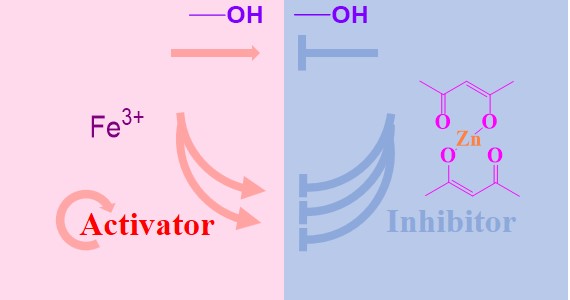

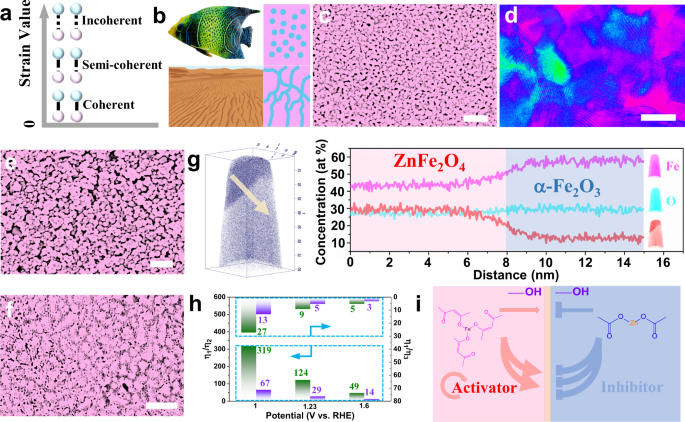

Numerous natural systems contain surfaces or threads that enable directional interface contact, such as zebra stripes, spot fish, and undulating sand dunes. Some spatiotemporal stationary structures, which are summarized by Alan Turing as the interaction of reaction and diffusion with each othe. Turing explained the emergence of stationary patterns by invoking the interplay between an activator and an inhibitor with different diffusion rates, which has proven to be extremely influential across many disciplines because they can show enhanced features resulting from abundant and smooth interfaces. Recently, Tan used a facile route based on aqueous-organic interfacial polymerization to generate Turing-type polyamide membranes for water purification, and these membranes exhibit excellent water-salt separation performance. Zhang reported a cation exchange approach in the heterogeneous solvent of diethylenetriamine and deionized water to produce Turing-type Ag2Se on CoSe2 nanobelts relied on diffusion-driven instability, which is highly effective in catalyzing the oxygen evolution reaction (OER) in alkaline electrolytes with an 84.5% anodic energy efficiency. It should be noted that the above case studies the related potential of the Turing structure in heterogeneous solution. However, to date, realization of an inorganic Turing structure (spots or stripes) in homogeneous solutions has not been reported because of the similar diffusion coefficients for most small molecule weight species.
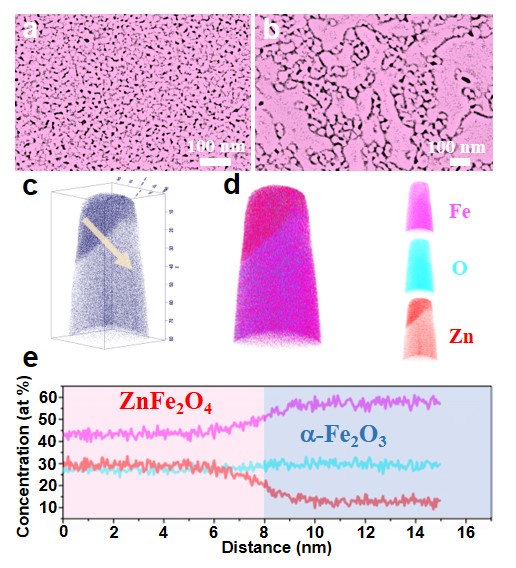
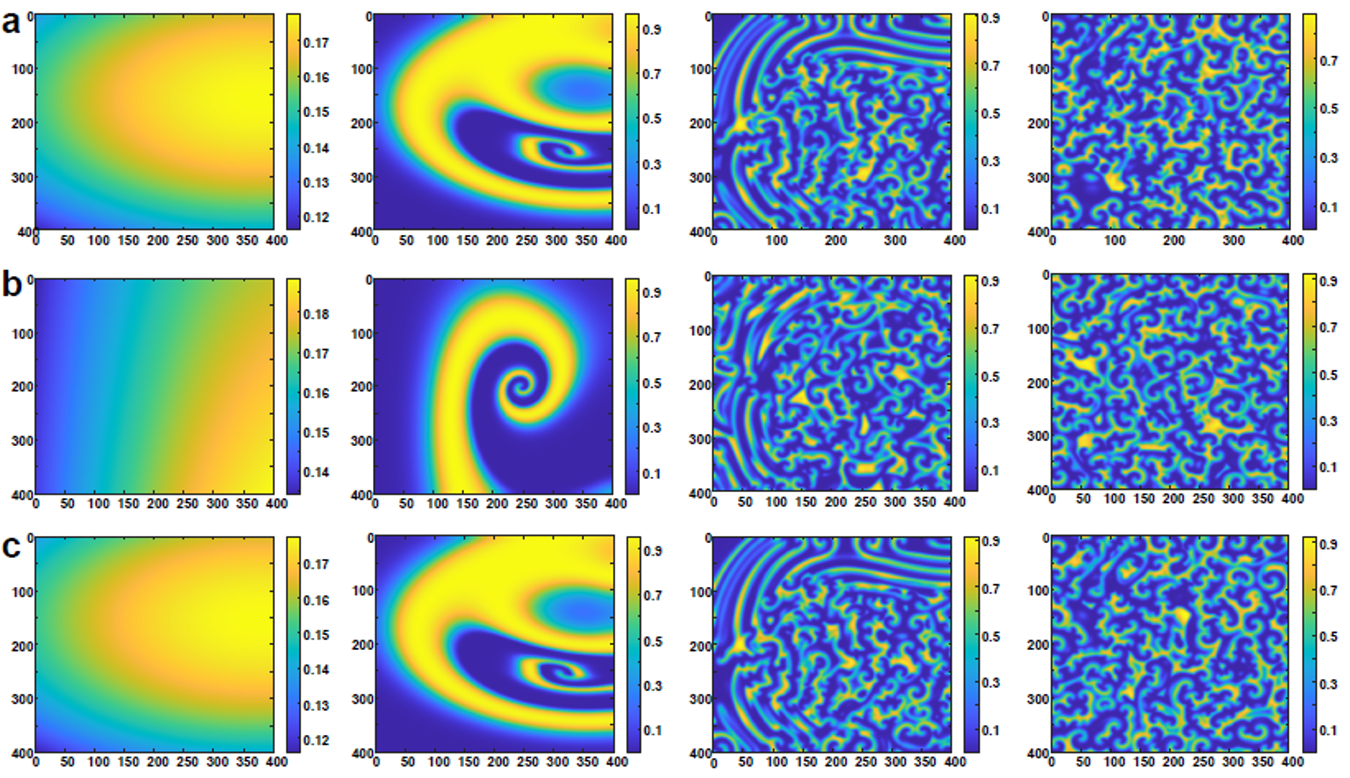
Fig. 1a and b show the spot-like and stripe-like Turing structures prepared with Zn-Fe-O as a model, and Fig. 1c–e can clearly observe the existence of the ZnFe2O4/α-Fe2O3 dual-phase interface. Fig. 2 shows the evolution of the Turing structure at different diffusion coefficient differences or different starting positions, which are well matched with the experimental microstructure, so it can be confirmed that this phase separation is a Turing structure and is influenced by reaction diffusion theory modulation. Therefore, more mathematical models or parameters can be introduced to obtain more Turing structured films, bringing new approaches for chemical and material design.

Hello everyone, I am a student from China. I am currently focusing on the structural design of thin film materials to solve the problems of future energy shortage and environmental pollution
Follow the Topic
-
Nature Communications
An open access, multidisciplinary journal dedicated to publishing high-quality research in all areas of the biological, health, physical, chemical and Earth sciences.

Related Collections
With Collections, you can get published faster and increase your visibility.
Women's Health
Publishing Model: Hybrid
Deadline: Ongoing
Tumor Microenvironment Crosstalk and Therapeutic Implications
Publishing Model: Hybrid
Deadline: Nov 02, 2026