How Triple-Negative Breast Cancer Sends Secret Messages to Silence the Immune System
Published in Cancer and Immunology


The Challenge of Triple-Negative Breast Cancer
Triple-negative breast cancer (TNBC) is one of the most aggressive forms of breast cancer. Unlike many other breast cancers, it lacks the common therapeutic targets that have transformed treatment for other patients. As a result, many individuals with TNBC have fewer treatment options, and the disease often develops resistance to therapy.
One of the greatest mysteries surrounding TNBC is its remarkable ability to escape destruction by the immune system. Although immune cells can recognize and eliminate cancer cells, TNBC often creates an environment in which these defenses gradually lose their effectiveness. Understanding how this happens became the starting point of our study.
From Curiosity to Discovery: Tiny Messengers with a Big Impact
Every cell in our body communicates with its neighbors. One way they do this is by releasing tiny membrane-bound particles called exosomes. Once considered little more than cellular waste, exosomes are now recognized as powerful biological messengers carrying proteins, RNA molecules, lipids, and other signaling molecules.
We wondered whether TNBC-derived exosomes were doing more than simply suppressing immune cells. Could they actually reprogram T cells, the body's most important cancer-fighting cells?
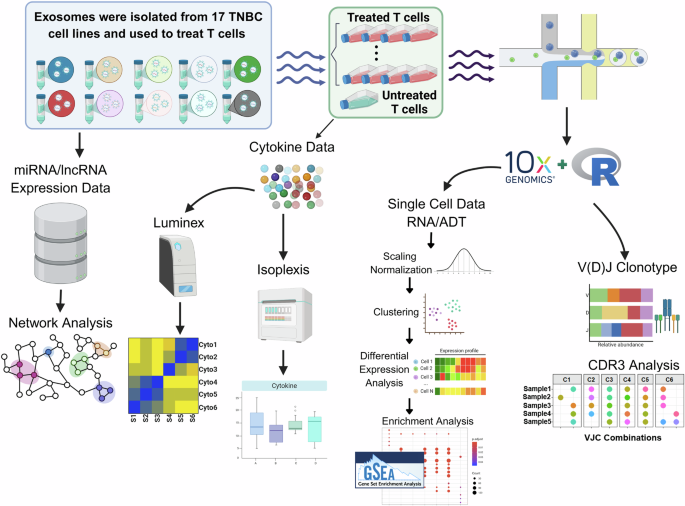
To answer this question, we combined advanced single-cell multiomics with functional immunology. This allowed us to examine not only how individual T cells changed after interacting with tumor-derived exosomes, but also how their T-cell receptor (TCR) repertoires—the molecular fingerprints that determine what T cells recognize—were altered.
Mechanistic Insights: Reprogramming T Cells from Within
Our study revealed that TNBC-derived exosomes act like tiny biological delivery vehicles. After entering T cells, they release their molecular cargo and reshape how these immune cells function.
Surprisingly, the effects extended beyond changes in gene expression. Tumor-derived exosomes remodeled both αβ and γδ T-cell receptor clonotypes, demonstrating that cancer can influence not only the behavior of immune cells but also the diversity of the receptors they use to recognize disease.
These findings reveal a previously underappreciated mechanism by which tumors weaken antitumor immunity and establish immune escape.
Translational Potential
Understanding how tumors manipulate immune cells opens new possibilities for therapy. If we can interrupt this exosome-mediated communication or prevent their molecular cargo from reprogramming T cells, future treatments may restore stronger antitumor immune responses.
Beyond TNBC, similar mechanisms may operate in other cancers, suggesting that targeting exosome-mediated immune communication could become a broadly applicable immunotherapeutic strategy.
Conclusion: A New Way Tumors Escape Immunity
Our study shows that TNBC-derived exosomes are more than simple messengers—they are sophisticated tools that tumors use to communicate with and reprogram the immune system. By reshaping both T-cell states and T-cell receptor repertoires, these tiny vesicles help create an immune environment that favors tumor survival.
We hope these findings provide new insight into tumor–immune communication and inspire future therapies that restore the immune system's ability to recognize and eliminate cancer.
Behind the Cover
One of the most enjoyable aspects of this project was translating a complex biological concept into a visual story. The cover illustration, designed by Safa Rezaei Benam, depicts a Trojan Horse constructed from exosomes. Much like the legendary tale, the exosomes appear harmless while secretly transporting molecular cargo into T cells. Once inside, these hidden messages reprogram immune function and ultimately help tumors evade immune surveillance. We were honored that this artwork was selected as the cover image for this issue, providing a visual representation of the central discovery of our study.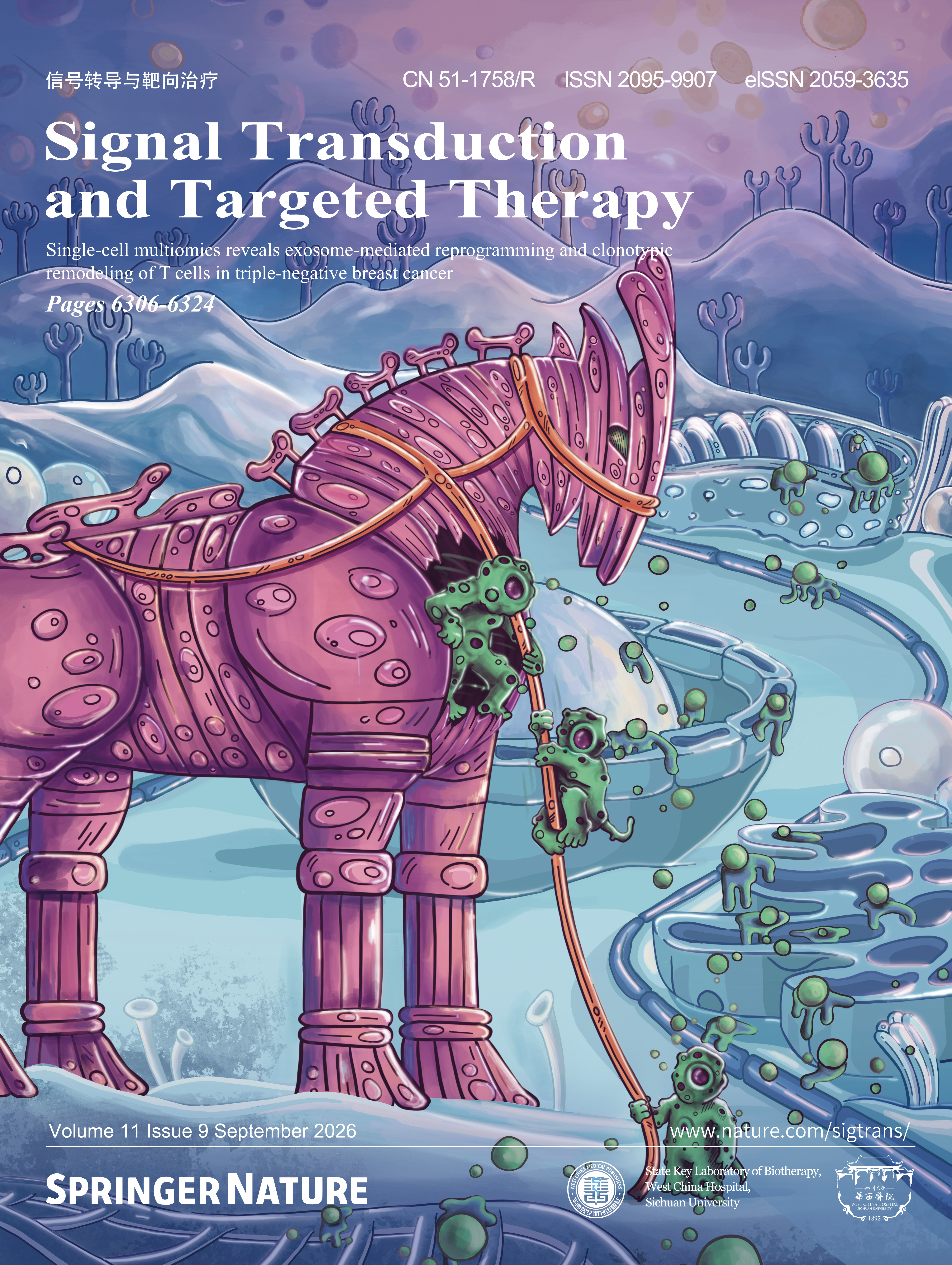
Acknowledgements
We would like to sincerely thank Safa Rezaei Benam, M.F.A. for designing the cover artwork for our article. Her exceptional creativity, artistic vision, and close collaboration with our research team transformed the scientific concepts of this study into a compelling visual narrative. The cover illustration beautifully captures the central theme of our work and played an important role in communicating our findings to a broad scientific audience. We are deeply grateful for her invaluable contribution.

Follow the Topic
-
Signal Transduction and Targeted Therapy
This is an international, peer-reviewed, open-access journal publishing articles related to signal transduction in physiological and pathological processes, alongside signal transduction-targeted therapeutics in the form of biological agents and small molecular drugs used to treat human diseases.