Interview: Challenges in Access to Medicines
Published in Social Sciences, Sustainability, and General & Internal Medicine

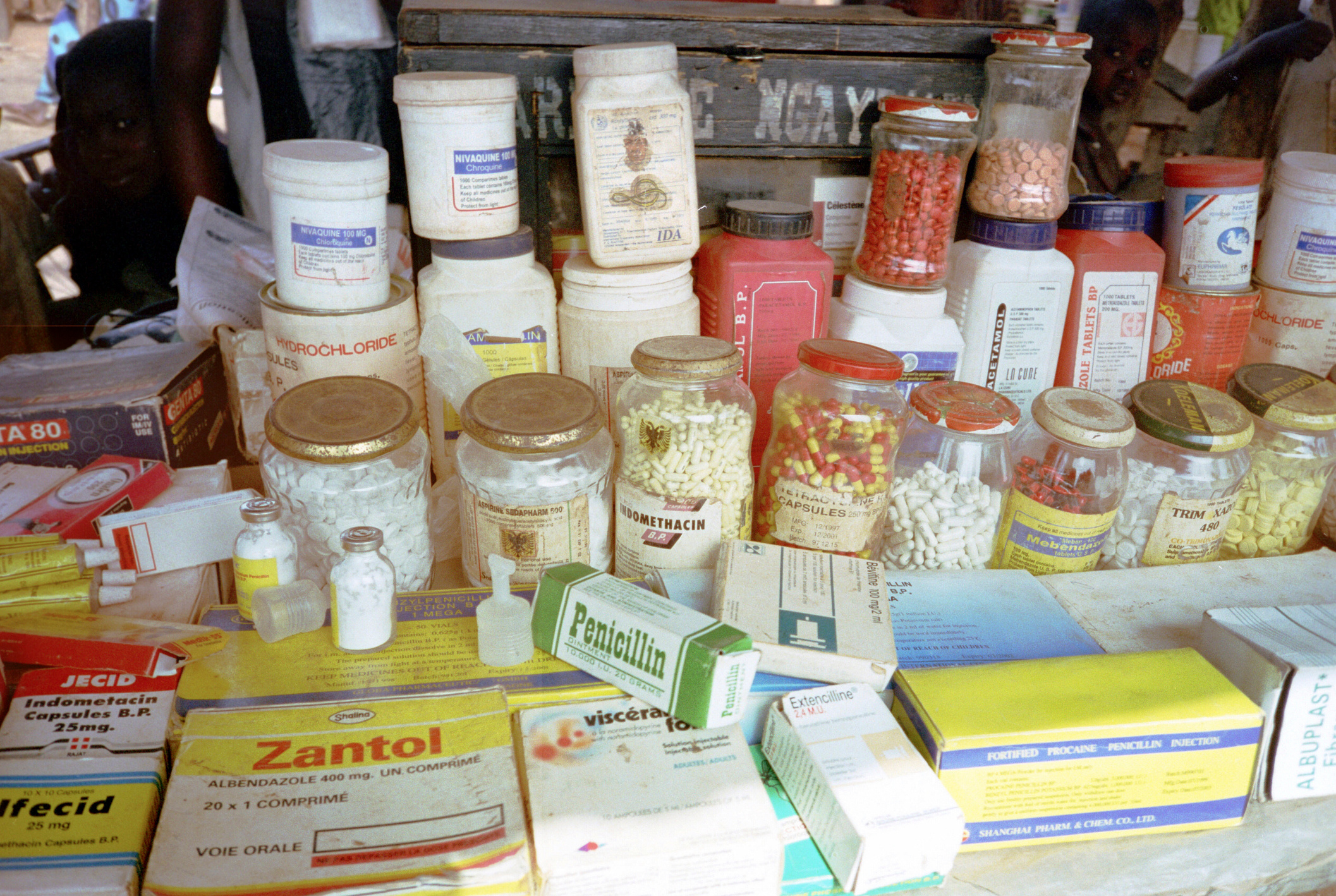
Image credits: Krypos via Getty Images
We spoke to Dr. Marie Antignac at the European Society of Cardiology (ESC) Congress 2026. She serves as the head of the Hospital Pharmacy Department at the large teaching hospital of Pitié Salpêtrière (AP-HP), and whose work in collaboration with the African Research Network for Non-Communicable Diseases (ARN-NCD) explores two understudied dimensions of medicine in several African countries – the quality of available medicines and the acceptability of medicines from the patient and prescriber perspectives, including medicine adherence. At the ESC Congress, Marie delivered a talk "Management of hypertension post-acute coronary syndrome in Africa: challenges and opportunities".
This interview is part of the collaboration project “Is the Future of Healthcare Affordable and Sustainable?” between the Sustainable Development Goals (SDG) 1: No Poverty and SDG 3: Good Health and Well-Being working groups at Springer Nature. This project aims to raise awareness of the issues associated with attaining universal health coverage, part of the SDGs set forth by the United Nations.
Q: Please give a short summary of your work on the issues affecting blood pressure management after acute coronary syndromes (ACS) in Africa (Editorial note: talk delivered by Dr. Antignac at the ESC Congress 2026).
Management of blood pressure after ACS decreases the risk of secondary events. Controlling blood pressure is important, because if blood pressure is high, the risk of developing stroke, myocardial infarction and other major cardiovascular events linked to mortality is increased. International guidelines on how to properly use medicines for management of blood pressure are well-established, but we identified that the real challenge in management of blood pressure in sub-Saharan Africa is access to medicines.
There are five dimensions to the accessibility of medicines:
Availability is the first: is the medicine available?
Accessibility: is the medicine located near the patient?
Affordability: does the patient have capacity to purchase the medicine?
Acceptability: encompasses both drug adherence by the patient and prescription of the drug by the physician; are there cultural barriers or similar preventing the medication reaching the patient?
Quality: are the drugs of good quality?
Our work is on these five dimensions, particularly on the affordability, acceptability and quality of drugs.
Q: Why are these dimensions so difficult to tackle?
Quality of drugs is a major issue. In North America or European Countries (Editorial note: countries with stringent pharmaceutical regulatory systems, good manufacturing, storage, and distribution practices are designed to maintain the quality of medicines throughout the supply chain), quality of drugs is not questioned. However, when we interviewed physicians in sub-Saharan Africa, quality of drugs that patients purchase in licensed pharmacies and at street markets is often the first concern. At street markets, there is usually an array of both traditional and approved medicines. This is a big problem for two reasons. Firstly, you do not know where the medicines come from, and secondly, these medicines spend a lot of time in hot and humid conditions, which increases the risk of impurity development in the medicines. We have performed a large-scale quality analysis of 1,530 (of 3,468 collected) cardiovascular medicine samples sold in licensed pharmacies as well as at street markets across 10 countries in sub-Saharan Africa and measured the content of active ingredients in each drug. 16% of these drugs were deemed to be of poor-quality. (Data supported by study: Fighting fake medicines: First quality evaluation of cardiac drugs in Africa)
On examining factors associated with poor quality, we found a large diversity. However, one factor remained consistently associated with poor quality: the place of manufacture. We observed that cardiovascular drugs produced in Asia for the African market were of lower quality than those drugs that had been produced in Africa directly. Producing drugs for the local market in sub-Saharan Africa could be a solution to improving drug quality.
The drug market there is inequitable. If you were rich, you could afford drugs from a pharmacy, but if you were poor, you would buy your drugs cheaper at the street market. In our study, 16.3% of the cardiovascular medicine samples tested were classified as poor quality overall. The proportion was 35% among medicines manufactured in Asia and reached 50% among Asian-manufactured medicines obtained from street markets (Data supported by study: Fighting fake medicines: First quality evaluation of cardiac drugs in Africa).
Acceptability of medicines is the next thing we explored. Firstly, we looked at adherence to medication by the patient. The barriers were diverse between countries; however, we found links between antihypertensive medicine adherence and the individual wealth index of the patient (Data supported by study: Factors associated with poor adherence to medication among hypertensive patients in twelve low and middle income Sub-Saharan countries). Patients belonging to the lower wealth group showed lower adherence than patients of the higher wealth group, demonstrating the inequity of the relationship between patients and adherence. Secondly, we observed that physicians prescribing hypertension medication to patients living in rural areas were more likely to prescribe less intensive medication regimes (Data supported by study: Barriers to up-titrated antihypertensive strategies in 12 sub-Saharan African countries: the Multination Evaluation of hypertension in Sub-Saharan Africa Study). Patients in rural areas were more likely to receive monotherapies, in contrast with patients in urban areas who were more likely to receive intensive multi-drug therapies. This has been observed more in low-income countries than in middle-income countries.
Q: In your study, cardiovascular medicines manufactured in Asia and obtained from street markets were associated with a higher prevalence of poor quality (study: Fighting fake medicines: First quality evaluation of cardiac drugs in Africa). What factors might drive this continued sourcing?
We unfortunately do not have this data and cannot yet answer this question. The problem of the medicine supply chain in Africa is major. In North America or in many European countries (Editorial note: countries with stringent pharmaceutical regulatory systems, good manufacturing, storage, and distribution practices are designed to maintain the quality of medicines throughout the supply chain), the medicine supply chain is strictly within legal frameworks. There are high control and regulation organised by pharmacies, that is not necessarily the case in sub-Saharan Africa. Some drugs arrive in sub-Saharan African countries through unknown logistics, and though they try to control all the drug supply chains, they are not successful in doing so.
Q: Are these drugs being tested for quality upon arrival on the African continent?
We carried out another study where we measured the levels of active ingredients and impurities in anti-diabetic drugs collected across 13 sub-Saharan African countries, covering capital cities and international border cities. 28% of the tested drugs failed to meet active ingredient dosage content, possibly due to poor manufacturing practices, and about 10% of the tested drugs had high levels of impurities that may be due to poor conditions of conservation (Data supported by study: Quality of antidiabetic medicines in 13 sub-Saharan African countries: a cross-sectional survey).
Q: You suggested that the best way for Africa (Editorial note: affected African countries) to tackle these issues is to produce its own pharmaceuticals. Could you share your thoughts on what the challenges are?
It is difficult for Africa to produce its own pharmaceuticals, as high-level decisions are required. Some countries are beginning to do this. In Senegal, for example, some medications are being produced by local pharmaceutical industries. Some pharmaceutical companies have also expanded general health and pharmaceutical initiatives in African countries. Our study found differences in the prevalence of poor-quality cardiovascular medicines according to factors including manufacturing origin and source of purchase (Data supported by study: Fighting fake medicines: First quality evaluation of cardiac drugs in Africa).
However, health policy decisions must be made to finance these developments, and these are not easy to change. As a pharmacist, my job is to produce robust data for politicians to make their decisions.
Q: Health policies can be influenced by robust data, but directing resources away from more urgent needs is difficult for countries with already limited resources.
Yes. This is why the African Medicines Agency (AMA) plays such an important role. It is a new agency that builds and regulates medicine access on a continental scale (Editorial note: AMA is a specialized African Union agency intended to strengthen and coordinate medicines regulation across participating states and regional economic communities). Each country cannot produce all the medicines it needs; not even us in France can produce all the medicines we need! It may however be possible at the continental scale with the AMA.
Q: In your view, what gaps can publishers fill to raise awareness for these issues and to drive changes in health policies?
The first step is to produce and collect correct data, not just estimation. A lot of papers in the scientific literature are based on estimations or very small cohorts from specific centres that are then generalised for the whole African population. We need to find more original data, and that can be done by encouraging physicians in the different countries to report real data. Scientific journals need to publish more robust data rather than estimated data. Global Burden of Disease metrics are important, but they are heavily estimated due to gaps in reporting.
Q: What is your hope for the outcome of this project?
My hope is for this project to be led by African physicians, and for the journals and large societies such as the European Society of Cardiology (ESC) to integrate them. I hope that African physicians can lead big studies, collaborating across African countries. Our African Research Network for Non-Communicable Diseases (ARN-NCD) tries to facilitate this by connecting researchers across 20 countries.
Marie Antignac spoke on her research again in Berlin at the World Health Summit 2026, and the session is available for viewing via the World Health Summit channel.
Disclaimer: Views expressed by the interviewee are their own and do not necessarily represent Springer Nature editorial policy.
Sources and further reading:
Antignac M, Diop BI, Macquart de Terline D, Bernard M, Do B, Ikama SM, N'Guetta R, Balde DM, Tchabi Y, Sidi Aly A, Ali Toure I, Zabsonre P, Damorou JMF, Takombe JL, Fernandez C, Tafflet M, Empana JP, Plouin PF, Narayanan K, Marijon E, Jouven X. Fighting fake medicines: First quality evaluation of cardiac drugs in Africa. Int J Cardiol. 2017 Sep 15;243:523-528. doi: 10.1016/j.ijcard.2017.04.099. Epub 2017 Jun 20. PMID: 28641892.
Macquart de Terline D, Kane A, Kramoh KE, Ali Toure I, Mipinda JB, Diop IB, Nhavoto C, Balde DM, Ferreira B, Dèdonougbo Houenassi M, Ikama MS, Kingue S, Kouam Kouam C, Takombe JL, Limbole E, Mfeukeu Kuate L, N'guetta R, Damorou JM, Sesso Z, Sidy Ali A, Perier MC, Azizi M, Empana JP, Jouven X, Antignac M. Factors associated with poor adherence to medication among hypertensive patients in twelve low and middle income Sub-Saharan countries. PLoS One. 2019 Jul 10;14(7):e0219266. doi: 10.1371/journal.pone.0219266. PMID: 31291293; PMCID: PMC6619761.
Cavagna P, Kramoh KE, Diop IB, Kouam Kouam C, Ikama MS, Takombe JL, Damorou JM, Ali Toure I, Balde DM, Dzudie A, Khoury S, Perier MC, Asselin A, Azizi M, Houenassi MD, Kane A, Kimbally-Kaki SG, Kingue S, Limbole E, Mfeukeu Kuate L, Mipinda JB, Ferreira B, Nhavoto C, Sidy Ali A, Empana JP, N'guetta R, Jouven X, Antignac M. Barriers to up-titrated antihypertensive strategies in 12 sub-Saharan African countries: the Multination Evaluation of hypertension in Sub-Saharan Africa Study. J Hypertens. 2022 Jul 1;40(7):1411-1420. doi: 10.1097/HJH.0000000000003169. PMID: 35762480.
Antignac M, N'Guetta R, Secretan PH, Do B, Ikama MS, Mipinda JB, Toure IA, Takombe JL, Lubenga Y, Dia MM, Isselmou Boukhary Ould EB, Dalaba M, Balde NM, Kake A, Sy ECI, Cavagna P, Perier MC, Sobngwi E, Cisse PB, Boitard C, Empana JP, Diop IB, Mbaye MN, Jouven X. Quality of antidiabetic medicines in 13 sub-Saharan African countries: a cross-sectional survey. EClinicalMedicine. 2025 Aug 7;87:103405. doi: 10.1016/j.eclinm.2025.103405. PMID: 40823495; PMCID: PMC12355408.
African Medicines Agency
https://au-ama.africa/
African Research Network for Non-Communicable Diseases
https://www.arn-ncd.org/
World Health Summit session: High Price, High Quality? Rethinking Medicine Pricing and Trust in LMICs
https://www.worldhealthsummit.org/sessions/0f337632-7878-44b1-8060-804f92285e74
Related Sustainable Development Goals:
SDG 1: No Poverty
SDG 3: Good Health and Well-being
SDG 3.8: Universal health coverage (UHC)
Keywords: health equity, universal health coverage, medicine accessibility, cardiovascular drugs, drug manufacturing and logistics, healthcare affordability and accessibility
Follow the Topic
📢 Introducing: # Mental Health
Mental Health is a Topic created to increase visibility and impact of research in this area and facilitate exchange amongst researchers.
Continue reading announcement