Intimate partner violence and the dual burden ofanxiety and depression among women inZambia: Spatial inequalities and implications for the sustainable development goals
Published in Behavioural Sciences & Psychology
Background
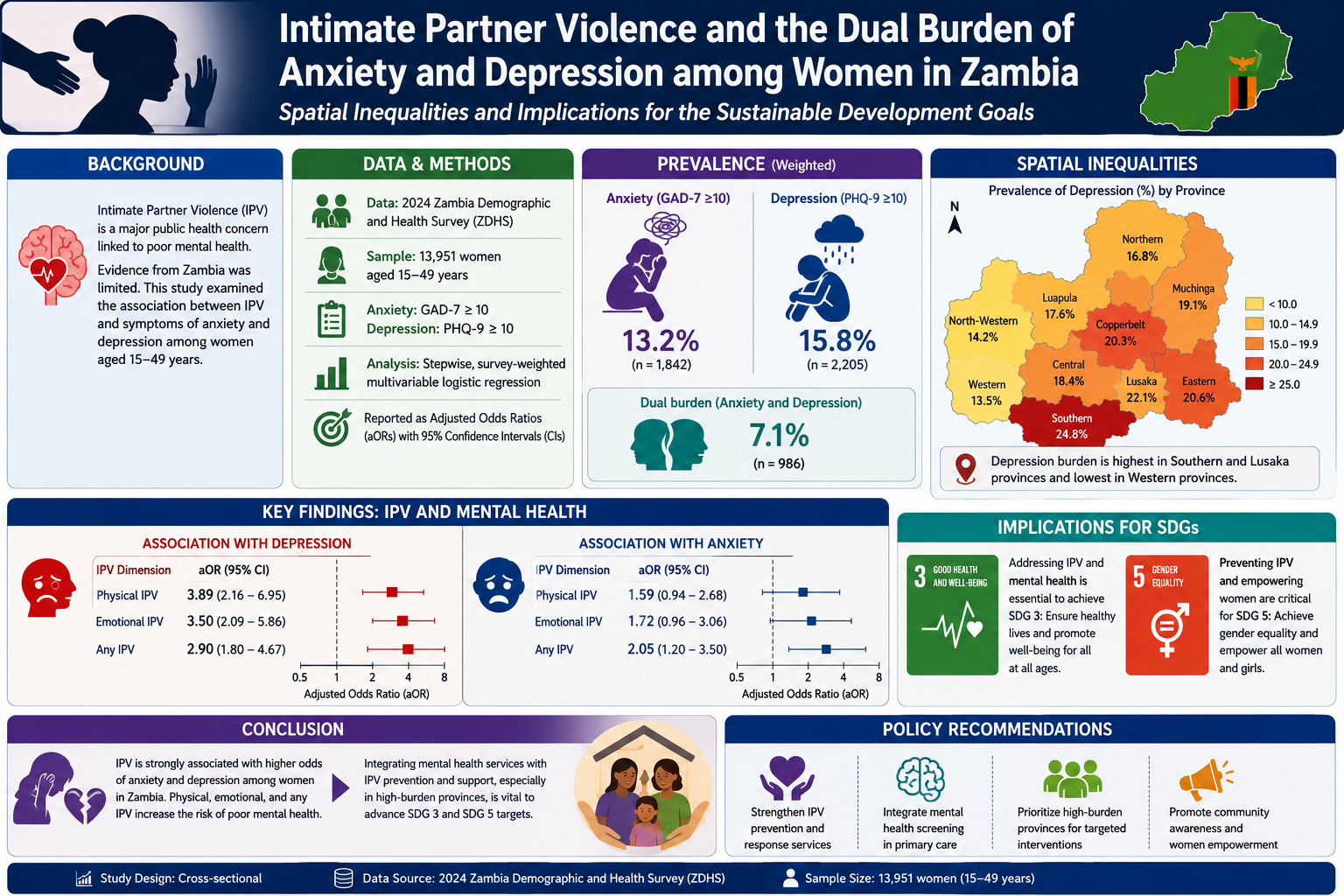
Mental health disorders, particularly depression and anxiety, are major public health concerns among women in Zambia. Although intimate partner violence (IPV) is a recognized risk factor, nationally representative evidence examining its association with mental health and spatial inequalities has been limited.
Methods
-
Data: 13,951 women aged 15–49 years from the 2024 Zambia Demographic and Health Survey (ZDHS).
-
Measures: Depression (PHQ-9) and Anxiety (GAD-7), with scores ≥10 indicating symptoms.
-
Analysis: Stepwise survey-weighted multivariable logistic regression and spatial analysis to identify regional disparities.
Key Findings
-
Physical IPV was strongly associated with depression (AOR = 3.89; 95% CI: 2.16–6.95).
-
Emotional IPV significantly increased the odds of depression (AOR = 3.50; 95% CI: 2.09–5.86).
-
Any IPV was associated with higher odds of:
-
Depression: AOR = 2.90 (95% CI: 1.80–4.67)
-
Anxiety: AOR = 2.05 (95% CI: 1.20–3.50)
-
-
Spatial analysis identified substantial provincial inequalities, with some regions experiencing a disproportionately higher mental health burden.
Implications for Research and Practice
-
Integrating mental health screening, psychosocial support, and IPV prevention into maternal and primary healthcare could improve early identification and care.
-
Geographically targeted interventions can help policymakers prioritize high-burden provinces and accelerate progress toward SDG 3 (Good Health and Well-being) and SDG 5 (Gender Equality).
Links
-
Full paper:
-
Open Access under the Creative Commons Attribution (CC BY 4.0) License.

Please sign in or register for FREE
If you are a registered user on Research Communities by Springer Nature, please sign in