Is It Really a Choice When Unhealthy Food Is Easier to Think Of?
Published in General & Internal Medicine, Public Health, and Behavioural Sciences & Psychology


Abstract
You are watching television and suddenly think of something sweet. It is 3 pm and a snack comes to mind. You walk through a supermarket and notice food you had not planned to buy, or, when being with friends, feeling stressed or celebrating seems naturally connected with particular foods.
We usually describe what happens next as a choice. But there is an important question before that choice: why did that particular food come to mind?
My research has followed this question from early studies of packaging recognition and shopper memory to food environments, salience and the development of Unhealthy Habituation Hooks, or UHHs.[1-8] In my doctoral research, 68% of the food-memory associations elicited by the cues I tested were linked with unhealthy food categories, compared with 32% linked with healthy categories.[6]
This does not mean that 68% of eating happens without thinking, or that people have no control. It simply means that, in this study, unhealthy foods were more likely to come to mind when people were prompted by familiar everyday cues such as being with friends, parties, boredom, stress, sweet or salty tastes, snack times, certain times of day, and television.[6] The finding is about what was easier to remember in those situations, not about people losing their ability to choose.
Importantly, the wider evidence has continued to develop. Meta-analyses, systematic reviews and newer real-world studies now show that food cues can be associated with craving and subsequent eating, that responses depend on individual goals and states, and that cues are embedded throughout everyday environments.[9-14] More recent neuroimaging reviews, a Nature Medicine dietary trial and Australian modelling of supermarket placement restrictions strengthen the case for studying the food environment as part of the behavioural system rather than treating dietary behaviour as an information problem alone.[15-18]
I therefore propose a broader health-promotion question: can policy help reshape what is easy to think of, easy to obtain, convenient to choose and easy to repeat, so that healthier patterns have a fairer opportunity to become habitual?
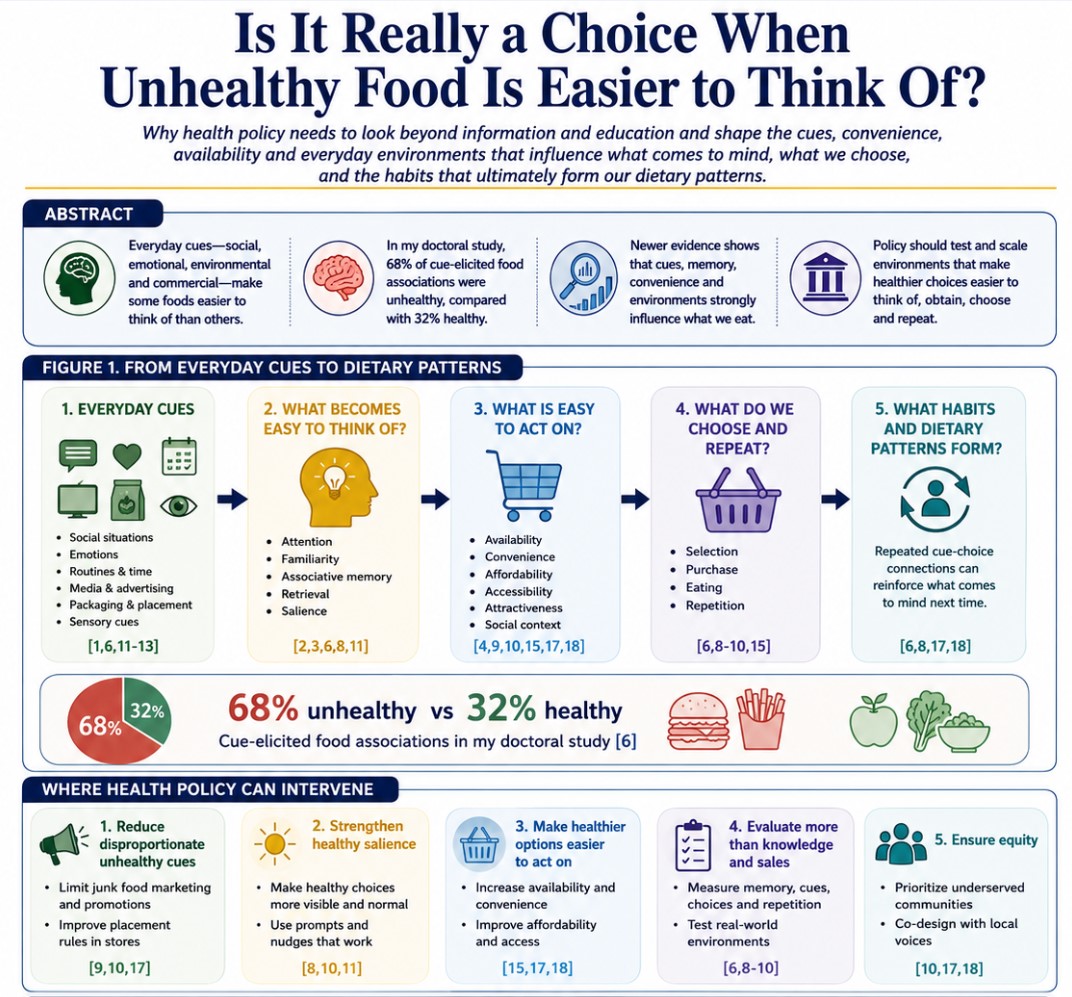
Figure 1. From everyday cues to dietary patterns: a proposal for health promotion and food policy. Proposed synthesis of my research on packaging, memory, food environments, salience, and Unhealthy Habituation Hooks, drawing on broader evidence from food-cue reactivity, cue-based interventions, real-world food environments, neurobiology, and environmental policy.[1-18] The arrows represent hypotheses for prospective testing, not a claim that every food choice follows a single causal sequence.
Why does one food come to mind before another?
My interest in this question began in marketing and consumer behaviour rather than public health. In an in-store study, my colleagues and I examined the packaging elements shoppers spontaneously used to recognise products, identifying features such as colour, brand name, logo, font style and imagery as prominent cues.[1]
We then developed experimental methods that altered packaging elements and measured recognition and memory responses rather than relying only on what people said influenced them.[2,3] The same work was later communicated in a research-focused design publication.[5]
The point was not simply that packaging matters. It was that commercial organisations systematically study what becomes noticeable, familiar and easy to retrieve from memory. That observation led me towards health promotion. Our 2013 work on shopping environments and healthy food purchasing argued that people make food decisions within environments already shaped by promotion, access, and competing signals, while public health responses have often relied heavily on information and encouragement.[4, 6, 8]
When a cue becomes a hook
My doctoral research developed this problem into the construct of Unhealthy Habituation Hooks.[6] I used a semi-experimental approach that combined associative-memory measurement, branding-like metrics, and Bayesian techniques to investigate whether particular cues disproportionately retrieved unhealthy rather than healthy food categories.
The cues included social situations such as parties and time with friends; emotional states including boredom, sadness, stress, loneliness, and happiness; sensory cues such as salty, savoury, and sweet; routines such as breakfast and snacking; particular times of day; and television.[6]
The study did not assume that a cue automatically causes someone to eat. It asked a more specific question: when that cue prompts food-related memory, what becomes easy to think of?
Across the elicited food associations, 68% were connected with unhealthy food categories and 32% with healthy categories.[6] The thesis also separated these memory associations from participants' reported motivations and examined differences in propensity to habituation, reinforcing the idea that knowing what is healthy and having healthy intentions do not necessarily describe the full decision process.
Emotion and social life are part of the environment
Another strand of my consumer-behaviour research reinforced the importance of affective and social influences. Loureiro, Taghian and I examined how benign and malicious envy related to desire for luxury fashion products through different psychological and social pathways.[7]
That study was not about food or obesity and does not provide evidence for UHHs. Its relevance is conceptual: human behaviour is not generated by information alone, and emotions, social comparison, affiliation and learned meaning can influence what people desire and choose.[7] This is particularly relevant because several UHHs in my food research were themselves social and emotional.[6] Food can become connected not only to hunger but also to celebration, friendship, boredom, stress, or a familiar routine.
Can the science of salience be used for health?
In 2021, colleagues and I explicitly tested whether salience methods used in commercial research could be adapted for health promotion.[8] Using associative-memory measures and Bayesian analysis, we found that habitual unhealthy dietary patterns were more likely when foods were saliently connected with taste, social and emotional attributes.
The larger contribution was methodological. If commercial researchers can investigate which products become mentally available in particular situations, public health can use similar principles to investigate how healthier and less healthy options compete in memory. This changes the question from only “Do people know what is healthy?” to “What comes to mind, under which circumstances, and how easily?”
The wider evidence now supports taking cues seriously
A major meta-analysis by Boswell and Kober combined 69 effects from 45 reports involving 3,292 participants. Food-cue reactivity and craving prospectively predicted eating and weight-related outcomes with an overall medium association, although the authors also emphasised variability across studies.[9]
This matters because it moves the discussion beyond a single study or theoretical construct. Food cues and craving are measurable behavioural phenomena associated with what happens next, even though they explain only part of a much more complex system.
Importantly, cues can potentially work in healthier directions as well. Buckland and colleagues' systematic review and meta-analysis of 25 studies found that weight-control cues produced a small overall reduction in food intake, with larger effects among people who already held strong weight-control goals; the authors also cautioned that many included studies had a high risk of bias.[10] That nuance is valuable for policy. A cue is not a magic switch, and simply placing a healthy message in an unhealthy environment is unlikely to solve the problem. But the evidence supports studying when cues work, for whom, and in what contexts.
Learning and memory are central to food-cue responses
Kanoski and Boutelle's 2022 Springer Nature review brings the learning-and-memory argument particularly close to my original proposition. They describe food cues as including sights, smells, emotions, situations, and times associated with food-related memories, and review evidence that repeated learning can link these cues to food seeking, craving, and eating.[11]
Their review also makes an important point for ordinary life: food-cue responses can persist even when someone is not physiologically hungry. Attention, learned associations, reward, memory and physiological state can interact rather than operating as separate systems.[11] This is why health promotion cannot treat the person as a passive recipient of nutritional facts. Information enters a mind that has already learned from thousands of previous exposures.
What do people actually encounter outside the laboratory?
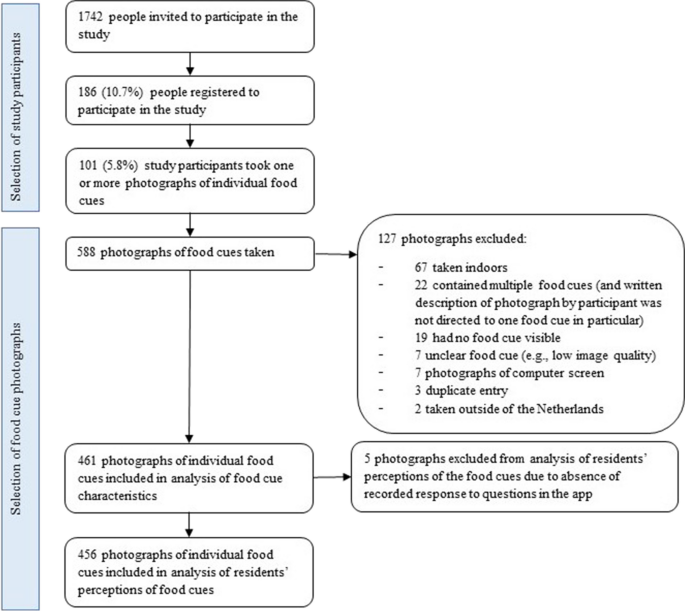
Recent Springer Nature studies bring this question into everyday environments. Wopereis and colleagues asked 101 adults to photograph food cues they encountered in outdoor public spaces; participants produced 461 photographs, and among cues depicting food, 54.4% showed only unhealthy food.[12]
A follow-up photovoice study found that residents described unhealthy food cues as recurring reminders that these foods were accessible and affordable. Participants identified hunger, fatigue and cue attractiveness as factors that could amplify their influence, while also expressing legitimate concerns about autonomy and paternalism in possible regulation.[13]
These studies do not validate UHHs because they were not designed to test my construct. They do, however, independently strengthen the case for investigating what people encounter, what those encounters activate, and what happens next.
What do newer brain studies add?
A 2025 systematic review and meta-analysis by Vartanian and colleagues synthesised evidence on neural responses to visual food cues according to body weight and hunger state.[14] The study adds to a long literature showing that food cues recruit brain systems involved in reward, attention and control, while also demonstrating that hunger and individual characteristics matter.
A 2026 Springer Nature scoping review by Flanagan and colleagues examined 57 intervention studies using food-cue fMRI in obesity and binge-eating disorder.[16] Reward-related and cognitive-control regions repeatedly appeared in treatment-response findings, but predictive evidence remained limited and heterogeneous, leading the authors to call for better standardisation.[16]
This is exactly why food behaviour should not be reduced to an automatic brain response. The evidence instead supports a multi-level system in which environment, memory, reward, control, physiological state and experience interact.
Information and education are necessary, but they cannot do all the work
A 2025 randomised crossover trial in Nature Medicine provides another important piece of the puzzle. Adults with overweight or obesity were given minimally processed and ultra-processed diets that both followed UK healthy dietary guidance; participants lost weight on both diets, but weight loss was significantly greater during the minimally processed condition.[15]
That trial did not test UHHs or associative memory. Its relevance here is broader: even when dietary guidance is held relatively constant, characteristics of the food and eating environment still matter. Availability and convenience therefore should not be framed only as problems. They are also part of the solution.
Healthy food should not simply exist somewhere in the environment. It needs to be easy to find, affordable where possible, convenient to obtain and prepare, socially normal, and familiar enough to come to mind when people actually make decisions.
Policy can change the starting conditions
Australia now has particularly relevant policy evidence. Osifowora and colleagues modelled restrictions on unhealthy food and drink placement at supermarket checkouts, aisle ends and entrances and estimated reductions in mean BMI of 0.26 kg/m² in males and 0.21 kg/m² in females, approximately 0.37 million health-adjusted life years gained, and A$4.45 billion in healthcare savings over the modelled population lifetime.[17]
These are modelled estimates rather than observed population outcomes. But they demonstrate why structural interventions deserve serious testing: prominent placement changes what is repeatedly visible and convenient at the moment of purchase.
WHO's 2026 guideline on healthy school food environments moves in the same direction. It recommends standards to increase the availability and consumption of healthier foods and conditionally recommends nudging interventions that can change the placement, presentation or price of food options.[18] That is an important policy shift. The task is no longer only to tell people what a healthier decision looks like, but to create environments that make healthier decisions easier to adopt and sustain.
The missing policy outcome may be memory
I think we should go one step further. When food-environment policies are evaluated, we usually measure purchasing, dietary intake, weight or health outcomes; we could also measure whether the environment changes what comes to mind.
If unhealthy products become less dominant in prominent environments and healthier foods become more visible, available, convenient and positively associated with everyday routines, do people's cue-food memory associations change over time?
My doctoral research distinguished UHHs from Healthy Habituation Hooks, cues that preferentially retrieved healthier food categories.[6] That gives us a testable positive proposition: policy should not only try to suppress unhealthy salience; it could investigate how to build healthy salience.
Prospective studies could combine ecological momentary assessment, real-world cue mapping, associative memory testing, purchasing or dietary data, and contextual measures such as hunger, fatigue, mood, and stress. Policy changes in supermarkets, schools, and public environments could serve as natural experiments examining a longer pathway: what people encounter, what comes to mind, what is available and convenient, what they repeatedly choose, and which habits ultimately form.
A fairer starting point for choice
This argument does not remove personal agency. It recognises that agency never begins in an empty space. Commercial food environments already operate through visibility, placement, packaging, repetition, availability, convenience, familiarity and emotional association.[1-8] Health promotion should be equally sophisticated in understanding the behavioural consequences of those conditions.
We have become good at communicating what constitutes healthier choices. The next challenge is to make healthier food easy to think of, easy to find, convenient to choose and easy to repeat. If our environments influence which foods come to mind, the policy question shifts from information and education alone toward how environments shape what is mentally available and what becomes easy to act on. It requires environments that make healthier choices memorable, available, convenient, and, eventually, habitual.
Key takeaways for policy and research
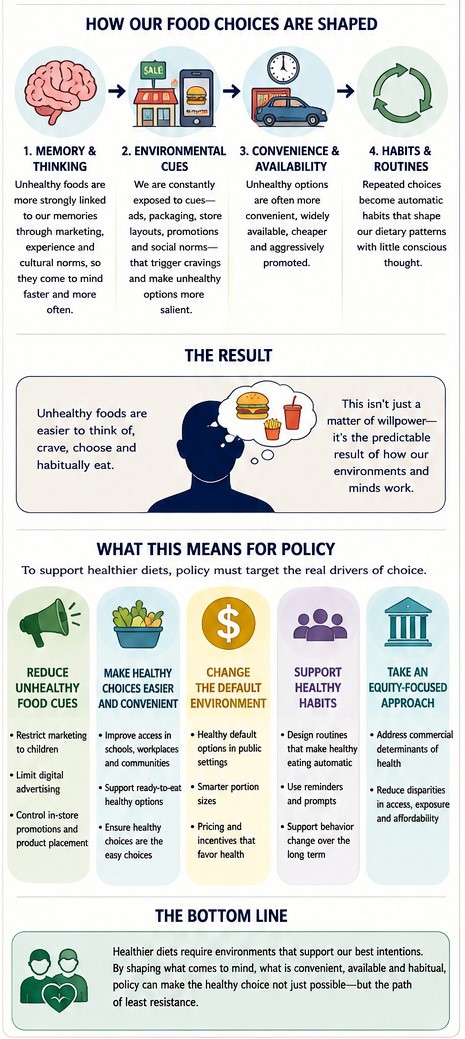 Figure 2. A proposal for policy and research.
For policy
- Move beyond information and education alone. Nutrition knowledge matters, but policy should also address the cues, placement, convenience, availability and repeated exposures that shape what comes to mind and what is easiest to choose.
- Make healthier foods easier to think of and easier to act on. Healthy options should be visible, familiar, accessible, affordable where possible, convenient and well integrated into everyday routines.
- Treat placement and environmental design as behavioural interventions. Supermarkets, schools, workplaces and public spaces can be designed to reduce disproportionate unhealthy salience while strengthening healthier alternatives.
- Evaluate more than purchasing and intake. Policy evaluation should also examine whether changing environments alters cue exposure, memory associations and repeated behaviour over time.
- Protect agency by improving the conditions in which choices are made. The aim is not to remove choice, but to create a fairer starting point in environments already shaped by commercial cues and behavioural influences.
For research
- Prospectively retest Unhealthy Habituation Hooks in contemporary populations. The original findings should be replicated across different cultural, socioeconomic and age groups rather than assumed to remain unchanged.
- Follow the full pathway from cue to habit. Studies should distinguish between exposure, attention, what comes to mind, desire, availability, convenience, choice, consumption and repetition.
- Test whether environments can change memory. Natural experiments around supermarket placement, school food standards and other policy changes could examine whether healthier environments gradually alter which foods are most readily retrieved.
- Investigate Healthy Habituation Hooks as well as unhealthy ones. Research should test whether repeated positive exposure, convenience, and availability can strengthen associations with healthy foods and support healthier habits.
- Measure context and individual variation. Hunger, fatigue, stress, mood, social situations, routines and other factors may change how people respond to the same cue and should be incorporated into prospective designs.
- Link behavioural mechanisms to policy outcomes. The next generation of studies should ask not only whether an intervention works, but how, for whom, under which conditions, and whether its effects become sustained enough to influence dietary patterns.
References
- Pinero de Plaza MA, Lockshin L, Kennedy R, Corsi A. Distinctive elements in packaging (FMCG): an exploratory study. Paper presented at: Australian & New Zealand Marketing Academy Conference 2010; 2010 Nov 29-Dec 1; Christchurch, New Zealand. 7 p. Available from: https://researchnow.flinders.edu.au/en/publications/distinctive-elements-in-packaging-fmcg-an-exploratory-study/
- Pinero de Plaza MA, Lockshin L, Kennedy R, Corsi AM. A new method to measure behavioral responses to packaging design elements. In: Paulo R, editor. Marketing to citizen: going beyond customers and consumers: conference proceedings. Portugal: European Marketing Academy; 2012. p. 1-8. Available from: https://www.unipegaso.iris.cineca.it/handle/20.500.12607/81099
- Pinero de Plaza MA, Lockshin L, Kennedy R, Corsi AM. A new behavioural methodology: measuring the effect of packaging design on shopper's memory. In: Muratovski G, editor. agIdeas Research: Design for Business. Vol. 1. Australia: agIdeas; 2012. p. 140-149. Bibliographic record: https://researchers.adelaide.edu.au/profile/alejandra.pinerodeplaza
- Pinero de Plaza MA, Taghian M. Shopping environment dynamics and consumers' healthy food purchase. Paper presented at: Australian & New Zealand Marketing Academy Conference 2013; 2013 Dec 1-4; Auckland, New Zealand. 6 p. Available from: https://researchnow.flinders.edu.au/en/publications/shopping-environment-dynamics-and-consumers-healthy-food-purchase
- Pinero de Plaza MA, Lockshin L, Kennedy R, Corsi AM. A new behavioral methodology: measuring the effect of packaging design on shopper's memory. Executive Summary: Design for Business: Research. 2015;4:7 p. Bibliographic record: https://marketingscience.info/staff/professor-rachel-kennedy
- Pinero de Plaza MA. The semiconscious choice of food as a potential obesogenity marker [doctoral thesis]. Melbourne: Deakin University; 2016. Available from: https://hdl.handle.net/10536/DRO/DU:30090810
- Loureiro SMC, Pinero de Plaza MA, Taghian M. The effect of benign and malicious envies on desire to buy luxury fashion items. J Retail Consum Serv. 2020;52:101688. https://doi.org/10.1016/j.jretconser.2018.10.005
- Pinero de Plaza MA, Taghian M, Marmolejo-Ramos F, Barrera-Causil CJ, Hall J. Investigating salience strategies to counteract obesity. Health Promot Int. 2021;36(6):1539-1553. https://doi.org/10.1093/heapro/daaa123
- Boswell RG, Kober H. Food cue reactivity and craving predict eating and weight gain: a meta-analytic review. Obes Rev. 2016;17(2):159-177. https://doi.org/10.1111/obr.12354
- Buckland NJ, Er V, Redpath I, Beaulieu K. Priming food intake with weight control cues: systematic review with a meta-analysis. Int J Behav Nutr Phys Act. 2018;15:66. https://doi.org/10.1186/s12966-018-0698-9
- Kanoski SE, Boutelle KN. Food cue reactivity: neurobiological and behavioral underpinnings. Rev Endocr Metab Disord. 2022;23:683-696. https://doi.org/10.1007/s11154-022-09724-x
- Wopereis TM, Djojosoeparto SK, Rongen FC, Peeters SC, de Vet E, Poelman MP. Temptation at every corner: exploring public perceptions of food cues and policy support for governmental food cue regulation in outdoor public spaces. BMC Med. 2024;22:602. https://doi.org/10.1186/s12916-024-03818-w
- Wopereis TM, Roman KJ, Djojosoeparto SK, Poelman MP. Voicing residents' perception of (commercial) food cues in outdoor public spaces: a photovoice study. BMC Public Health. 2025;25:1496. https://doi.org/10.1186/s12889-025-22619-1
- Vartanian M, Jahanitabesh A, Christensen JF, Staub H, Jensen DEA, Villringer A, Witte AV. Neural responses to visual food cues according to weight and hunger state: a systematic review and meta-analysis. Neurosci Biobehav Rev. 2025;177:106301. https://doi.org/10.1016/j.neubiorev.2025.106301
- Dicken SJ, Jassil FC, Brown A, Kalis M, Stanley C, Ranson C, et al. Ultraprocessed or minimally processed diets following healthy dietary guidelines on weight and cardiometabolic health: a randomized, crossover trial. Nat Med. 2025;31:3297-3308. https://doi.org/10.1038/s41591-025-03842-0
- Flanagan K, Pacheco LB, Gao M, Verdejo-Garcia A. Harnessing food cue evoked neuroimaging towards treatment optimisation for obesity and binge eating disorder. Rev Endocr Metab Disord. 2026. https://doi.org/10.1007/s11154-026-10045-6
- Osifowora B, Tran H, Frew E, Ananthapavan J. The cost-effectiveness of placement restrictions of unhealthy food and drinks at end of aisles and checkouts in Australian supermarkets. Nutr J. 2026;25:56. https://doi.org/10.1186/s12937-026-01307-9
- World Health Organization. Policies and interventions to create healthy school food environments: WHO guideline. Geneva: World Health Organization; 2026. Available from: https://www.who.int/publications/i/item/9789240118324

Dr Maria Alejandra Piñero de Plaza is a health systems researcher and implementation scientist who helps teams address a common problem in health innovation: promising ideas often work in pilots but struggle to become useful, equitable, and sustainable in real-world systems. Her work sits at the intersection of implementation science, caring science, digital health, AI-enabled evaluation, consumer engagement, and health equity. She is a Research Fellow at the Caring Futures Institute, Flinders University, and an Adjunct Fellow at the Adelaide Medical School, The University of Adelaide.
She works best with complex problems where evidence, people, technology, services, and policy interact. Her methodological work includes PROLIFERATE and PROLIFERATE_AI, decision-intelligence frameworks that integrate implementation science, realist evaluation, participatory methods, Bayesian modelling, Monte Carlo simulation, expert elicitation, and computational modelling. These frameworks help collaborators move beyond a simple question, “Does it work?”, toward more useful implementation questions: Who does it work for, under what conditions, through which mechanisms, with what trade-offs, and with what unintended consequences?
She brings evidence of delivery across research, policy, and implementation. Her work has contributed to more than A$2.67 million in competitive and government-funded projects, with evaluations informing state-level models of care, national policy discussions, and real-world implementation across cardiac rehabilitation, emergency cardiac care, virtual care, AI implementation, and priority populations. This includes the Country Heart Attack Prevention Project, which contributed to translating flexible cardiac rehabilitation into South Australia’s Statewide Cardiac Rehabilitation Model of Care; RAPIDx AI, a multi-site program evaluating AI-enabled decision support in emergency cardiac care; Safe@Home, examining virtual care and telemonitoring for older adults; CREW, focused on cardiac rehabilitation for women; CR4ALL, focused on scaling cardiac rehabilitation for underserved populations; and the Frail, Homebound and Bedridden People program, which helped make visible the access needs of people who cannot easily attend care in person.
Her publications provide evidence across the areas in which she most often collaborates: consumer engagement in health policy, research and services; continuity of care for First Nations Peoples living with chronic disease; telehealth for homebound people; human-centred AI implementation in emergency cardiac care; care biography; and the Caring Life Course Theory. Across this work, she examines how health systems can better recognise lived experience, relational care, cultural continuity, care networks, and context as central to whether evidence becomes useful in practice.
As a partner, Dr Piñero de Plaza brings methodological depth, practical translation experience, and a collaborative approach to work. With a PhD in health promotion, behaviour, and health, and prior training in marketing science, journalism, anthropology, consumer behaviour, and applied AI and data science, she pays close attention to how people interact with health technologies, processes of change, information, services, and environments.
She holds a certificate in Applied AI and Data Science from MIT, and applies this training through a responsible, human-centred, and context-sensitive evaluation lens.
She has received the Women of Colour in STEM Healthcare Innovator Award, the CSIRO ON Prime Innovation Reward, research excellence awards from Flinders University, and Wiley Top Cited and Top Downloaded Article recognitions. She understands these achievements as part of collaborative work with research teams, consumers, clinicians, communities of practice, mentors, and partner organisations committed to improving care. Her broader profile is available through University of Adelaide Researcher Profiles, Flinders ResearchNow, ORCID, and LinkedIn.