The 2026 challenge: turning wicked problems into living evidence for care, health innovation, and evaluation in a post-truth political economy
Published in Public Health, Mathematical & Computational Engineering Applications, and Law, Politics & International Studies

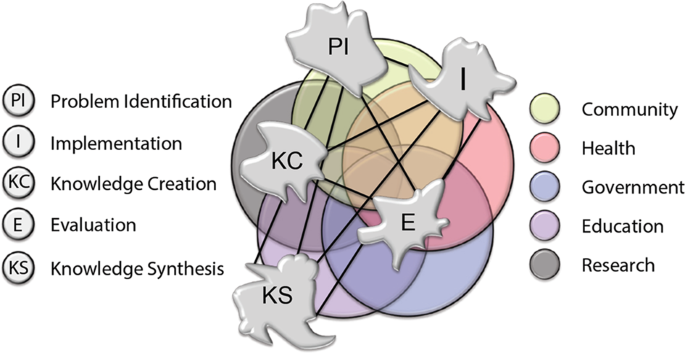

A “wicked problem” is a problem where the rules keep shifting. Stakeholders value different outcomes, evidence is interpreted through different lenses, and each attempted solution reshapes the context, creating new trade-offs. In health and care, many of the toughest challenges fit this pattern, which is why innovation depends on fast, shared learning rather than one-off answers.
That is why the framing developed with Tieu and colleagues is the guiding theme of this opinion piece. In Wicked Problems in a Post-Truth Political Economy, we argued that knowledge translation (KT) is increasingly a legitimacy challenge rather than merely a dissemination task. Evidence competes with narratives, incentives, and power, and being right does not guarantee that it will be believed or acted upon. Translation breaks down when the shared conditions for learning and trust erode. [1]
What we mean by “post-truth political economy” and why it changes evaluation
This phrase can sound abstract, so we define it precisely.
Political economy refers to how power, institutions, incentives, and resources shape what gets decided, funded, and scaled. Post-truth points to contexts where shared factual ground is fragile: selective uptake of evidence, misinformation dynamics, polarisation, and competing narratives can outweigh technical validity in shaping decisions. Put together, post-truth political economy means:
The uptake of evidence is shaped as much by trust, incentives, narratives, and power as by scientific merit. [1]
That matters because it changes what “good evidence” must do. In wicked-problem conditions, evidence must be not only correct but legible, auditable, and useful for steering decisions under contestation.
Against that backdrop, our 2024–2025 publication set converges on one practical claim:
If innovation is meant to improve human lives, it must be evaluated as a living intervention inside a complex adaptive system. That means measuring early signals, steering in real time, and making equity and meaning explicit. It also means treating habits and behaviour as part of the intervention, not an afterthought: whether people understand it, trust it, fit it into their routines, and keep using it over time: These are often the mechanisms through which impact is created or lost. [2–19]
What did we learn in 2024–2025 that makes that claim defensible, and what does it imply for 2026?
1) Care is relational and biographical, so the science must model trajectories, not snapshots
A first thread is conceptual, but operational: care is not an “episode.” It unfolds through relationships, transitions, and accumulated experience.
We advanced this trajectory logic in Caring Life Course Theory, using cardiac rehabilitation as a worked exemplar of how care needs, mechanisms, and outcomes evolve across time and contexts. [7] We extended this logic to survivorship, showing how care needs and self-care behaviours are shaped by trajectories rather than isolated events. [8] We also strengthened the conceptual foundation by incorporating the importance of a care biography, clarifying how “biographical time and narratives” help explain what people carry forward into care encounters and decisions. [9]
In parallel, Fundamentals of Care work moved from framework to measurable modelling. We validated a tool and used predictive pathway analysis to show that context and nurse–patient relationships are not background noise, but decision-relevant signals. [10] We also developed a patient-centred predictive model of caring interaction, moving relational care toward measurable, testable mechanisms. [11] A conference output reinforced the feasibility across Australian healthcare settings (and a pilot in Spain) through early predictive modelling of Fundamentals of Care decision-making. [12]
Why this matters under post-truth conditions: when stakeholders disagree on what “good” entails, evaluation requires constructs that remain meaningful across groups. Trajectory-based, person-centred constructs help anchor “value” in lived care, rather than in institutional proxies. [1,7,10]
2) Innovation succeeds or fails through adoption, so adoption must be treated as a primary outcome and measured early
A second thread makes the first operational: good ideas fail not only due to limited clinical merit, but because systems do not adopt, absorb, and sustain them.
We argued directly that adoption must be measured before it is too late, because late evaluation becomes retrospective storytelling rather than a tool for learning and redesign. [13] We also reframed evaluation as behavioural and systems-aware, including how choice architectures shape what people actually do, and why evaluation must move from narrow “utility” proxies toward meaning, mechanisms, and multilevel prediction. [2,14–16]
Crucially, this is not only conceptual. We evaluated RAPIDx AI in emergency cardiac care using a human-centred approach that treated sociotechnical fit (workflow, decision-making, end-user goals) as part of the evidence, not as an implementation appendix. [17] A complementary analysis traced the pathway from comprehension to behaviour in emergency departments, positioning adoption as part of the causal chain. [18] We applied the same adoption-aware logic to inter-professional education, demonstrating how mixed-methods digital evaluation can make learning outcomes, use, and context visible. [19]
Why this matters in a post-truth political economy: trust collapses quickly. When legitimacy is contested, the window for course-correction is short. Early adoption measurement becomes a risk-management tool for credibility, not merely an academic endpoint. [1,13,17]
3) Equity is not an aspiration; it is a condition for legitimacy and sustainability
The third thread forces the first two to answer a more difficult question: by whom is adoption undertaken, and at what cost?
Our systematic review and meta-analysis on telehealth for homebound populations synthesised utilisation, quality of life, and wellbeing outcomes, treating telehealth as a care solution embedded in social conditions rather than a simple technology swap. [20] We also synthesised the evidence on self-management support for socioeconomically disadvantaged older adults with chronic conditions, underscoring the need to design mechanisms that account for constrained resources and unequal burdens. [21] We translated this equity logic into an accessible narrative: AI and telehealth can act as bridges to equity, but only when evaluation treats equity-relevant outcomes as primary endpoints. [22]
The 2024 evidence base provided essential grounding: digital interventions for loneliness and social isolation [23], nurse-led interventions for hypertension and lifestyle behaviour [24], and the measurement properties of utility-based HRQoL measures in cardiac rehabilitation and secondary prevention [25]. Together, these show that inequities are patterned, measurable, and often amplified by what systems choose to measure and reward.
Why this matters under post-truth conditions: inequitable impact becomes a legitimacy crisis. Equity is not only ethics. It is system stability. [1,20,21]
4) Wicked problems require durable transdisciplinary learning systems, not project-bounded proofs
Finally, our work on transdisciplinary practice highlighted a structural constraint: wicked problems outlast typical funding cycles. We documented how health researchers understand and promote transdisciplinary collaboration in practice, including the factors that enable or impede it. [26] A complementary analysis criticised the “project straightjacket” that traps transdisciplinarity inside short-term deliverables rather than durable learning infrastructures. [27]
This is not separate from evaluation. It is the governance condition for evaluation to become “living evidence” rather than a one-off report.
The gear-mesh: how these findings integrate into one coherent agenda
Here is the hinge that connects care, innovation, and evaluation into a single argument.
-
If care is a trajectory (relational, biographical), evaluation must track mechanisms over time rather than rely on snapshots. [7–12]
-
If mechanisms unfold over time, adoption is part of the mechanism and must be measured early and iteratively. [13–19]
-
If adoption is part of the mechanism, equity is present from the outset in who can access, adopt, and benefit, as well as in how burdens are distributed. [20–25]
-
Under a post-truth political economy, all of this must be legible and auditable to all stakeholders, because legitimacy is contested and learning can fail even when the evidence is strong. [1,2,13]
So the 2026 challenge is not “more innovation” or “more AI.” It is:
Build evaluation systems that make value visible early, credibly, and equitably, so complex systems can learn together even when the truth is contested. [1,2,13]
What we should build next and why applied AI and data science now matter
The most buildable research challenges for 2026 sit at the intersection of implementation science, complexity, and applied AI and data science, not as “automation,” but as infrastructure for learning.
Challenge A: Living evaluation pipelines (signals → predictions → decisions)
We need evaluation pipelines that update as contexts shift, combining pathway models, multilevel analytics, and interpretable prediction so systems can correct course while change is still possible. [10,11,14–17]
Challenge B: Adoption foresight
We should operationalise early indicators of adoption (“adoption phenotypes”) that capture comprehension, workflow fit, burden, trust, and behaviour change, then test whether redesign based on those signals prevents predictable failure modes. [13,17,18]
Challenge C: Equity-explicit endpoints that stand up under scrutiny
Equity must be treated as a design variable and an outcome: burden, access friction, relational safety, heterogeneous effects, and wellbeing should sit alongside utilisation and clinical endpoints, especially in digitally mediated care, where exclusion can be invisible. [20–25]
Challenge D: Durable transdisciplinary learning systems
If wicked problems are the unit of challenge, then collaboration, governance, and shared measurement must outlast project cycles. Otherwise, learning resets and “evidence” becomes episodic rather than cumulative. [26,27]
An open invitation for 2026 collaborations
If we accept the post-truth political economy diagnosis, then the scientific response is not to speak louder. It is to develop learning architectures that remain credible in the face of contestation.
The most useful partnerships and projects in 2026-2027 will likely sit at the intersections of:
-
complexity science + implementation (mechanisms and emergence)
-
applied AI & data science (monitoring, prediction, interpretability, decision support)
-
equity and ethics (legitimacy, distribution of benefits and burdens)
-
clinical + community collaboration (real constraints, real meaning)
-
transdisciplinary governance (durability beyond projects)
Wicked problems do not yield to single interventions. They yield to systems that learn, and learning is something we can co-design. [12-20, 34 -38]
References
-
Tieu, M., Lawless, M., Hunter, S. C., Pinero de Plaza, M. A., Darko, F., Mudd, A., Yadav, L., & Kitson, A. (2023). Wicked problems in a post-truth political economy: a dilemma for knowledge translation. Humanities and Social Sciences Communications, 10(1), Article 280. https://doi.org/10.1057/s41599-023-01789-6
-
Piñero de Plaza, M. A. (2025). From Utility to Meaning: Reframing Health System Evaluation through Multilevel, Predictive and Biographical Models. Springer Nature Research Communities. https://go.nature.com/3XNzoGj
-
Piñero de Plaza, M. A. (2025). Health System Evaluation, Rewired: health professional behaviours. Springer Nature Research Communities. https://go.nature.com/4ie0D4f
-
Piñero de Plaza, M. A. (2025). The Not-So-Hidden Architecture of Our Choices. Springer Nature Research Communities. https://go.nature.com/3FzrzOr
-
Piñero de Plaza, M. A. (2025). A Systems-Aware Evaluation Approach for Innovation. Springer Nature Research Communities. https://go.nature.com/4iN8XIf
-
Piñero de Plaza, M. A., Lawless, M., Reo, R. (2025). Seeing Through the Patient’s Eyes: Co-designing a Video and Infographic to Transform Professional Care Relationships. Springer Nature Research Communities. https://go.nature.com/4eeyQ37
-
Piñero de Plaza, M. A., Hutchinson, C., Beleigoli, A., Tieu, M., Lawless, M., Conroy, T., Feo, R., Clark, R. A., Dafny, H., McMillan, P., Allande-Cussó, R., & Kitson, A. A. (2025). The Caring Life Course Theory: Opening new frontiers in care—A cardiac rehabilitation example. Journal of Advanced Nursing, 81(8), 5163–5180. https://doi.org/10.1111/jan.16312
-
Lawless, M. T., Piñero de Plaza, M. A., Thamm, C., Kitson, A., & Paterson, C. (2025). Applying the Caring Life-Course Theory to Explore Prostate Cancer Survivors’ Care Needs, Care Trajectories, And Self-Care Behaviors: A Qualitative Study. Seminars in Oncology Nursing, 41(6), 152017. https://doi.org/10.1016/j.soncn.2025.152017
-
Tieu, M., Cussó, R. (Allande-Cussó), Collier, A., Cochrane, T., Piñero de Plaza, M. A., Lawless, M., Feo, R., Perimal-Lewis, L., Thamm, C., Hendriks, J. M., Lee, J., George, S., Laver, K., & Kitson, A. (2024). Care biography: A concept analysis. Nursing Philosophy, 25(3), e12489. https://doi.org/10.1111/nup.12489
-
Allande-Cussó, R., Piñero de Plaza, M. A., Kitson, A., Feo, R., Conroy, T., & Porcel-Gálvez, A. M. (2025). How Context Shapes Person-Centred Fundamental Care Through Nurse–Patient Relationships: Validation of the FoC Intelligence Modelling Tool and Predictive Pathway Analysis. Journal of Advanced Nursing. https://doi.org/10.1111/jan.70335
-
Allande-Cussó, R., Piñero-De Plaza, M. A., Gómez-Salgado, J., & Porcel-Gálvez, A. M. (2025). Measuring the Science of Caring: A Patient-Centred Predictive Model for the Caring Interaction. Scandinavian Journal of Caring Sciences, 39(3), e70110. https://pmc.ncbi.nlm.nih.gov/articles/PMC12418724/
-
Piñero de Plaza, M. A., Allande Cusso, R., Conroy, T., Porcel-Gálvez, A. M., Feo, R., Chipchase, L., Adams, A. M. N., Parr, J., & Kitson, A. (2025). Exploring the Fundamentals of Care Framework through a Predictive Model: Insights from a Pilot Study in Australian Healthcare Settings. Abstract from 2025 ILC Annual International Conference, Genoa, Italy. https://ilccare.org/event/2025-ilc-annual-international-conference/
-
Piñero de Plaza, M. A. (2025). Why good ideas fail: measure adoption before it’s too late. Springer Nature Research Communities. https://go.nature.com/3KauKhD
-
Piñero de Plaza, M. A. (2025). PROLIFERATE_AI CSIRO On PRIME. https://research.csiro.au/onalumni/proliferate_ai/
-
Flinders University. (2026). PROLIFERATE_AI: Leading the future of innovation with AI, predictive modelling, and ethical user-centred design. Research@Flinders (ResearchNow). https://researchnow.flinders.edu.au/en/activities/proliferateai-leading-the-future-of-innovation-with-ai-predictive/
-
A HT. RAPIDx AI [Internet]. 2023. https://healthtranslationsa.org.au/project/rapid-x-ai/ (accessed 2024 Aug 19).
-
Piñero de Plaza, M. A., Lambrakis, K., Marmolejo-Ramos, F., Beleigoli, A., Archibald, M., Yadav, L., McMillan, P., Clark, R., Lawless, M., Morton, E., Hendriks, J., Kitson, A., Visvanathan, R., Chew, D. P., & Barrera Causil, C. J. (2025). Human-centred AI for emergency cardiac care: Evaluating RAPIDx AI with PROLIFERATE_AI. International Journal of Medical Informatics, 196, 105810. https://doi.org/10.1016/j.ijmedinf.2025.105810
-
Pinero de Plaza, M. A. (2025). From Comprehension to Behaviour: A PROLIFERATE_AI Secondary Analysis of RAPIDx AI Adoption Across South Australian Emergency Departments. Poster session presented at The 2025 SA CVRN Research Showcase and Awards, Adelaide, Australia. https://researchnow.flinders.edu.au/en/publications/from-comprehension-to-behaviour-a-proliferateai-secondary-analysi/
-
Piñero De Plaza, M. A. (2025). Advancing Digital Evaluation for Inter-Professional Education: A PROLIFERATE_AI Mixed-Methods Analysis. In J. Bichel-Findlay (Ed.), Health. Innovation. Community: Engage. Disrupt. Transform (Studies in Health Technology and Informatics, Vol. 333, pp. 82–86). IOS Press. https://doi.org/10.3233/SHTI251580
-
Piñero de Plaza, M. A., Gulyani, A., Bulto, L. N., Allande Cusso, R., Pearson, V., Lange, B., Marin, T., Gebremichael, L., Brown, S., Dafny, H., Sajeev, S., Bulamu, N., Beleigoli, A., Nesbitt, K., McMillan, P., Clark, R., Tieu, M., Kitson, A., Champion, S., Hines, S., & 1 other. (2025). Telehealth as a Care Solution for Homebound People: Systematic Review and Meta-Analysis of Healthcare Utilization, Quality of Life, and Well-Being Outcomes. Health and Social Care in the Community. 7224151. https://doi.org/10.1155/hsc/7224151
-
Lawless, M. T., Oster, C., Block, H., Cash, B., Bulto, L. N., Piñero de Plaza, M. A., George, S., Ambagtsheer, R., Archibald, M., Battersby, M., & Kitson, A. (2025). Self-management support interventions for socioeconomically disadvantaged older adults with chronic conditions: A systematic review. Patient Education and Counseling, 141, 109305. https://doi.org/10.1016/j.pec.2025.109305
-
Piñero de Plaza, M. A. (2025). “Care Finally Came to Me”: AI and Telehealth as Bridges to Equity. Springer Nature Research Communities. https://go.nature.com/45sVD7h
-
Ambagtsheer, R. C., Borg, K., Townsin, L., Piñero de Plaza, M. A., O’Brien, L. M., Kunwar, R., & Lawless, M. T. (2024). The effectiveness of technology interventions in reducing social isolation and loneliness among community-dwelling older people: A mixed methods systematic review. Archives of Gerontology and Geriatrics Plus, 1(1), 100008. https://doi.org/10.1016/j.aggp.2024.100008
-
Bulto, L. N., Roseleur, J., Noonan, S., Piñero de Plaza, M. A., Champion, S., Dafny, H. A., Pearson, V., Nesbitt, K., Gebremichael, L. G., Beleigoli, A., Schultz, T., Hines, S., Clark, R. A., & Hendriks, J. M. (2024). Effectiveness of nurse-led interventions versus usual care to manage hypertension and lifestyle behaviour: a systematic review and meta-analysis. European Journal of Cardiovascular Nursing, 23(1), 21–32. https://doi.org/10.1093/eurjcn/zvad040
-
Bulamu, N. B., Gebremichael, L. G., Hines, S., Mpundu-Kaambwa, C., Pearson, V., Dafny, H. A., Piñero de Plaza, M. A., Beleigoli, A., Kaambwa, B., Hendriks, J. M., & Clark, R. A. (2024). Measurement properties of utility-based health-related quality of life measures in cardiac rehabilitation and secondary prevention programs: a systematic review. Quality of Life Research, 33(9), 2299–2320. https://doi.org/10.1007/s11136-024-03657-5
-
Lawless, M. T., Tieu, M., Archibald, M. B., Piñero de Plaza, M. A., & Kitson, A. L. (2025). From Promise to Practice: How Health Researchers Understand and Promote Transdisciplinary Collaboration. Qualitative Health Research, 35(1), 3–16. https://doi.org/10.1177/10497323241235882
-
Romera, A. J., Bratman, E. Z., Piñero de Plaza, M. A., Descalzo, A. M., & Ghneim-Herrera, T. (2025). Freeing transdisciplinarity from the project straightjacket: reframing the problem. Social Sciences & Humanities Open, 11, 101483. https://doi.org/10.1016/j.ssaho.2025.101483
-
Nesbitt, K., Champion, S., Pearson, V., Gebremichael, L. G., Dafny, H., Ramos, J. S., Suebkinorn, O., Piñero de Plaza, M. A., Gulyani, A., Du, H., Clark, R. A., Beleigoli, A., & on behalf of the NHMRC Country Heart Attack Prevention (CHAP) Partnership Project Team. (2025). The effectiveness of interactive cardiac rehabilitation web applications versus usual care on programme completion in patients with cardiovascular disease: A systematic review and meta-analysis of randomised controlled trials. Journal of Telemedicine and Telecare, 31(4), 475–486. https://doi.org/10.1177/1357633X231201874
-
Suebkinorn, O., Ramos, J. S., Grace, S. L., Gebremichael, L. G., Bulamu, N. B., Piñero de Plaza, M. A., Dafny, H. A., Pearson, V., Bulto, L. N., Chen, R. T., Rattanakanokchai, S., Ghisi, G. L. M., Marin, T., Nesbitt, K., Gulyani, A., Hines, S., Dalleck, L. C., Hendriks, J. M., Clark, R. A., & Beleigoli, A. (2025). Effectiveness of alternative exercises in cardiac rehabilitation for program completion and outcomes in women with or at high risk of cardiovascular disease: a systematic review and meta-analysis. JBI Evidence Synthesis, 23(6), 1041–1076. https://doi.org/10.11124/jbies-24-00457
-
Beleigoli, A., Foote, J., Gebremichael, L. G., Bulamu, N. B., Astley, C., Keech, W., Tavella, R., Gulyani, A., Nesbitt, K., Piñero de Plaza, M. A., Ramos, J. S., Ludlow, M., Nicholls, S. J., Chew, D. P., Beltrame, J., & Clark, R. A. (2024). Clinical Effectiveness and Utilisation of Cardiac Rehabilitation After Hospital Discharge: Data Linkage Analysis of 84,064 Eligible Discharged Patients (2016–2021). Heart, Lung and Circulation, 33(7), 1036–1045. https://doi.org/10.1016/j.hlc.2024.01.018
-
Beleigoli, A., Dafny, H. A., Piñero de Plaza, M. A., Hutchinson, C., Marin, T., Ramos, J. S., Suebkinorn, O., Gebremichael, L. G., Bulamu, N. B., Keech, W., Ludlow, M., Hendriks, J., Versace, V., & Clark, R. A. (2024). Clinical effectiveness of cardiac rehabilitation and barriers to completion in patients of low socioeconomic status in rural areas: A mixed-methods study. Clinical Rehabilitation, 38(6), 837–854. https://doi.org/10.1177/026921552412369
-
Suebkinorn, O., Ramos, J. S., Grace, S. L., Gebremichael, L. G., Bulamu, N., Piñero de Plaza, M. A., Dafny, H. A., Pearson, V., Hines, S., Dalleck, L. C., Coombes, J. S., Hendriks, J. M., Clark, R. A., & Beleigoli, A. (2024). Effectiveness of alternative vs traditional exercises on cardiac rehabilitation program utilization in women with or at high risk of cardiovascular disease: a systematic review protocol. JBI Evidence Synthesis, 22(2), 281–291. https://doi.org/10.11124/jbies-22-00394
-
Gebremichael, L. G., Champion, S., Nesbitt, K., Pearson, V., Bulamu, N. B., Dafny, H. A., Sajeev, S., Piñero de Plaza, M. A., Ramos, J. S., Suebkinorn, O., Gulyani, A., Bulto, L. N., Beleigoli, A., Hendriks, J. M., Hines, S., Clark, R. A., & on behalf of the NHMRC CHAP Project Team. (2024). Effectiveness of cardiac rehabilitation programs on medication adherence in patients with cardiovascular disease: A systematic review and meta-analysis. International Journal of Cardiology: Cardiovascular Risk and Prevention, 20, 200229. INSERT DOI HERE https://doi.org/10.1016/j.ijcrp.2023.200229
-
Piñero de Plaza, M. A., Archibald, M., Lawless, M., Ambagtsheer, R. C., McMillan, P., Mudd, A., Freeling, M., & Kitson, A. (2024). A human-centered approach to measuring the impact of evidence-based online resources. In Studies in Health Technology and Informatics (Vol. 310, pp. 389–393). IOS Press. https://doi.org/10.3233/shti230993
-
Piñero de Plaza, M. A., Beleigoli, A., Kitson, A., McMillan, P., & Barrera Causil, C. J. (2024). Piloting a Big Data Epidemiology Approach to Support Frail, Homebound, and Bedridden People. In Studies in Health Technology and Informatics (Vol. 310, pp. 1292–1296). IOS Press. https://doi.org/10.3233/shti231173
-
Lawless, M., Archibald, M., Ambagtsheer, R., Piñero de Plaza, M. A., & Kitson, A. (2024). My Wellbeing Journal: Development of a communication and goal-setting tool to improve care for older adults with chronic conditions and multimorbidity. Health Expectations, 27(1), e13890. https://doi.org/10.1111/hex.13890
-
Piñero de Plaza, M. A., Yadav, L., & Kitson, A. (2023). Co-designing, measuring, and optimizing innovations and solutions within complex adaptive health systems. Frontiers in Health Services, 3, 1154614. https://doi.org/10.3389/frhs.2023.1154614
-
Piñero de Plaza, M. A., Gebremichael, L., Brown, S., Wu, C. J., Clark, R. A., McBride, K., Hines, S., Pearson, O., & Morey, K. (2023). Health System Enablers and Barriers to Continuity of Care for First Nations Peoples Living with Chronic Disease. International Journal of Integrated Care, 23(4), 17. https://doi.org/10.5334/ijic.7643

Dr Maria Alejandra Piñero de Plaza is a health systems researcher and implementation scientist who helps teams address a common problem in health innovation: promising ideas often work in pilots but struggle to become useful, equitable, and sustainable in real-world systems. Her work sits at the intersection of implementation science, caring science, digital health, AI-enabled evaluation, consumer engagement, and health equity. She is a Research Fellow at the Caring Futures Institute, Flinders University, and an Adjunct Fellow at the Adelaide Medical School, The University of Adelaide.
She works best with complex problems where evidence, people, technology, services, and policy interact. Her methodological work includes PROLIFERATE and PROLIFERATE_AI, decision-intelligence frameworks that integrate implementation science, realist evaluation, participatory methods, Bayesian modelling, Monte Carlo simulation, expert elicitation, and computational modelling. These frameworks help collaborators move beyond a simple question, “Does it work?”, toward more useful implementation questions: Who does it work for, under what conditions, through which mechanisms, with what trade-offs, and with what unintended consequences?
She brings evidence of delivery across research, policy, and implementation. Her work has contributed to more than A$2.67 million in competitive and government-funded projects, with evaluations informing state-level models of care, national policy discussions, and real-world implementation across cardiac rehabilitation, emergency cardiac care, virtual care, AI implementation, and priority populations. This includes the Country Heart Attack Prevention Project, which contributed to translating flexible cardiac rehabilitation into South Australia’s Statewide Cardiac Rehabilitation Model of Care; RAPIDx AI, a multi-site program evaluating AI-enabled decision support in emergency cardiac care; Safe@Home, examining virtual care and telemonitoring for older adults; CREW, focused on cardiac rehabilitation for women; CR4ALL, focused on scaling cardiac rehabilitation for underserved populations; and the Frail, Homebound and Bedridden People program, which helped make visible the access needs of people who cannot easily attend care in person.
Her publications provide evidence across the areas in which she most often collaborates: consumer engagement in health policy, research and services; continuity of care for First Nations Peoples living with chronic disease; telehealth for homebound people; human-centred AI implementation in emergency cardiac care; care biography; and the Caring Life Course Theory. Across this work, she examines how health systems can better recognise lived experience, relational care, cultural continuity, care networks, and context as central to whether evidence becomes useful in practice.
As a partner, Dr Piñero de Plaza brings methodological depth, practical translation experience, and a collaborative approach to work. With a PhD in health promotion, behaviour, and health, and prior training in marketing science, journalism, anthropology, consumer behaviour, and applied AI and data science, she pays close attention to how people interact with health technologies, processes of change, information, services, and environments.
She holds a certificate in Applied AI and Data Science from MIT, and applies this training through a responsible, human-centred, and context-sensitive evaluation lens.
She has received the Women of Colour in STEM Healthcare Innovator Award, the CSIRO ON Prime Innovation Reward, research excellence awards from Flinders University, and Wiley Top Cited and Top Downloaded Article recognitions. She understands these achievements as part of collaborative work with research teams, consumers, clinicians, communities of practice, mentors, and partner organisations committed to improving care. Her broader profile is available through University of Adelaide Researcher Profiles, Flinders ResearchNow, ORCID, and LinkedIn.
Follow the Topic
-
Humanities and Social Sciences Communications
A fully open-access, online journal publishing peer-reviewed research from across—and between—all areas of the humanities, behavioral and social sciences.

Related Collections
With Collections, you can get published faster and increase your visibility.
Environmental advocacy: psychological and behavioural dynamics
Publishing Model: Open Access
Deadline: Nov 25, 2026
Loneliness and social isolation
Publishing Model: Open Access
Deadline: Feb 09, 2027