Is residual cardiovascular risk one problem or many? An endpoint-harmonized look across five drug classes
Published in General & Internal Medicine and Pharmacy & Pharmacology


Why we did this study
Even with intensive LDL-cholesterol lowering, blood pressure control and antithrombotic therapy, many patients with atherosclerotic cardiovascular disease, diabetes, chronic kidney disease or obesity continue to experience myocardial infarction, stroke or cardiovascular death. Over the past decade, several drug classes – SGLT2 inhibitors, GLP-1 receptor agonists, PCSK9 inhibitors, omega-3 fatty acid–based therapies and anti-inflammatory agents – have each demonstrated cardiovascular benefit in large outcomes trials. However, trials define “MACE” differently, which makes it difficult to judge whether these mechanistically distinct strategies converge on a reproducible reduction in cardiovascular events.
What we did
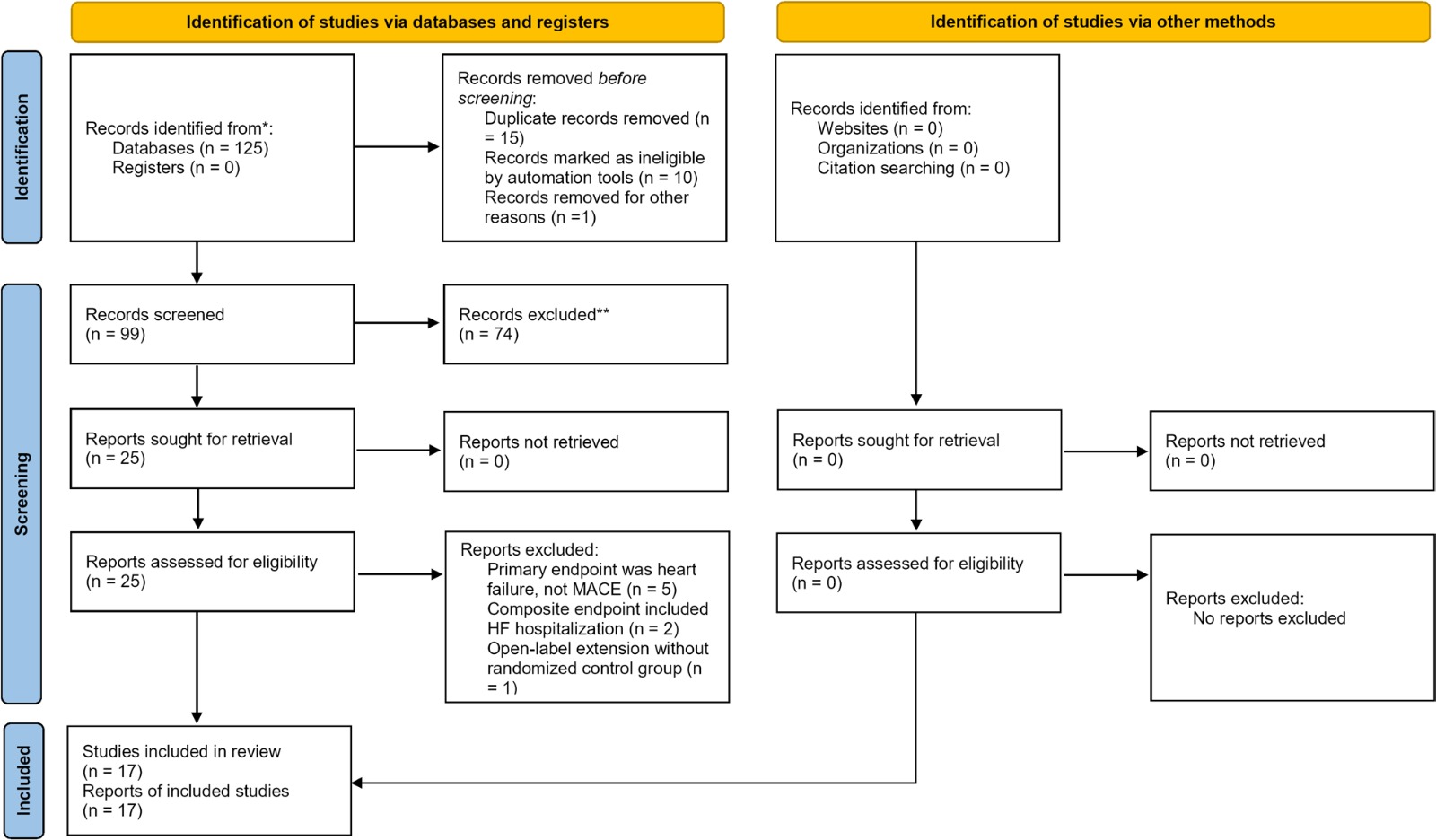
We conducted a PROSPERO-registered (CRD420261279972) systematic review and meta-analysis of randomized controlled trials across these five therapeutic classes, reported according to PRISMA 2020. The central design feature was a prespecified endpoint-harmonization framework: a hierarchical set of rules for selecting, in each trial, the cardiovascular composite most comparable to MACE. Robustness was then tested in a sensitivity analysis restricted to strict 3-point MACE (cardiovascular death, nonfatal myocardial infarction and nonfatal stroke). Hazard ratios were pooled using random-effects models (REML with Hartung–Knapp adjustment) in R with the metafor package. Seventeen trials met the eligibility criteria (Figure 1; Table 1).
What we found
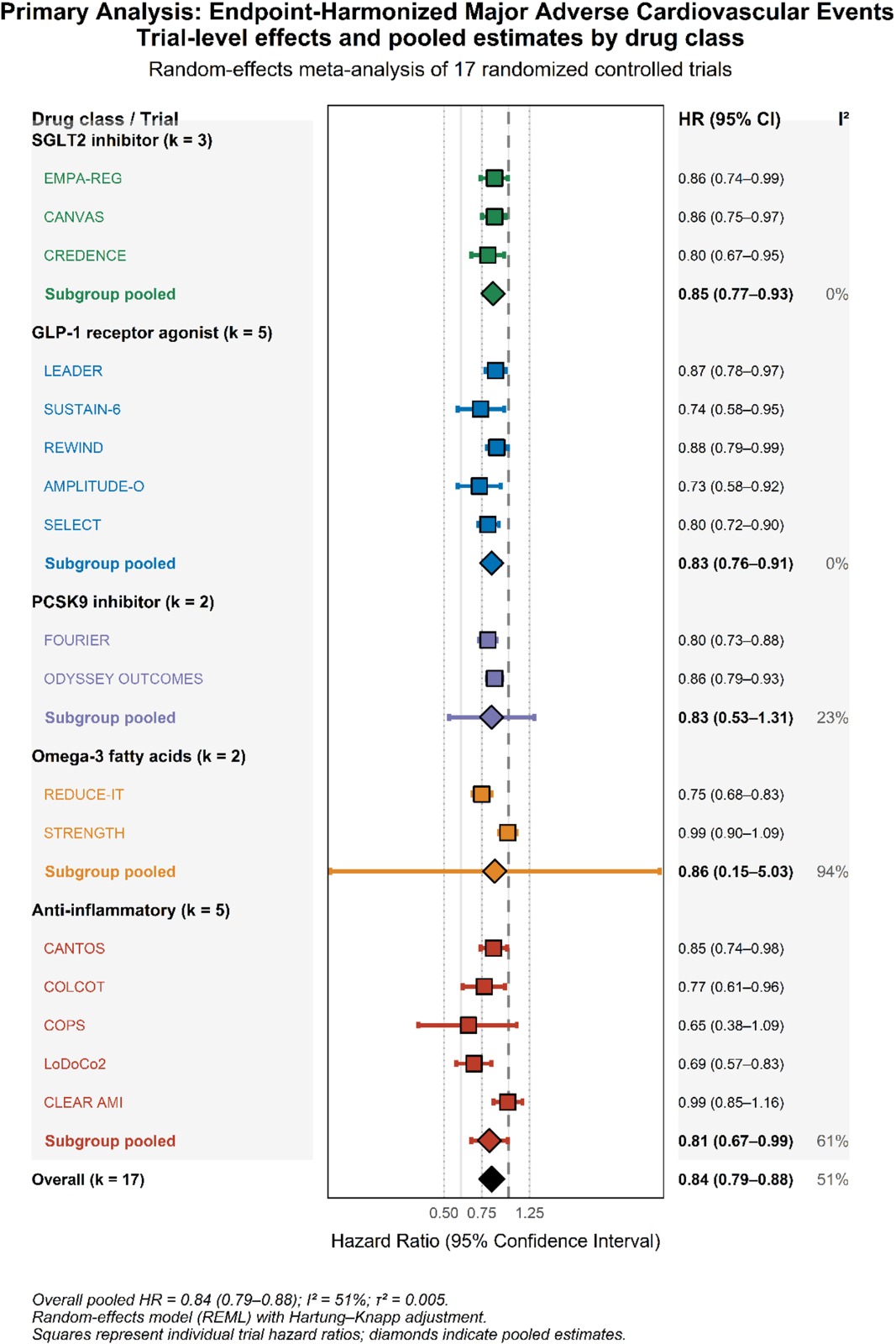
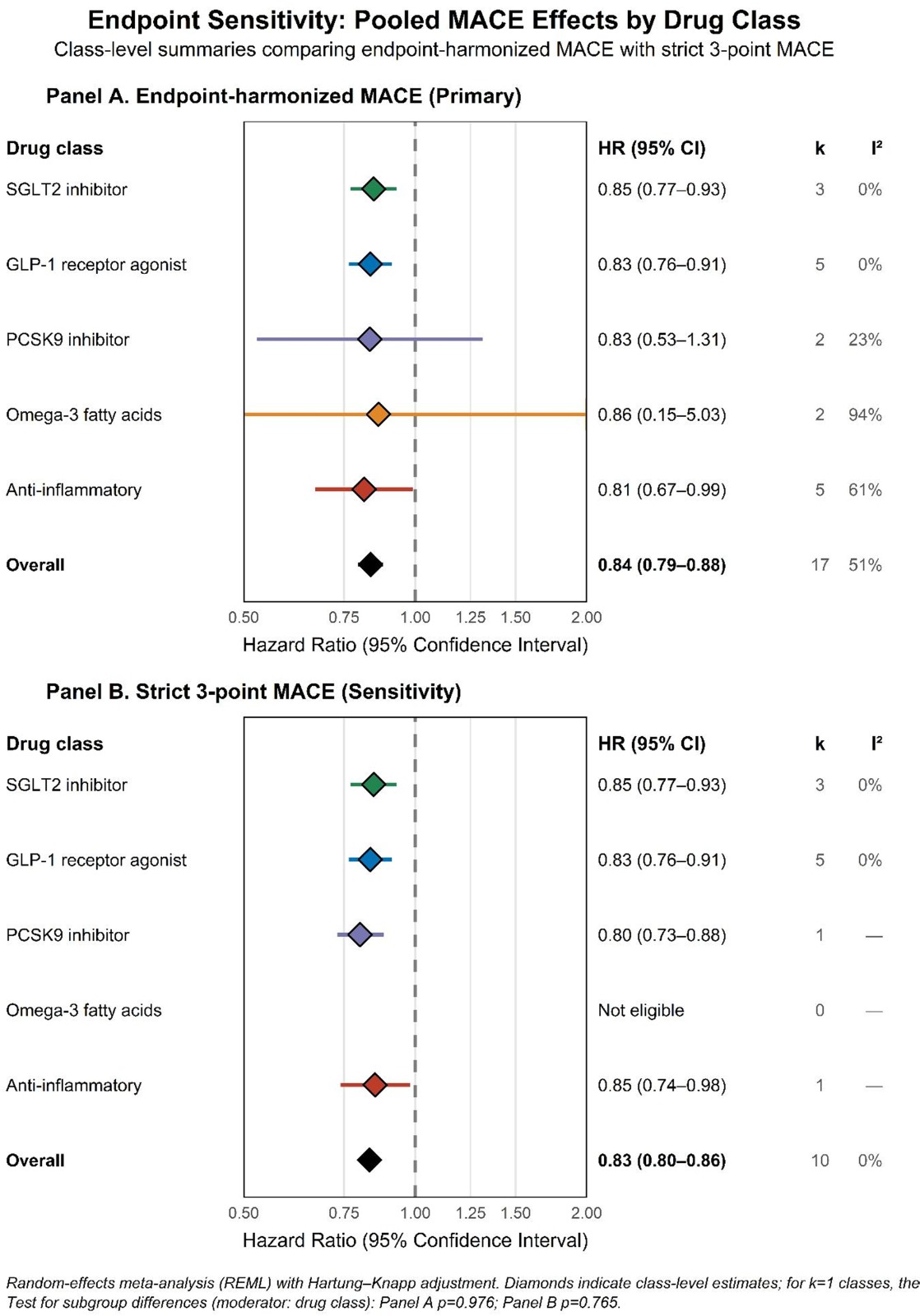
- Primary analysis: 17 trials, 157,278 participants and 15,815 events. Active therapy was associated with a 16% lower risk of MACE (HR 0.84, 95% CI 0.79–0.88; I² = 51%) (Table 2; Figure 2).
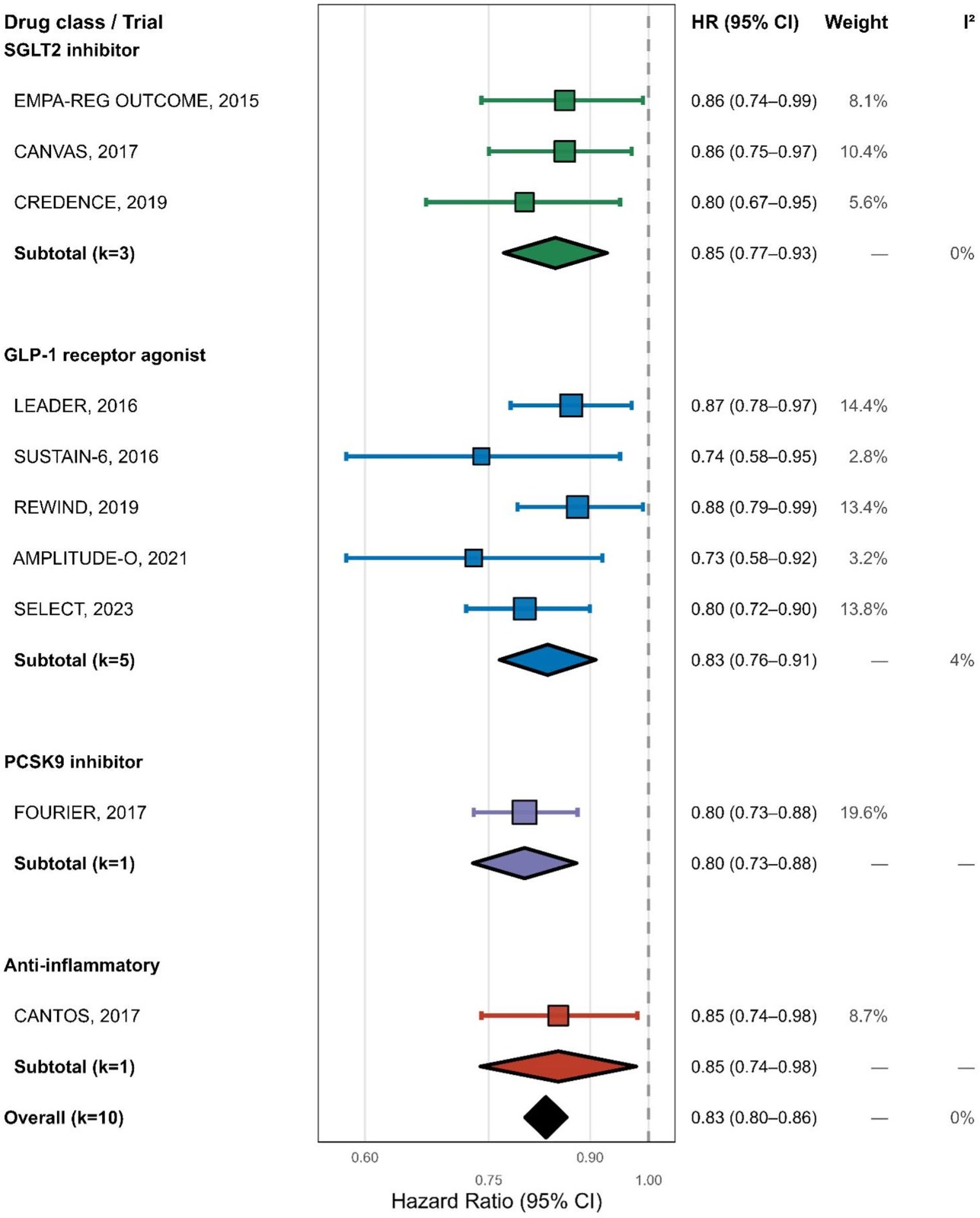
- Strict 3-point MACE: 10 trials and 98,973 participants gave a near-identical estimate (HR 0.83, 95% CI 0.80–0.86), with no observed heterogeneity (I² = 0%) (Figure 4).
- By drug class: benefit was most consistent for SGLT2 inhibitors and GLP-1 receptor agonists. Anti-inflammatory therapies also favoured treatment, with greater variation across agents and settings (Figure 3).
- Limited evidence: PCSK9 inhibitor and omega-3 estimates rested on two trials each; the omega-3 result reflects the well-recognized divergence between REDUCE-IT and STRENGTH.
- Effect modification: no statistically significant effect modification by drug class was detected, although the analysis was not designed to establish equivalence between classes.
Table 2. Key outcomes: primary endpoint-harmonized MACE and strict 3-point MACE sensitivity analysis.
| Analysis set | Trials (k) | Participants (N) | Events (n) | Pooled HR (95% CI) | I² | τ² | P for subgroup differences (drug class) |
|---|---|---|---|---|---|---|---|
| Endpoint-harmonized MACE (primary) | 17 | 157,278 | 15,815 | 0.84 (0.79–0.88) | 51% | 0.005 | 0.976 |
| Strict 3-point MACE (sensitivity) | 10 | 98,973 | 9,067 | 0.83 (0.80–0.86) | 0% | 0.000 | 0.765 |
Hazard ratios were pooled using random-effects meta-analysis with restricted maximum likelihood estimation and Hartung–Knapp adjustment. I² and τ² quantify between-study heterogeneity. Events represent total endpoint events across intervention and control groups within each analysis set. No omega-3 fatty acid trial was eligible for the strict 3-point MACE analysis. Source: Bin Bashir M, et al. Scientific Reports (2026). doi:10.1038/s41598-026-73850-8. Licensed under CC BY 4.0.
What we found most instructive
Much of the between-trial heterogeneity disappeared once the endpoint definition was held constant. This suggests that a meaningful part of the apparent inconsistency across cardiovascular outcomes trials reflects how composite endpoints are constructed, rather than differences in biology alone.
Why it matters
Residual cardiovascular risk appears multidimensional and modifiable through several partly independent pathways – lipid, metabolic, cardiorenal and inflammatory. However, overall benefit should not be equated with therapeutic interchangeability. These therapies are best viewed as complementary options, layered according to each patient’s clinical phenotype, with pathway-specific evidence continuing to guide the choice of agent.
Included trials
Table 1. Trial and population characteristics of the included randomized trials (primary endpoint-harmonized MACE pool; k = 17).
| Trial (Year) | Drug class | Intervention | Comparator | N | Age, mean (SD) | Women, % | Diabetes, % | ASCVD, % | Follow-up, months |
|---|---|---|---|---|---|---|---|---|---|
| Zinman et al. (2015) | SGLT2 inhibitor | Empagliflozin (10 mg or 25 mg once daily; pooled) | Placebo | 7,020 | 63.1 (8.6) | 28.5 | 100.0 | 100.0 | 37 |
| Neal et al. (2017) | SGLT2 inhibitor | Canagliflozin (100 mg or 300 mg once daily; pooled) | Placebo | 10,142 | 63.3 (8.3) | 35.8 | 100.0 | 65.6 | NR |
| Perkovic et al. (2019) | SGLT2 inhibitor | Canagliflozin | Placebo | 4,401 | 63.0 (9.2) | 33.9 | 100.0 | 50.4 | 31 |
| Marso et al. (2016) | GLP-1 receptor agonist | Liraglutide | Placebo (on background standard care) | 9,340 | 64.3 (7.2) | 35.7 | 100.0 | 81.3 | 46 |
| Marso et al. (2016) | GLP-1 receptor agonist | Semaglutide (0.5 mg or 1.0 mg once weekly, pooled) | Placebo (volume-matched) | 3,297 | 64.6 (7.4) | 39.3 | 100.0 | 83.0 | 25 |
| Gerstein et al. (2019) | GLP-1 receptor agonist | Dulaglutide | Placebo | 9,901 | 66.2 (6.5) | 46.3 | 100.0 | 31.5 | 65 |
| Gerstein et al. (2021) | GLP-1 receptor agonist | Efpeglenatide | Placebo | 4,076 | 64.5 (8.2) | 33.0 | 100.0 | 89.6 | 22 |
| Lincoff et al. (2023) | GLP-1 receptor agonist | Semaglutide (2.4 mg once weekly, SC) | Placebo | 17,604 | 61.6 (8.9) | 27.7 | 0.0 | 100.0 | 40 |
| Sabatine et al. (2017) | PCSK9 inhibitor | Evolocumab (140 mg every 2 weeks or 420 mg monthly) | Placebo | 27,564 | 62.5 (9.0) | 24.6 | 37.0 | 100.0 | 26 |
| Schwartz et al. (2018) | PCSK9 inhibitor | Alirocumab | Matching placebo | 18,924 | 58.6 (9.4) | 25.2 | 28.8 | 100.0 | 34 |
| Bhatt et al. (2019) | Omega-3 fatty acids | Icosapent ethyl | Placebo (mineral oil) | 8,179 | 64.0 | 28.8 | 58.6 | 70.7 | 59 |
| Nicholls et al. (2020) | Omega-3 fatty acids | Omega-3 carboxylic acids (EPA+DHA, 4 g/day) | Corn oil | 13,078 | 62.5 (9.0) | 35.0 | 70.0 | NR | 42 |
| Tardif et al. (2019) | Anti-inflammatory | Colchicine (0.5 mg once daily) | Placebo | 4,745 | 60.6 (10.6) | 19.0 | 19.6 | 100.0 | 23 |
| Nidorf et al. (2020) | Anti-inflammatory | Colchicine 0.5 mg once daily | Placebo | 5,522 | 66.0 (8.6) | 15.0 | 19.0 | 100.0 | 29 |
| Ridker et al. (2017) | Anti-inflammatory | Canakinumab | Placebo | 5,628 | 61.2 (10.0) | 25.6 | 40.6 | 100.0 | 44 |
| Tong et al. (2020) | Anti-inflammatory | Colchicine (0.5 mg twice daily for 1 month, then once daily) | Placebo | 795 | 61.0 (11.0) | 19.0 | NR | 100.0 | NR |
| Jolly et al. (2025) | Anti-inflammatory | Colchicine | Placebo | 7,062 | 60.6 (10.3) | 20.5 | 18.7 | NR | 36 |
Follow-up is reported as median duration in months where available. ASCVD = atherosclerotic cardiovascular disease; NR = not reported in the primary trial publication. Source: Bin Bashir M, et al. Scientific Reports (2026). doi:10.1038/s41598-026-73850-8. Licensed under CC BY 4.0.
Read the paper
Bin Bashir M, Chen C, Mohammad A, Ahmed RM, Wang ZQ. Contemporary cardiometabolic and inflammation targeting therapies reduce residual cardiovascular risk in an endpoint harmonized meta analysis. Scientific Reports. 2026. https://doi.org/10.1038/s41598-026-73850-8
We welcome comments and discussion from clinicians and researchers working on residual cardiovascular risk.
Follow the Topic
-
Scientific Reports
An open access journal publishing original research from across all areas of the natural sciences, psychology, medicine and engineering.

Related Collections
With Collections, you can get published faster and increase your visibility.
Cancer Prevention and Control
Publishing Model: Hybrid
Deadline: Feb 19, 2027
Healthy Aging
Publishing Model: Open Access
Deadline: Dec 31, 2026