Leveraging very-long-chain fatty acids for diagnostics and strategies for taming chemoresistance in colorectal cancer
Published in Cancer, Chemistry, and General & Internal Medicine

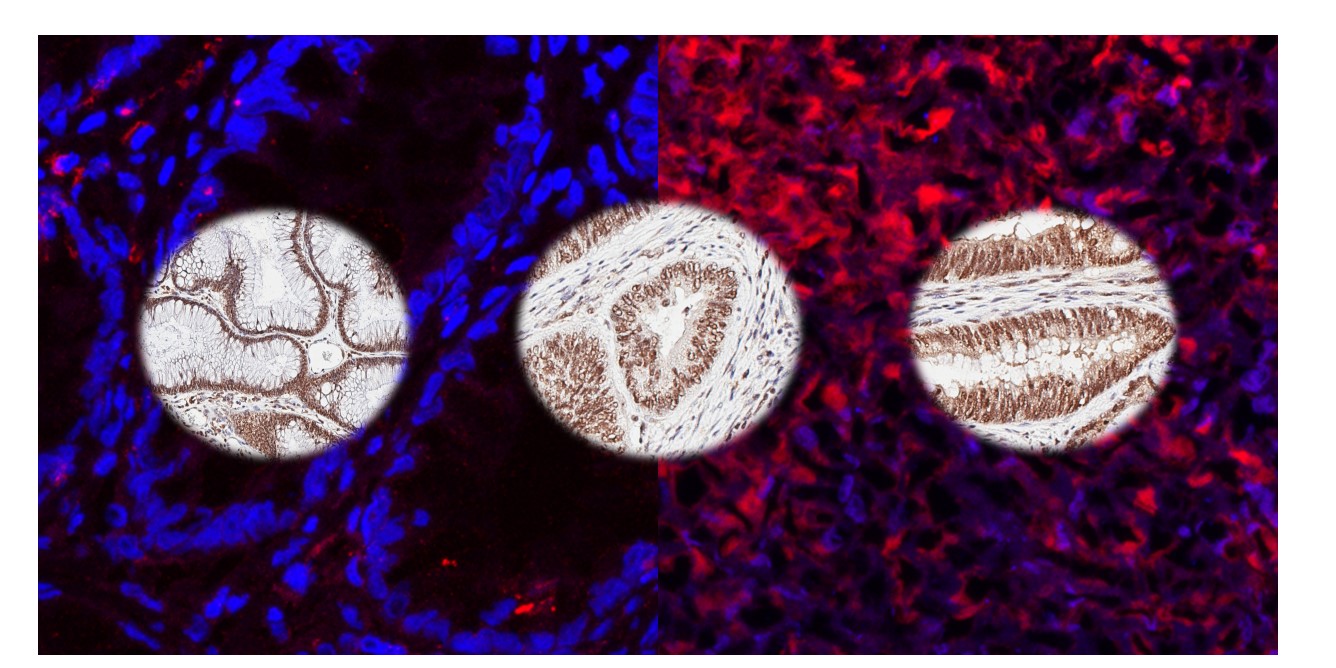

Colorectal cancer (CRC) represents a major public health concern due to its high incidence, mortality, and prevalence in both developed and developing countries. As per current trends, it is the second-most common cause of cancer-associated deaths globally and the sixth-most common malignancy in India. CRC develops through progressive transformation of the epithelial lining of the colon or rectum from normal intestinal mucosa to invasive carcinoma due to accumulation of genetic, epigenetic, and/or metabolic alterations. Despite major advancements in screening (colonoscopy or fecal occult blood testing), surgical interventions, chemotherapy, targeted therapy, and immunotherapy, CRC continues to be one of the most-deadly forms of cancer, particularly in patients diagnosed at advanced or metastatic stages. Considering the molecular diversity associated with CRC, which often leads to variable clinical response, the disease has been classified into four consensus molecular subtypes (CMS), each defined by distinct biological features. This framework helps in predicting prognosis and tailoring treatment strategies more effectively2. The majority of CRC patients frequently receive multimodal treatment such as folinic acid, 5-fluorouracil, and irinotecan (FOLFIRI), or folinic acid, 5-fluorouracil, and oxaliplatin (FOLFOX), as a part of first-line therapy coupled with anti-EGFR monoclonal antibodies. However, resistance to these therapies is almost warranted due to compensatory signaling pathway activation, such as WNT and PI3K/AKT/mTOR signaling pathways3. Disease often relapses due to altered signaling pathways, impaired drug metabolism, and tumor immune evasion, making treatment less effective and recurrence more likely. While the molecular mechanism of this acquired therapy resistance remains incompletely understood, the complex interplay between membrane-bound and freely circulating fatty acids and cell signaling proteins may lead to consequences, such as cancer pathogenesis and treatment unresponsiveness.
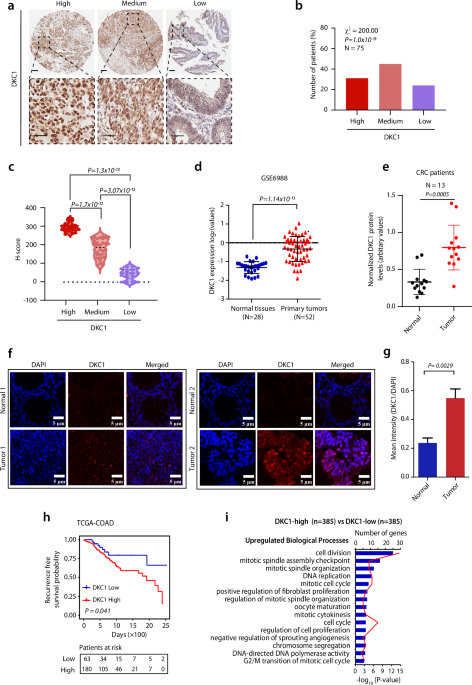
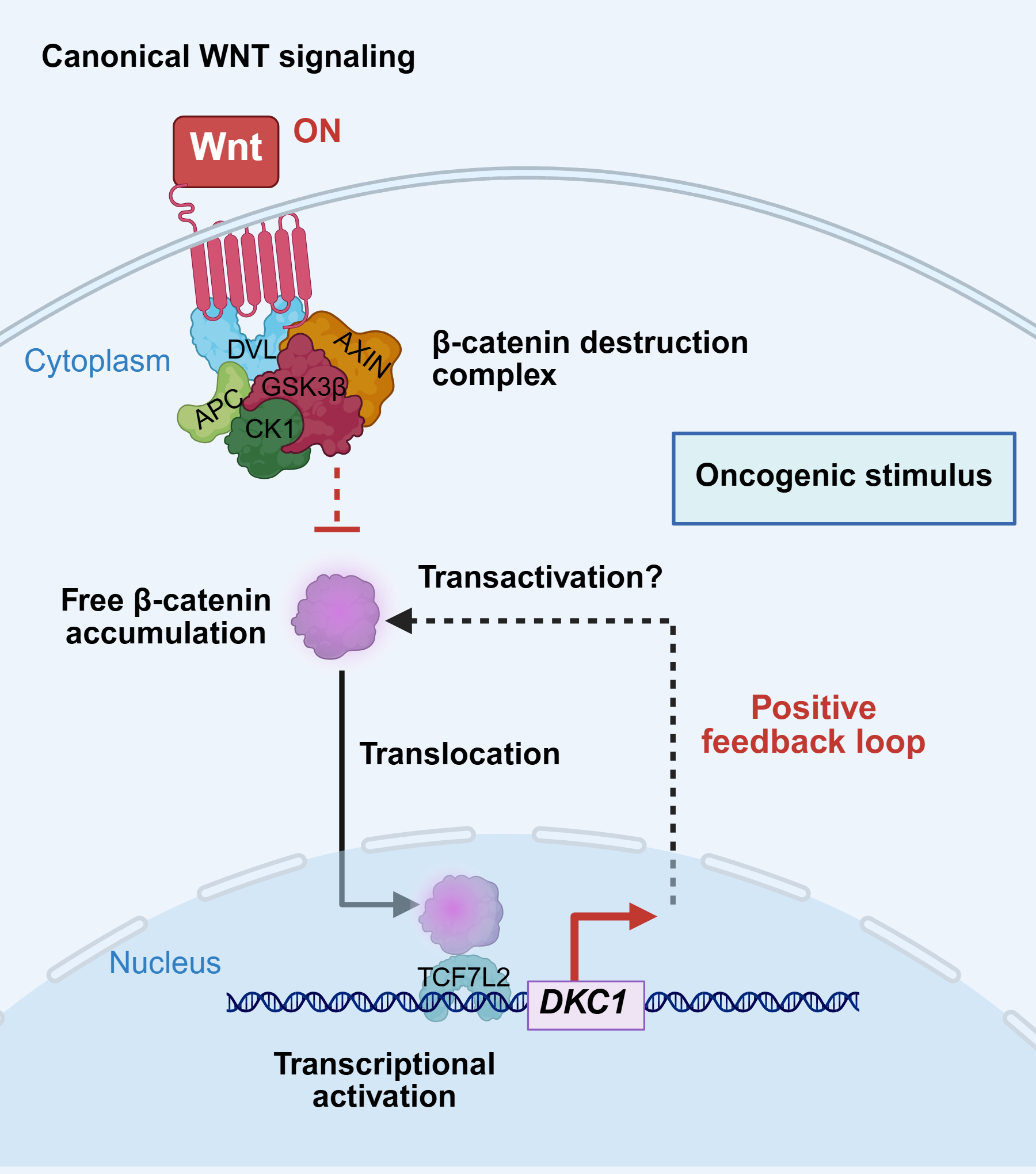
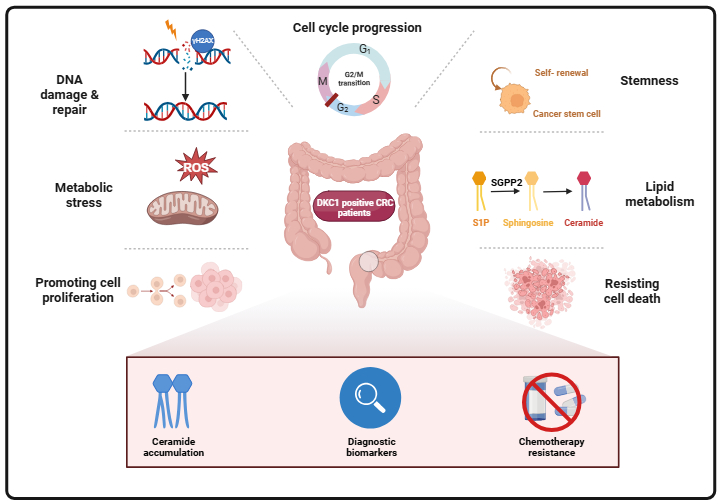
In this study, we show that Dyskerin pseudouridine synthase 1 (DKC1), which is normally involved in post-translational regulation of ribosomal RNA (rRNA) activity and telomere maintenance4, is upregulated in ~76% of the CRC patients, irrespective of their mutational backgrounds (KRAS or BRAF) and ethnicity. Upon functional characterization, DKC1 was found to drive tumor initiation and maintenance by promoting cell cycle progression, inducing stemness and DNA damage, and suppressing apoptosis. Interestingly, CRC patients with elevated DKC1 expression tend to align with the WNT-driven CMS2 subtype, a group known for its distinct molecular signatures. Intriguingly, we found that DKC1 itself is directly controlled by canonical WNT signaling, positioning it both as a marker and potential driver within this pathway. These findings were however paradoxical, given that Firestein et al. previously identified DKC1 as a critical upstream regulator of β-catenin activity5. Building on this, we hypothesized the existence of a positive feedback loop between DKC1 and WNT signaling, which may be essential for sustaining the tumorigenic properties associated with DKC1 in CRC. To prove this, we stimulated the benign immortalized colon epithelial cells, YAMC and MSIE, and CRC patient-derived organoids with WNT3a ligand and observed an elevated expression of DKC1 with WNT signaling stimulation. Moreover, suppressing WNT signaling resulted in the reduction of DKC1 levels. Hence, a regulatory feedback loop was found between DKC1 and WNT-signaling (Figure 1); however, abrogating one of these axes was insufficient to overcome DKC1-associated oncogenic phenotypes.
To unravel how high DKC1 levels drive CRC, we carried out a comprehensive transcriptomic and lipidomic analysis in cancer cells where DKC1 was silenced. The results pointed to sphingolipid metabolism as a key pathway under the control of DKC1, directly tied to cancer progression. What makes this especially compelling is that complex fatty acids have already been used in clinics as blood-based biomarkers to diagnose and predict outcomes in colorectal cancer. But new evidence in this study suggests these fatty acids are not just passive indicators; they may actively fuel the disease progression as well. Aligning with this, we found that DKC1 regulates sphingolipid metabolism through Sphingosine-1-phosphate phosphatase 2 (SGPP2), an enzyme involved in maintaining the homeostatic flux of Sphingosine levels via the salvage pathway, resulting in the upregulation of very-long-chain fatty acid Ceramides such as C24 (d18:1/24:0). Interestingly, C24 ceramide was elevated in the blood of colorectal cancer patients with high DKC1 expression. It was fascinating to find that this molecule was switching-on the WNT signaling pathway through the DKC1–SGPP2 axis, a key driver of cancer growth. Recognizing the diagnostic potential of this finding, the Indian Patent Office has officially granted a patent (No. 573132; dated October 31, 2025) for using this breakthrough in colorectal cancer detection.
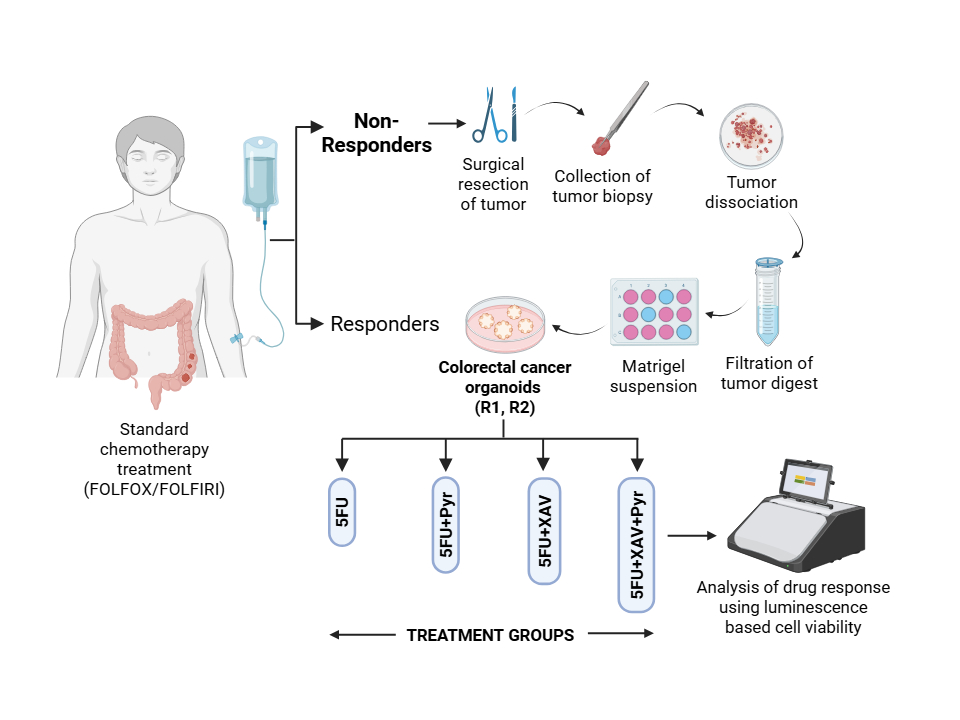
To explore how DKC1 might be linked to drug resistance, we partnered with Dr. Nazia Chaudhary, Dr. Sorab N. Dalal, and their team at the Advanced Center for Treatment, Research and Education in Cancer (ACTREC), India. Together, we examined DKC1 levels in CRC cell lines developed by them that had developed resistance to frontline chemotherapy regimens FOLFIRI and FOLFOX. This collaboration provided crucial insights into the role of DKC1 in shaping treatment response. To our curiosity, elevated DKC1 levels were found in the resistant models compared to the parental lines. We next went ahead to characterize whether DKC1 plays a role in conferring therapy resistance. Indeed, we found that DKC1 promotes chemoresistance in the CRC cells xenografted in mice. Yet, an important question remains, are elevated DKC1 levels the cause of resistance, or simply a consequence of it? Next, we turned our focus towards identifying pharmacological strategies capable of disrupting the DKC1-driven oncogenic circuitry to overcome treatment refractoriness in colorectal cancer. We found that DKC1 and WNT signaling inhibition alone was ineffective, thus we employed a combinatorial treatment strategy that might be effective for the treatment of therapy-resistant CRC patients. We therefore tested the inhibitors against DKC1 and WNT at various doses in FOLFOX-resistant CRC cells and found a synergistic effect at low drug dosage. Most importantly, the combinatorial treatment strategy was effective in FOLFOX-resistant mice xenografts, but also in patient-derived organoids from CRC patient specimens (Figure 2).
Overall, our study highlights the pivotal role of very-long-chain fatty acid ceramides as drivers of CRC progression and therapy resistance. It further positions specialized ceramides as promising blood-based biomarkers for identifying DKC1-positive CRC, while offering a compelling rationale to target the DKC1/WNT axis in chemotherapy resistant CRC patients (Figure 3).
Link to the paper: DKC1 promotes colorectal cancer progression and therapy resistance by dysregulating sphingolipid biosynthesis
Blog post written by Bushra Ateeq, Umar Khalid Khan, and Ayush Goel.
References:
1 Bray, F. et al. Global cancer statistics 2022: GLOBOCAN estimates of incidence and mortality worldwide for 36 cancers in 185 countries. CA Cancer J Clin 74, 229-263 (2024). https://doi.org/10.3322/caac.21834
2 Guinney, J. et al. The consensus molecular subtypes of colorectal cancer. Nat Med 21, 1350-1356 (2015). https://doi.org/10.1038/nm.3967
3 Yu, F. et al. Wnt/beta-catenin signaling in cancers and targeted therapies. Signal Transduct Target Ther 6, 307 (2021). https://doi.org/10.1038/s41392-021-00701-5
4 Mitchell, J. R., Wood, E. & Collins, K. A telomerase component is defective in the human disease dyskeratosis congenita. Nature 402, 551-555 (1999). https://doi.org/10.1038/990141
5 Firestein, R. et al. CDK8 is a colorectal cancer oncogene that regulates beta-catenin activity. Nature 455, 547-551 (2008). https://doi.org/10.1038/nature07179
Follow the Topic
-
Nature Communications
An open access, multidisciplinary journal dedicated to publishing high-quality research in all areas of the biological, health, physical, chemical and Earth sciences.

Related Collections
With Collections, you can get published faster and increase your visibility.
Women's Health
Publishing Model: Hybrid
Deadline: Ongoing
Biosensing
Publishing Model: Hybrid
Deadline: Jun 30, 2026

Please sign in or register for FREE
If you are a registered user on Research Communities by Springer Nature, please sign in