Looking for History in the Wrong Archive
Published in Social Sciences and Arts & Humanities



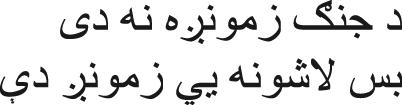

For a long time, I believed that if I wanted to understand conflict, I needed to read reports, policy papers, official documents, and newspaper archives. I was convinced that history lived there.
I was wrong.
The more I read, the more uncomfortable I became. These sources documented military operations, political decisions, and security developments with remarkable precision. They explained what had happened, but they left surprisingly little room for what it actually meant to live through those years. I could reconstruct events, yet I still felt strangely distant from the people whose lives those events had transformed.
Looking back, I realise I was asking the right questions but searching in the wrong archive.
Perhaps I recognised that absence because I grew up in Swat, where conflict was never an abstract subject but part of everyday life. Later, as a student at the University of Peshawar, I lived in a university hostel with students from different regions, each carrying their own experiences of conflict, displacement, and uncertainty. Those conversations rarely centred on military strategy or politics. Instead, they revolved around interrupted education, families trying to rebuild their lives, and the quiet emotional burden that remains long after the headlines disappear.
At the time, those conversations felt ordinary. We were simply students sharing our experiences. Only years later did I realise that they were also fragments of lived history—stories that rarely found a place in the reports and archives I was reading.
When I eventually began this research, I instinctively returned to those archives because that is what researchers are trained to trust. Yet every report I finished left me with the same unsettling feeling: I knew more about the conflict than I did about the people who had lived through it.
The answer, I eventually realised, had been with me since childhood.
Poetry.
Not because poetry offered facts that archives ignored, but because it preserved something archives often cannot: memory, dignity, emotion, and lived experience.
I cannot point to a single poem that changed my thinking. It was the accumulation of voices. Different poets, writing years apart, kept returning to the same memories—displacement, silence, checkpoints, surveillance, identity, grief, and resilience. After a while, it became impossible to dismiss those recurring patterns as coincidence.
Somewhere during those months, I stopped asking what the poems meant and started asking what they remembered.
I was no longer reading poetry simply as literature. I was beginning to see it as a place where lived experience survives—not official history, but history carried through memory, emotion, and everyday life. Without planning it, my research question changed. Instead of asking how poetry represents conflict, I found myself asking a much larger question: What happens to history when official archives cannot fully capture lived experience?
Only later did I realise that this question had quietly led me to the idea that eventually became the intellectual foundation of the paper: poetry as a counter-archive. I had not set out to prove that argument. Rather, it emerged naturally from listening to voices that consistently preserved experiences institutional records had overlooked.
One lesson from this research surprised me more than anything else. I had assumed that research was about finding answers. Instead, it became an exercise in questioning my own assumptions. More than once, I caught myself trying to make the poems fit categories I had already created. Each time I thought I understood them, another poem quietly unsettled my interpretation. Eventually, I realised the research became stronger only when I allowed the poems to change my questions instead of forcing them to fit my answers.
When I began this research, I believed I was studying contemporary Pashto poetry.
Looking back, I realise I was really studying a much larger question: Who gets to preserve history? Who decides what becomes part of the historical record, and what quietly disappears?
Institutions preserve documents. Communities preserve memories. Sometimes those memories survive not in official archives, but in poems carried from one generation to the next.
Looking back, I no longer think of poetry simply as literature. I think of it as one of the few places where lived experience can survive long after official narratives have been written.
Recognising that simple truth changed not only this paper, but also the kind of researcher I hope to become.
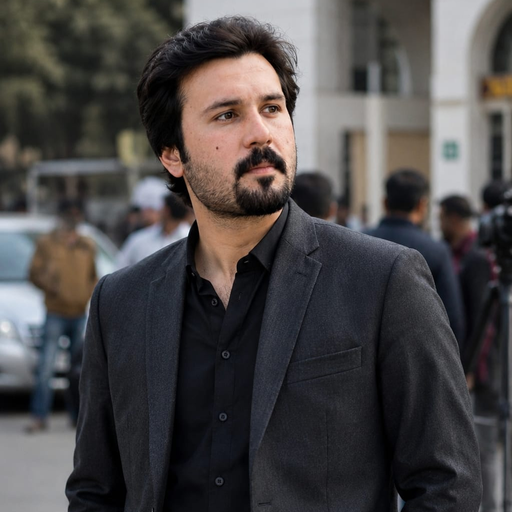
Awrang Khan (officially registered as Sana Ullah in academic and legal records) is an MS scholar in the Department of Arts and Media at Foundation University Islamabad, Pakistan. He holds a bachelor's degree in journalism and mass communication from the University of Peshawar. His academic interests include political communication, media studies, climate communication, and cultural analysis. His research focuses on media and cultural narratives in conflict-affected and politically volatile regions of Pakistan, with particular emphasis on public opinion, collective memory, climate discourse, and cultural expression in Pashtun society.
Follow the Topic
-
Human Arenas
The aim of this journal concerns the interdisciplinary study of higher psychological functions (as topic of a general theory of psyche from the perspective of cultural psychology) in human goal-oriented liminal phenomena in ordinary and extraordinary life conditions.

Introducing the Palgrave Macmillan Campaign for the Humanities
At Palgrave Macmillan we publish cutting-edge humanities research that has real-world impact. This research community brings together the voices of our authors and editorial team to highlight and publicize the value of the humanities and humanities research in our world today.
Continue reading announcementRelated Collections
With Collections, you can get published faster and increase your visibility.
Arena of Technologies
Publishing Model: Hybrid
Deadline: Ongoing
Arena of Health
Publishing Model: Hybrid
Deadline: Ongoing
