Lurking in the shadows – the risk of malaria and other mosquito-borne diseases returning to Europe
Published in Microbiology



Once upon a time, and yet not so long ago, malaria and other so-called tropical diseases were just simply thought of as diseases, endemic in temperate and northern regions of the world as well as the tropics.
In fact, malaria, yellow fever, dengue and leishmaniasis were prominent public health concerns, with outbreaks of dengue plaguing (please excuse the pun) southern Europe and the Mediterranean basin in the 1930s. It was through concerted vector control efforts that the responsible mosquito species were eradicated.
It was only around the mid-20th century that many European countries were declared ‘malaria free’. Malaria eradication was driven by improved housing, better access to healthcare, vector control measures and removal of mosquito breeding areas (such as draining of wetlands for agricultural use). However, travel associated malaria in Europe and other temperate regions has been persistent, and the news in August that workers at Frankfurt airport had died after being bitten by mosquitoes brought over from endemic regions alarmed the public.
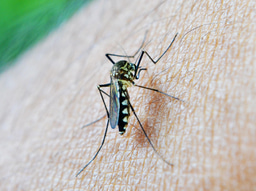
In September, the UK Health Security Agency confirmed that Aedes aegypti – the mosquito that spreads dengue and Zika (amongst other diseases) was found breeding in homes in East London. The species had been eradicated from mainland Europe and the UK since the mid-20th Century, so of course the presence of now actively breeding mosquitoes is concerning.
Furthermore, the European CDC (ECDC) has often published news alerts on the spread of West Nile Fever and its vectors (Culex mosquitoes) and other vector species (e.g. Aedes albopictus- transmits Zika, dengue, chikungunya and yellow fever) in Europe over the last decade. This spread is thought to be caused by a combination of travel and climate change.
In July 2026, a paper by Kieran Killen and colleagues from the University of Glasgow modelled the distribution of two native mosquito species in Scotland: Anopheles claviger and An. plumbeus. Both species are linked to historical malaria transmission in Scotland, and the model would help to assess the risk of potential future malaria transmission.
They found that these two species are widely distributed across Scotland today, but particularly in lowlands and coastal regions. Higher altitudes seem to be a barrier to both mosquito species.
Cross referencing the current modelled distribution to historical malaria hotspots (using 18th century data), they found that there was a link between historical hotspots and areas predicted to be favourable for mosquitoes today. In fact, nearly half the historical hotspots fall within areas predicted to be suitable for at least one of the mosquito species.
Climate (and changing climate) was linked to the increased presence of An. claviger, in particular, with warmer temperatures, higher humidity and availability of freshwater supporting its higher numbers.
The group was careful to stress that current social and epidemiological conditions in Scotland are very different to the conditions that supported malaria transmission in past centuries, thus making it difficult to for malaria to take a stronghold again. However, the continued cases of travel or imported malaria and changing climates could break this barrier in the future, and so they suggest mosquito distribution across the country should be monitored closely.
This seems to be the message I am getting from other similar research papers and health agencies - monitoring and surveillance is vital to prevent the spread, emergence or reemergence of a disease.
Cover image credit: Image by Frank Winkler from Pixabay

I completed a BSc in Microbiology (UCL) and a PhD in environmental microbiology/ atmospheric chemistry (Royal Holloway University of London) before joining BioMed Central. I blog about microbiology, infectious diseases and the environment amongst other things.
I am the Executive Publisher for Parasites & Vectors, Malaria Journal, Microbiome and other microbiology/ infectious diseases journals at BioMed Central.