Machine Learning Predicts Multidrug Resistance in Surgical ICU: Insights from a Resource-Limited Setting
Published in Healthcare & Nursing, Social Sciences, and Microbiology


The Clinical Challenge
Postoperative patients in surgical ICUs represent a uniquely vulnerable population. They face heightened infection risks from surgical wounds, indwelling devices, and compromised immune function, often requiring broad-spectrum empirical antibiotics. When multidrug-resistant (MDR) organisms emerge, treatment options narrow dramatically, and mortality rises. In resource-constrained environments, clinicians must make critical decisions without the benefit of rapid molecular diagnostics, relying instead on clinical judgment and delayed culture results.
Our retrospective study at Namazi Hospital, a tertiary referral center, analyzed 106 postoperative surgical ICU patients admitted between January 2022 and December 2023. The cohort was critically ill: median age was 66 years, 63.2% were male, and the all-cause in-hospital mortality rate reached 91.5%. Patients experienced prolonged ICU stays (median 14.5 days) and extensive antibiotic exposure, with median Days of Therapy (DOT) of 29.5 days and Length of Therapy (LOT) of 14.5 days. Alarmingly, the median Antimicrobial-Free Days (AFD) was zero, indicating continuous antibiotic exposure throughout ICU admission.
Resistance Patterns: A Concerning Landscape
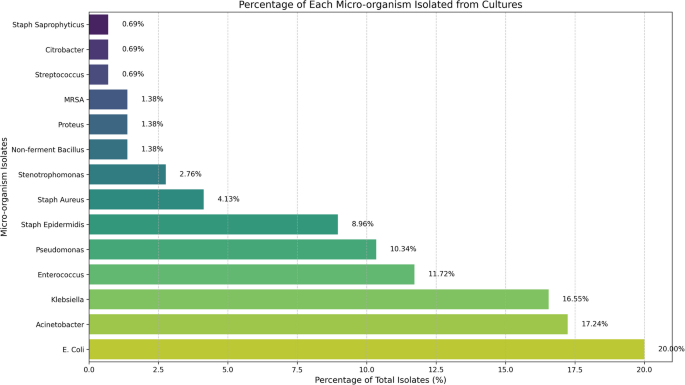
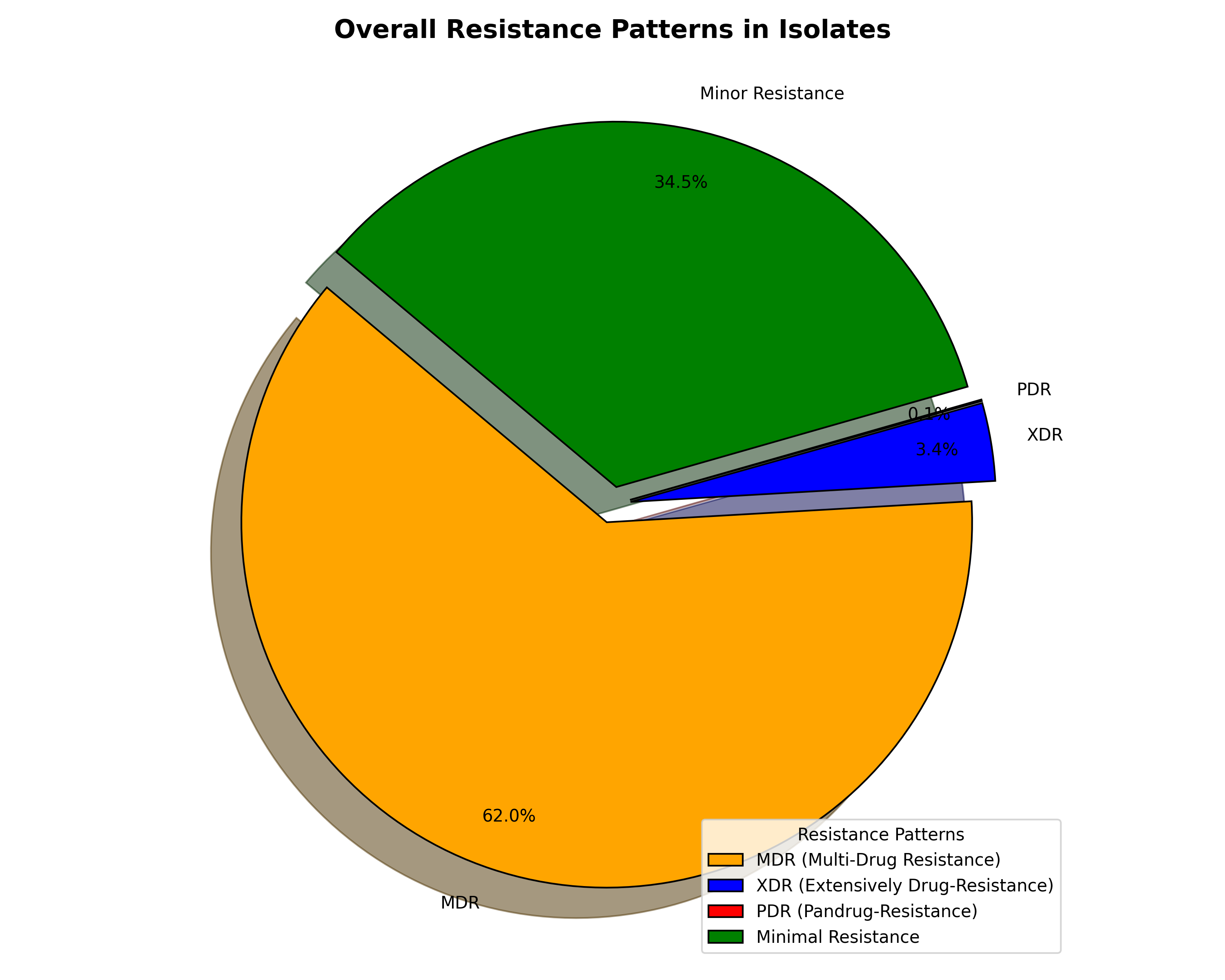
Analysis of 175 microbial entries revealed 145 culture-positive isolates, with Gram-negative bacteria predominating (71.72%). Escherichia coli (20%), Acinetobacter species (17.24%), and Klebsiella species (16.55%) emerged as the leading pathogens. Among these isolates, 62.07% exhibited multidrug resistance, and 3.45% were extensively drug-resistant (XDR). No pan-drug-resistant strains were identified, but the high MDR prevalence signals a critical need for targeted interventions.
Resistance rates varied significantly across antibiotic classes. Fluoroquinolones and third-generation cephalosporins demonstrated the highest resistance rates (68.27% and 71.72%, respectively), followed by folate pathway inhibitors (62.76%) and aminoglycosides (53.10%). Carbapenem resistance showed notable variation, with imipenem resistance at 22.76% compared to meropenem at 4.83%. These patterns underscore the importance of local antibiogram data in guiding empirical therapy decisions.
Machine Learning: A Promising Frontier
A key innovation of our study was the development of machine learning models to predict MDR/XDR infections using routinely available clinical data. We employed an XGBoost classifier with hyperparameter optimization via Optuna (100 trials), comparing its performance against a logistic regression baseline.
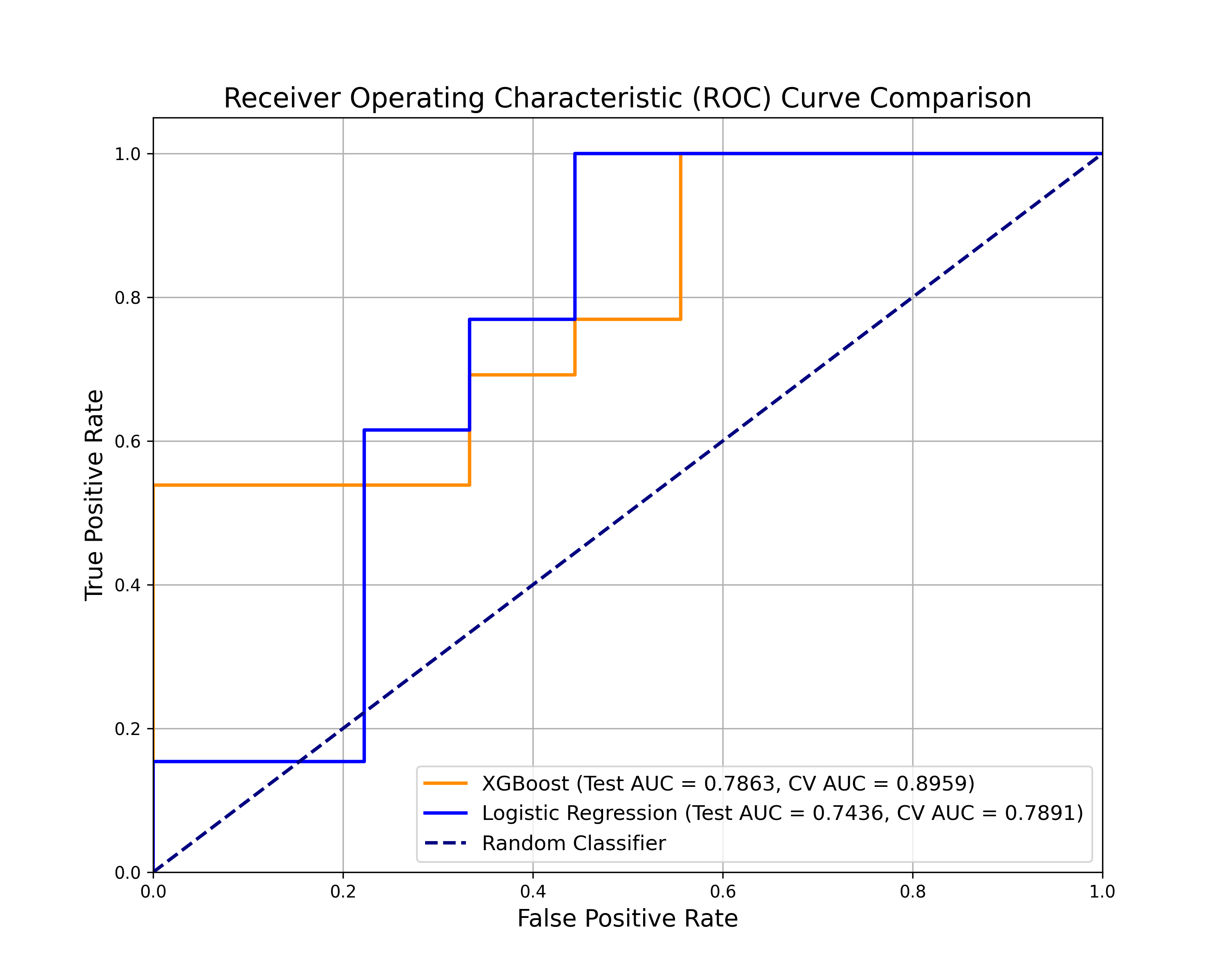
The XGBoost model achieved a test ROC-AUC of 0.786 and a mean fivefold cross-validation AUC of 0.896 ± 0.05, demonstrating robust discriminative ability. While the logistic regression model showed higher accuracy (77% vs. 70%), XGBoost exhibited superior balanced performance with a macro F1-score of 0.70. SHAP (SHapley Additive exPlanations) analysis identified Gram-negative infection type (mean absolute SHAP value: 1.76), Gram-positive infection type (1.36), length of therapy (1.31), and age (1.14) as the most influential predictors of resistance.
Critically, we implemented a deliberate feature selection strategy to prevent data leakage, excluding variables that directly indicate outcomes (such as specific microbial isolates) and focusing instead on patient demographics, comorbidities, surgical history, and antibiotic utilization metrics. This approach ensures clinical applicability by relying on data available at the point of care.
Clinical Implications and Future Directions
Our findings have several important implications for antimicrobial stewardship in critical care:
First, the prolonged antibiotic exposure observed—with median AFD of zero—reflects the challenges of managing critically ill postoperative patients in resource-limited settings. Implementing antibiotic timeout protocols and prospective audit-feedback mechanisms could help optimize prescribing practices.
Second, the high prevalence of MDR Gram-negative infections highlights the need for strengthened infection prevention and control measures, including enhanced hand hygiene, contact precautions, and environmental cleaning.
Third, machine learning models like XGBoost could serve as clinical decision support tools, helping clinicians identify high-risk patients who might benefit from escalated empirical therapy or alternative treatment strategies. This is particularly valuable in settings where rapid diagnostics are unavailable, and culture results require 48–72 hours.
A Call for Collaboration
This exploratory, single-center study provides hypothesis-generating insights but has inherent limitations, including sample size and generalizability. External validation across diverse patient populations and healthcare settings is essential before widespread implementation. I invite fellow researchers, clinicians, and data scientists interested in AMR surveillance, machine learning applications in medicine, and global health to connect and explore collaborative opportunities. Together, we can develop more robust, externally validated predictive models that support evidence-based antimicrobial stewardship worldwide.

Physician-Researcher (M.D., B.Med.Lab.Sc.) with expertise in clinical research coordination, study design, machine learning applications, and global health. I bridge clinical practice with research to improve surgical outcomes, develop biomaterials for trauma care, and apply AI-driven decision tools in medicine.
Key contributions include:
- Leading clinical trials and disease registries (Hirschsprung’s disease, surgery).
- Advancing surgical research with in-vivo models and molecular techniques.
- Expertise in medical writing, scientific publication, and statistical modeling (R, Python, ML).
I am particularly interested in the intersection of robotic surgery and clinical AI—specifically, how machine learning can be leveraged to predict surgical outcomes, optimize patient selection, and enhance intraoperative decision-making. My long-term goal is to contribute to the safe and effective integration of robotic platforms and AI into routine surgical workflows.
I am currently completing my medical licensure in Baden-Württemberg, Germany. Fluent in English, German, and Persian, I value cross-cultural collaboration and interdisciplinary teamwork.
Follow the Topic
-
BMC Infectious Diseases
This journal is an open access, peer-reviewed journal that considers articles on all aspects of the prevention, diagnosis and management of infectious and sexually transmitted diseases in humans, as well as related molecular genetics, pathophysiology, and epidemiology.

Related Collections
With Collections, you can get published faster and increase your visibility.
Personalized medicine in infectious diseases
BMC Infectious Diseases invites submissions for a Collection on Personalized medicine in infectious diseases.
The field of personalized medicine is rapidly advancing, particularly among infectious diseases, where the traditional ‘one-size-fits-all’ treatment approaches are increasingly inadequate. As our understanding of the genetic, environmental, and lifestyle factors influencing disease susceptibility and treatment response grows, this Collection aims to explore innovative strategies and technologies that can enhance the application of personalized medicine in combating infections.
Recent advancements in genomics, pharmacogenomics, and bioinformatics are transforming the application of personalized approaches for infectious diseases. These developments have enabled the identification of specific biomarkers that inform individualized treatment strategies, improving patient outcomes and minimizing adverse effects. In parallel, advances in molecular diagnostics and tailored antimicrobial therapies offer new opportunities to address the escalating challenge of antimicrobial resistance.
Improved understanding of host-pathogen interactions and the genetic determinants of infections may support the development of targeted antiviral and antimicrobial strategies that enhance their effectiveness, while limiting the emergence of resistance. Research in this area may also enable personalized antimicrobial dosing and optimized treatment guidelines that balance individual patient benefits with broader public health considerations.
This Collection welcomes original research articles on topics including but not limited to:
- Tailored antimicrobial therapy in infectious diseases
- Patient-specific interventions to improve clinical outcomes
- Personalized strategies to address antimicrobial resistance
- Precision medicine approaches in antiviral therapy
- Novel methodologies for disease modelling and therapeutic targeting
- Precision diagnostics, including biomarker validation and metagenomic sequencing
- Model-informed personalized dosing in infectious diseases
- Therapeutic drug monitoring in anti-infective therapy
This Collection supports and amplifies research related to SDG 3 (Good Health and Well-being).
All manuscripts submitted to this journal, including those submitted to collections and special issues, are assessed in line with our editorial policies and the journal’s peer review process. Reviewers and editors are required to declare competing interests and can be excluded from the peer review process if a competing interest exists.
Publishing Model: Open Access
Deadline: Dec 16, 2026
Tuberculosis and co-infections: diagnostics, management, and treatment
BMC Infectious Diseases invites submissions for a Collection on Tuberculosis and co-infections: diagnostics, management, and treatment.
Tuberculosis (TB) remains a leading cause of morbidity and mortality worldwide, particularly in regions with high prevalence rates and co-infections. The interplay between TB and various co-infections (including bacterial, viral, parasitic and fungal), complicates diagnosis and treatment strategies. Advances in molecular diagnostics and imaging techniques have improved our understanding of how these co-morbidities affect TB pathogenesis and treatment outcomes. However, the challenge of managing drug-resistant TB adds an additional layer of complexity, necessitating a comprehensive approach that integrates the latest research findings with clinical practice.
Research into TB of all stages and its co-infections is crucial for addressing the rising incidence of drug resistance and improving patient outcomes. Recent studies have identified critical biomarkers for early detection and prognosis, highlighting the role of rapid diagnostic tools in the clinical setting. Additionally, understanding the mechanisms of co-infections has led to tailored treatment regimens that maximize efficacy while minimizing adverse effects. Nonetheless, gaps remain in our knowledge of optimal management strategies for these complex cases, emphasizing the need for ongoing research in this field.
Future research endeavors should focus on the development of more effective diagnostic techniques and treatment protocols that consider the multifaceted interactions between TB and its co-infections. Innovations in personalized medicine may lead to targeted therapies that address specific pathogen interactions, ultimately enhancing patient recovery rates. Moreover, collaborative efforts between public health entities and research organizations could pave the way for comprehensive TB surveillance systems, fostering the identification of emerging trends in co-infection patterns.
This Collection welcomes original research articles on topics including but not limited to:
- Diagnostic innovations for Tuberculosis and co-infections
- Management strategies for drug-resistant Tuberculosis
- Interaction between Tuberculosis and HIV
- Tuberculosis and diabetes comorbidity
- Tuberculosis in the context of viral hepatitis and COVID-19
This Collection supports and amplifies research related to SDG 3 (Good Health and Well-being).
All manuscripts submitted to this journal, including those submitted to collections and special issues, are assessed in line with our editorial policies and the journal’s peer review process. Reviewers and editors are required to declare competing interests and can be excluded from the peer review process if a competing interest exists.
Publishing Model: Open Access
Deadline: Jan 27, 2027