Mastering X-ray Absorption Spectroscopy: Practical Guidance for Reliable Catalysis Research

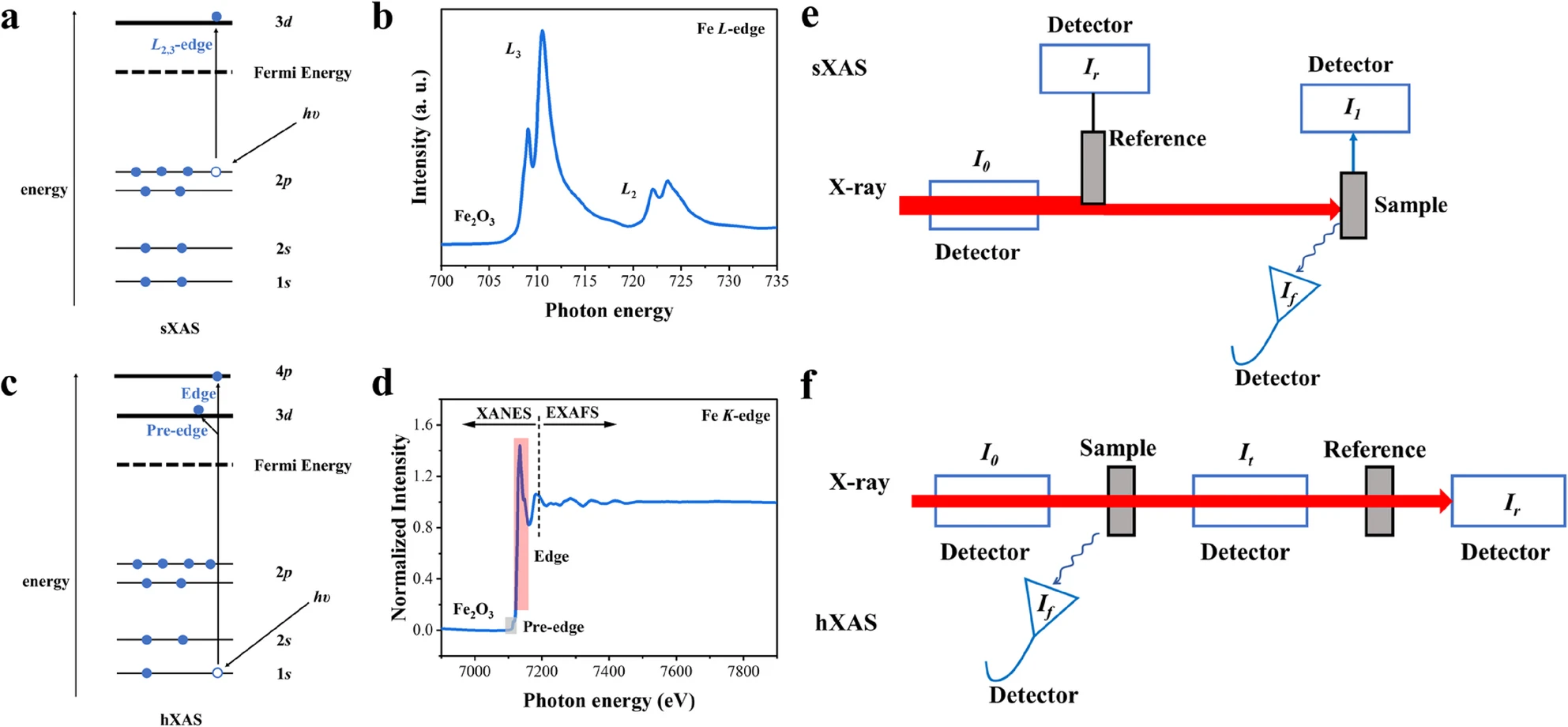
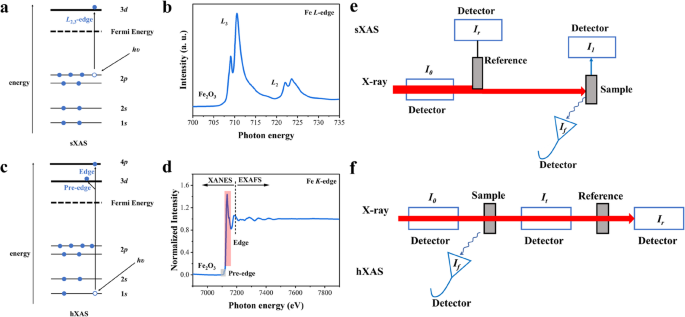

In this review published in Catal, we provide a practical guide to the precise acquisition, analysis, and interpretation of X-ray Absorption Spectroscopy (XAS) data for catalysis research. Drawing on both synchrotron-based and laboratory-based XAS studies, we discuss common experimental and analytical pitfalls and present best practices for obtaining reliable information on oxidation states, spin states, local structures, and catalytic mechanisms.
Key Insights
- Comprehensive guidance for XAS experiments, covering sample preparation, energy calibration, normalization, and the selection of appropriate detection modes to ensure reliable and reproducible measurements.
- Common pitfalls and best practices for data interpretation, including self-absorption effects, detector dead time, EXAFS fitting, and spectral normalization that can significantly affect conclusions if not handled properly.
- Reliable strategies for determining oxidation states, spin states, local symmetry, and coordination environments using complementary soft and hard XAS techniques.
- Advanced analytical approaches, including multiple-scattering simulations, wavelet-transform EXAFS, PCA, and MCR-ALS, for investigating complex catalytic systems and transient intermediates.
- Practical considerations for operando XAS studies, highlighting the impact of catalyst particle size, active-layer depth, and surface-to-bulk contributions on mechanistic interpretation.
- Recent advances in laboratory-based XAS instrumentation, demonstrating increasing accessibility and performance for routine characterization, in situ studies, and catalyst development.
Significance of This Work
In this work, we emphasize that obtaining meaningful mechanistic insights from XAS requires not only advanced instrumentation but also rigorous experimental design and data analysis. By integrating fundamental principles with practical recommendations, we provide a comprehensive framework for the reliable application of XAS in catalysis research. We hope this review will serve as a valuable resource for both newcomers and experienced researchers seeking to uncover catalyst structure-performance relationships and reaction mechanisms with greater confidence.
Authors & Affiliations
Hao Zhang†, Yalei Fan†, Jianqiu Zhu, Haisheng Yu, Jian-Qiang Wang, Zhiwei Hu*, and Linjuan Zhang*
† These authors contributed equally to this work.
Shanghai Institute of Applied Physics, Chinese Academy of Sciences, Shanghai 201800, China
University of Science and Technology of China, Hefei 230026, China
National Innovation Scientific Instruments (Suzhou) Co., Ltd, Suzhou 215100, China
Max Planck Institute for Chemical Physics of Solids, Dresden 01187, Germany
Corresponding Authors
Prof. Zhiwei Hu ✉ Zhiwei.hu@cpfs.mpg.de
Prof. Linjuan Zhang ✉ zhanglinjuan@sinap.ac.cn
How to Cite This Article
Zhang, H., Fan, Y., Zhu, J. et al. Precise analysis and proper application of X-ray absorption spectroscopy. Catal 2, 18 (2026). https://doi.org/10.1007/s44422-026-00030-0
Follow the Topic
-
Catal
Catal is an open access journal covering full spectrum of catalysis critical advances. From biocatalysts to heterogeneous catalysts, it integrates fundamental and applied sciences. Catal offers a primary platform for researchers and practitioners in the field.

Related Collections
With Collections, you can get published faster and increase your visibility.
Porous Materials for Sustainable Green Catalysis
The advancement of our collective understanding in the field of porous materials for sustainable green catalysis is crucial as we face urgent environmental challenges and the need for sustainable energy solutions. The integration of porous materials into catalytic processes has opened new avenues for improving efficiency, selectivity and stability while minimizing waste. Significant advances have been made, including the development of zeolites, mesoporous materials, metal-organic frameworks (MOFs) and covalent organic frameworks (COFs), which have demonstrated remarkable catalytic performance in various reactions.
Future research holds immense potential, with speculations ranging from the design of novel porous materials with tailored properties to their application in industrial catalysis, biocatalysis, H2 production and carbon capture technologies. By continuing this research, we can drive progress toward achieving Sustainable Development Goals (SDGs), particularly in clean energy (SDG 7) and climate action (SDG 13), ultimately fostering a sustainable future for our planet.
We invite researchers to contribute to this special Collection by submitting research articles, brief communications, perspectives, reviews, and analyses.
Topics of interest include but are not limited to:
- Synthesis of porous materials
- Catalytic performance evaluation
- Green synthesis methods
- Application in environmental remediation
- CO2 conversion technologies
- Biocatalysis in porous matrices
- Design of multifunctional porous catalysts
- Mechanistic studies of catalysis
Publishing Model: Open Access
Deadline: Dec 31, 2026
National Catalysis Conference 2025
The 22nd National Catalysis Conference, held in December 2025 in Xiamen, China, stands as the largest national academic event in the field of catalysis, bringing together leading scientists from academia and industry to discuss frontier research and emerging technologies across catalytic science.
In collaboration with several internationally recognized researchers from Xiamen University - the main organizer of the conference - Catal will publish a Special Issue featuring selected contributions from the meeting. This joint effort ensures high academic standards and showcases the scientific breadth and excellence presented at the conference.
Potential topics include, but are not limited to:
• Catalytic materials
• Thermocatalysis
• Electrocatalysis
• Biomass and CO₂ conversion
• Industrial catalysis
• Theoretical and computational catalysis
Publishing Model: Open Access
Deadline: Dec 31, 2026