Maternal Scholarship and Mediating Mothers
Published in Arts & Humanities

As North America gears up for its annual Mother’s Day (held on the second Sunday in May), mothers will inevitably experience an uptick in being treated to flowers, brunch, and phone calls from their grateful progeny. Certainly, they deserve this pointed attention, ongoing at least since 1914 when Mother’s Day became a formalized national holiday in the U.S. (“Mother’s Day”). It has only been within the last several decades, however, that mothers have been valued as subjects worthy of scholarly research, and that they have been brought to the fore in cultural representations to perhaps unprecedented degrees. In 1976, Adrienne Rich now famously lamented that, “We know more about the air we breathe, the seas we travel, than about the nature and meaning of motherhood” (11). These gaps began to be filled with the emergence of Motherhood Studies as a viable academic field of inquiry in the 1980s, and attendant academic conferences, publications, and organizations (i.e., the Journal of the Motherhood Initiative, Demeter Press, the International Association of Maternal Action and Scholarship). These developments helped to inspire, just as they critically responded to, an increase in creative depictions of mothers that offer up taboo-breaking portraits of motherhood that are raw and real; that reject traditional expectations of biological destiny and age-old myths about ‘instinctual’ and beatific maternity; and that radically illuminate the mother’s authentic (matrifocal) point of view.
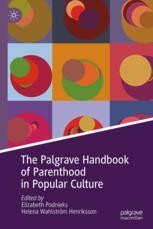
As an English professor focused on feminist issues, it was not until I had children that I was compelled to explore explicit connections between motherhood and literature. I sought out and happily discovered an expansive network of scholars, writers, and activists dedicated to the study and promotion of all things maternal. For over twenty years now I have participated in this richly supportive and committed community, one that consistently showcases how humanities research on motherhood is relevant to both academic and lay audiences. My colleague, Helena Wahlström Henriksson, and I recently published the edited collection of essays The Palgrave Handbook of Parenthood in Popular Culture, which constitutes forty chapters interrogating worldwide themes of caregiving, reproduction, and kinship within diverse twenty-first century mediated contexts like fiction, life writing, film, comics, visual art, gaming, advertising, and music, among others. As we indicate in our Introduction, this collaborative project was conceived in part as an acknowledgement of the complicated state of parenting today, as evidenced in headlines such as “The Relentlessness of Modern Parenting” (Miller), “Parents Under Pressure” (The U.S. Surgeon General), and “‘I couldn’t be left alone with the kids’: when parental exhaustion tips into burnout” (Linton).
Relatedly, our concentration on popular culture as a meaningful site of investigation into both motherhood and fatherhood was predicated on our conviction that, as noted by Charles Soukup and Christina R. Foust, “no facet of everyday life is outside the influence of popular culture” (9). Indeed, as they attest, “popular culture is worthy of our attention not only because we spend so much time and money consuming it, nor just because it brings joy. Rather, pop culture is a reflection of lived experience, which also creates lived experience. Popular culture is both a mirror and a stage to the larger communities and societies of which it is a part” (60). Here we can see how the humanities has the potential to inform and stimulate insightful, critical reactions from general audiences to representations of maternity within globally produced and consumed culture. To be sure, contemporary novels, films, and the like tackle pressing topics involving IVF, surrogacy, and AI nurturing; state surveillance and control of women’s reproductive bodies; pandemics and environmental disasters that impact fertility; recognition of colonial genocides that devastated Indigenous kinship structures; intersectional (especially racialized, lower class, and LGBTQ+) challenges to white, middle-class heteronormativity as the benchmark of the ‘good’ mother; the continuing reliance of well-off families in the Global North on (under)paid childminders from the Global South; and the growing cohort of women who boldly register maternal ambivalence or regret, or who choose not to mother at all.
The symbiotic relationship between representations of maternity and Motherhood Studies generates vital and timely dialogue about what it means to be a mother engaged in the practice of mothering within and beyond the institution of motherhood. This Mother’s Day, let us send—and receive—flowers. Let us also continue to generate art, scholarship, and conversation about caregiving in all its nuances, demands, and wonders.
Works Cited
Linton, Deborah. “‘I couldn’t be left alone with the kids’: when parental exhaustion tips into burnout.” The Guardian, February15, 2025.
Miller, Claire Cain. The Relentlessness of Modern Parenting. New York Times Company, New York, December 25, 2018.
“Mother's Day.” Encyclopedia of Motherhood. Edited by Andrea O'Reilly, Thousand Oaks: SAGE Publications, Inc., 2010, pp. 857-58.
“Parents Under Pressure: The U.S. Surgeon General’s Advisory on the Mental Health & Well-Being of Parents.” Office of the U.S. Surgeon General, August 28, 2024.
Podnieks, Elizabeth, and Helena Wahlström Henriksson. “Introduction: An Overview of Parenthood in Popular Culture.” In The Palgrave Handbook of Parenthood in Popular Culture, edited by Elizabeth Podnieks and Helena Wahlström Henriksson, Cham, Palgrave Macmillan Press, 2026, pp. 1-34.
Rich, Adrienne. Of Woman Born: Motherhood as Experience and Institution, W.W. Norton and Company, 1995.
Soukup, Charles, and Christina R. Foust. Popular Culture in Everyday Life: A Critical Introduction. Routledge, 2024.

Follow the Topic
Introducing the Palgrave Macmillan Campaign for the Humanities
At Palgrave Macmillan we publish cutting-edge humanities research that has real-world impact. This research community brings together the voices of our authors and editorial team to highlight and publicize the value of the humanities and humanities research in our world today.
Continue reading announcement
Please sign in or register for FREE
If you are a registered user on Research Communities by Springer Nature, please sign in