Meet the Editor: Rayner Kay Jin Tan
Published in Public Health

What drew you to the role of Deputy Editor for Global LGBTQ+ Health, and why do you see the journal as particularly important at this moment?
I was keen to take on the Deputy Editor role to support the work of our wonderful Editors-in-Chief. The work of Global LGBTQ+ Health feels especially important today, as we grapple with major shifts in political systems and funding landscapes that deeply affect LGBTQ+ people around the world. The journal also holds a commitment to epistemic justice in global health, which I see as a response to the ways global health architectures have privileged research and evidence that fail to capture the complexities of LGBTQ+ lives across the globe.
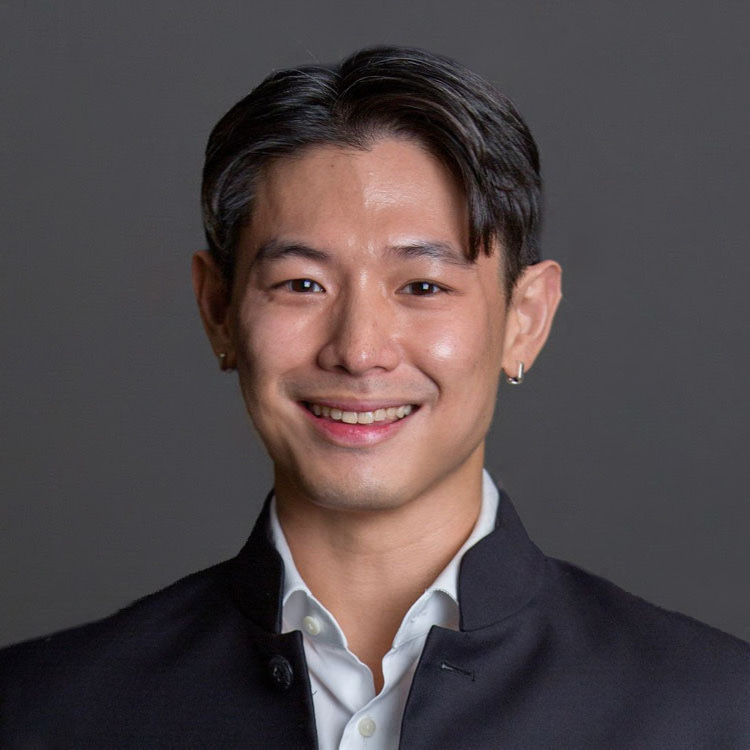 I was keen to take on the Deputy Editor role to support the work of our wonderful Editors-in-Chief. The work of Global LGBTQ+ Health feels especially important today, as we grapple with major shifts in political systems and funding landscapes that deeply affect LGBTQ+ people around the world. The journal also holds a commitment to epistemic justice in global health, which I see as a response to the ways global health architectures have privileged research and evidence that fail to capture the complexities of LGBTQ+ lives across the globe.
As Deputy Editor, how do you see your role in supporting the Editors-in-Chief and the wider Editorial Board, and what do you hope to contribute in this leadership position?
This is my first senior editorial role, and I am excited to bring my experience of writing, reviewing, and publishing across global and public health scholarly spaces. Through this role, I also hope to platform and elevate LGBTQ+ scholarship, community practice, and narratives from Asia and the Pacific.
In what ways has your career path influenced your perspective on LGBTQ+ health research and your approach to editorial work?
As someone who inhabits and lives with multiple stigmatised and marginalised identities, research began as a way of better understanding myself. My ability to connect personal troubles — HIV, substance dependence, mental health challenges — to public issues was born out of my sociological training. I have since sought to apply sociological lenses to better articulate the public health issues faced by LGBTQ+ communities. Entering research as a person with lived and living experience, a patient, and a community member has also allowed me to sit with what it means to occupy dual positionalities within privileged, scholarly spaces. This has shaped my approach to equity, inclusion, and representation in co-designing research, and to contesting the power structures and dogmas that allow such inequities to persist.
Which emerging topics or underexplored areas in LGBTQ+ health do you think the journal is well placed to highlight?
Given the scope of the journal, I believe we have work to do across several areas. I am pleased that the initial special collections reflect some of these priorities, including queer, trans, and non-binary health, and sexualised drug use (or 'chemsex'). These are under-researched areas that stem from structural issues and global health dynamics: funding priorities, political determinants, and stigma and discrimination. Such work is too often deprioritised, and where it does exist, it tends to reflect scholarship from better-resourced settings.
What guidance would you offer to early-career researchers who are looking to publish and build a profile in LGBTQ+ health research?
This may apply to any field, but reflecting on my own experience: ensure that your research remains equitable and is done in partnership with LGBTQ+ communities. Being from the community yourself doesn't automatically make your research community-engaged. Build long-term partnerships, integrate yourself into LGBTQ+ community activities, and support those at the forefront of practice in equitable ways. You will find no shortage of inspiration or ideas for impactful research. And even when traditional funding is out of reach, we have seen communities and researchers band together to get work done in ways that spur both scientific innovation and positive impact for communities.
Dr Rayner Kay Jin Tan is hosting, alongside Dr Allegra Ferrari, the collection Global Perspectives on Chemsex in the Context of LGBTQ+ Health. Submit now!

Rita is a Senior Publisher in the BMC Open Access Academic Journals team, managing a portfolio of journals in global and public health. She holds a Master’s in Publishing and Editing, and a BA in Languages, Literature, and Cultures.
Follow the Topic
-
Global LGBTQ+ Health
Global LGBTQ+ Health is an open access, peer reviewed journal, dedicated to publishing research that advances the understanding and improvement of health outcomes for LGBTQ+ individuals.

Related Collections
With Collections, you can get published faster and increase your visibility.
Queer, Trans, and Non-binary health in shifting political landscapes
Queer, Trans, and Non-binary health cannot be understood in isolation from the political conditions that shape stigma, identity recognition, and healthcare access. Minority stress theory has long established that enacted, anticipated, or internalised stigma, and associated identity concealment or hypervigilance, contribute to health inequalities for queer, trans, and non-binary people. Structural stigma extends this framework to illustrate that anti-queer, anti-trans, anti-non-binary hostility at the level of laws, policies, and public opinion also shapes health outcomes and healthcare access. Therefore, hostile political and legal environments are powerful drivers of ill health among queer, trans, and non-binary people, including in regions where hard-won rights are increasingly eroded.
The politicisation of gender-affirming care, particularly for young people, illustrates how moral panic (a product of disinformation) can contribute to restrictive, pathologising health policy and widening health inequalities. Similarly, the persistence of efforts to “repair” or “convert” a minoritised sexual orientation or gender (identity, modality, or expression) demonstrates that attempts to oppress queer, trans, and non-binary identity and expression remain entrenched in institutions. Criminalising such practices must be a priority in the pursuit of queer, trans, and non-binary health justice.
We invite submissions that address the following topics:
- Minority stress, structural stigma and novel frameworks for understanding widening health disparities
- Politicisation of gender-affirming healthcare
- Pathologising health systems, medical paternalism or refusal of care
- The harms of “conversion practices”, “gender exploratory therapy”, and other forms of sexual orientation and gender identity change efforts (SOGICE)
- Knowledge production, censorship and attacks on queer expertise in health and medicine
- Community-led responses and survival practices, including self-sourced medication and peer-delivered healthcare
- Harm and resilience across intersecting axes of inequality
- Inclusion of sexual orientation and gender measures in public health surveillance
Please note that non-empirical submissions must enable readers to identify a concrete implication for how LGBTQ+ health is understood, studied, practised, or governed. Work that engages medicine or illness solely as cultural, representational, or symbolic terrain, without implications for health knowledge or practice, falls outside the journal's scope.
Pre-submission enquiries can be directed to Dr Dean Connolly (dean.connolly@lshtm.ac.uk) and Dr Michal Pitoňák (michal.pitonak@fhs.cuni.cz).
This Collection supports and amplifies research related to SDG 3, Good Health and Well-Being, SDG 5, Gender Equality, SDG 10, Reduced Inequalities and SDG 16, Peace, Justice and Strong Institutions.
All submissions in this Collection undergo the journal’s standard peer review process. Similarly, all manuscripts authored by a Guest Editor(s) will be handled by the Editor-in-Chief. As an open-access publication, this journal levies an article processing fee. For articles accepted for publication in 2026, Global LGBTQ+ Health has waivers available to offer that can be requested upon submission and allocated on acceptance. For more information on publication fees, please see here. We recognize that many key stakeholders may not have access to such resources and are committed to supporting participation in this issue wherever resources are a barrier. For more information about what support may be available, please visit OA funding and support, or email OAfundingpolicy@springernature.com or the Editor-in-Chief.
Publishing Model: Open Access
Deadline: Feb 22, 2027
Global Perspectives on Chemsex in the Context of LGBTQ+ Health
Within the broader spectrum of sexualised drug use, research on chemsex - a socially structured and culturally codified practice involving the use of psychoactive substances and complex forms of intimacy desire, and vulnerability - has been shaped overwhelmingly by epidemiological and clinical contexts. Within this dominant frame, chemsex is most often approached as a public health problem to be measured and controlled. This risks narrowing how people who engage in chemsex are assessed and understood, positioning them primarily through the lens of risk rather than in relation to the broader social, relational, and embodied dimensions of their experiences.
In doing so, it can underplay the nuanced and textured realities of those who engage in chemsex, and the communities who provide care and support for them. Chemsex unfolds under diverse individual, interpersonal, social, and institutional conditions that cannot be fully captured through a clinical or public health lens alone, particularly where harm-reduction infrastructure are limited or absent. This is especially relevant for trans and non-binary people, women, bisexual people, sex workers, whose practices remain largely unstudied. The term "chemsex" itself also invites critical inquiry, particularly in relation to how it frames sexualised drug use, the subjects it brings into view, the kinds of knowledge it produces and the ways it shapes responses and interventions.
This Collection invites work that decentres the clinical gaze and balances both the potential harms and the meanings of chemsex. Chemsex practices and contexts serve as sites of risk and care, but also of intimacy, pleasure, autonomy, and community in ways that impact health.
We welcome submissions including, but not limited to:
- Sexualised drug use research from contexts where epistemic and empiric gaps exist, including, but not limited to, the Global South, ‘Global Majority’ (e.g. Asia, Latin America, Africa), and other under-represented and resource-limited settings
- Critical analyses of "chemsex" as an analytic category across contexts and its implications for health and other health outcomes
- Sexualised drug use among trans and non-binary people, women, bisexual+ people, and sex workers and other underrepresented communities
- Pleasure, agency, intimacy, wellbeing, and community as analytic anchors, alongside risk and harm
- Sexualised drug use under criminalisation: policing, legal risk, and their health consequences
- Community-led and peer-delivered responses where formal services are absent
- Syndemic and intersectional approaches that move beyond single-axis risk factors
- Methodological and ethical innovation in researching stigmatised, hidden, or criminalised practices as they relate to health and wellbeing
Please note that non-empirical submissions must enable readers to identify a concrete implication for how LGBTQ+ health is understood, studied, practised, or governed. Work that engages sexualised drug use solely as cultural, representational, or symbolic terrain, without implications for health knowledge, policy, or practice, falls outside the journal's scope.
This Collection supports and amplifies research related to SDG 3, Good Health and Well-Being, and SDG 10, Reduced Inequalities.
All submissions in this Collection undergo the journal’s standard peer review process. Similarly, all manuscripts authored by a Guest Editor(s) will be handled by the Editor-in-Chief. As an open-access publication, this journal levies an article processing fee. For articles accepted for publication in 2026, Global LGBTQ+ Health has waivers available to offer that can be requested upon submission and allocated on acceptance. For more information on publication fees, please see here. We recognize that many key stakeholders may not have access to such resources and are committed to supporting participation in this issue wherever resources are a barrier. For more information about what support may be available, please visit OA funding and support, or email OAfundingpolicy@springernature.com or the Editor-in-Chief.
Publishing Model: Open Access
Deadline: Apr 29, 2027