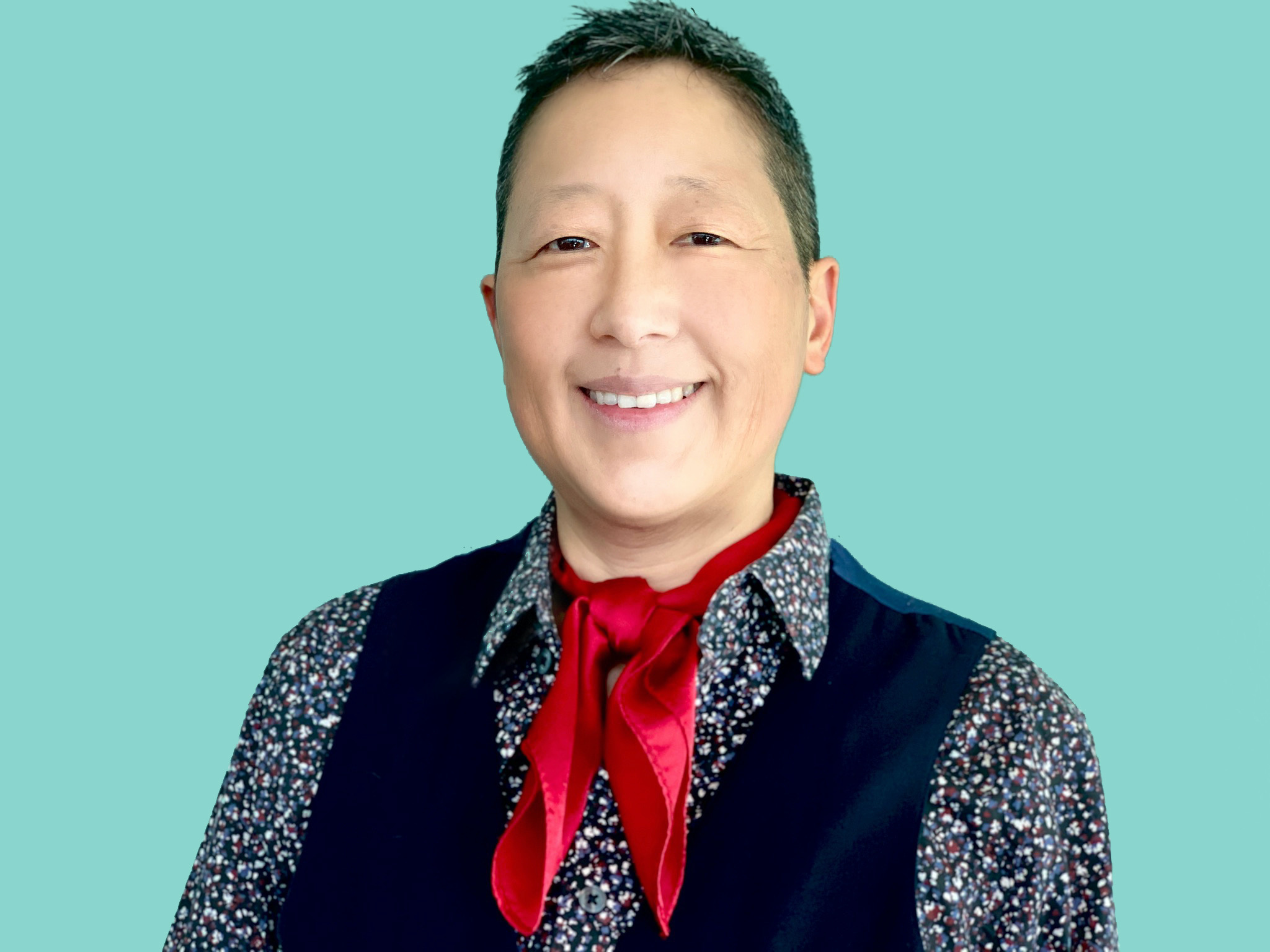
Meet the Editor: Sel J. Hwahng
Published in Social Sciences and Public Health

What inspired you to take on the role of Editor-in-Chief for Global LGBTQ+ Health, and why do you feel this journal is needed now?
 My motivation for taking on the role of Editor-in-Chief for Global LGBTQ+ Health is rooted in many years of working at the intersection of LGBTQ+ health, population health research, and health equity - often within publishing landscapes that were not fully equipped to support this work. My experience as Program Chair of the LGBTQ Health Caucus of the American Public Health Association exposed me to the breadth, depth, and global potential of LGBTQ+ health research. This became even more apparent through my role as co-editor and co-author of the edited volume Global LGBTQ Health: Research, Policy, Practice, and Pathways (Springer Nature, 2024), as well as my work as editor of the Global LGBTQ Health book series for Springer Nature. Together, these experiences underscored the importance of centering both Global South and Global North contexts, fostering cross-regional comparisons, and creating space for scholarship that moves beyond singular geographic or disciplinary frameworks.
Although LGBTQ+ health research has expanded substantially, much of it remains concentrated in Global North countries and framed through relatively narrow biomedical or behavioral perspectives. Interdisciplinary, community-engaged, and Global South–led scholarship has often struggled to find a consistent and welcoming home. At a time of increasing political polarization, structural inequality, and global shifts in power, LGBTQ+ communities worldwide are experiencing both heightened visibility and intensified backlash - developments with clear implications for health and healthcare systems. Global LGBTQ+ Health aims to address these gaps by providing a dedicated, inclusive, and intellectually rigorous platform for globally engaged, policy-relevant, and methodologically diverse research.
How does your professional journey shape the way you approach LGBTQ+ health research and editorial leadership?
My professional journey has been intentionally interdisciplinary. Although my undergraduate training was in biology, my graduate education is grounded in the humanities and social sciences, and my formal training in public and population health began during my postdoctoral fellowship in social and behavioral science research focused on HIV and substance use. Over the course of my career, I have examined health disparities across LGBTQ+ populations and, more recently, completed a Sc.M. in cardiovascular disease epidemiology, which included training in kidney disease, diabetes, obesity, and aging. My work is also shaped by training in the humanities and social sciences, including gender studies, LGBTQ+ studies, ethnic studies, and critical approaches to health and medicine, with close attention to socio-political and historical context.
This interdisciplinary foundation strongly informs my approach to editorial leadership. I value methodological rigor, but I am equally attentive to theory, context, and power - particularly when evaluating research involving marginalized communities. I am mindful of how editorial processes can unintentionally reproduce inequities through methodological gatekeeping, language expectations, or narrow definitions of impact. As Editor-in-Chief, my goal is to foster an editorial culture that is transparent, supportive, and constructive, especially for scholars working across disciplines or outside dominant academic centers.
What is your vision for the journal in its first few years, and how do you hope it will influence global conversations around this topic?
 In its first few years, I envision Global LGBTQ+ Health establishing itself as a truly international and interdisciplinary journal - one that scholars actively seek out because they trust the review process and know their work will be thoughtfully engaged within a global conversation. I hope to see submissions that span regions, methods, and topics, with particular attention to work led by scholars and practitioners based in the Global South and other historically underrepresented settings.
Beyond publishing individual articles, I hope the journal will help shape broader conversations about what LGBTQ+ health research can and should look like. This includes moving beyond deficit-based narratives, centering structural and social determinants of health, encouraging cross-national and cross-regional perspectives, and highlighting research with clear implications for policy, education, and practice. Ultimately, I see the journal as a catalyst for collaboration and dialogue across borders and disciplines, including partnerships among Global South countries themselves.
What emerging or under-researched areas in LGBTQ+ health do you hope the journal will help bring to the forefront?
Many areas of LGBTQ+ health remain under-researched, particularly outside North American and Western European contexts. I am especially interested in scholarship that examines LGBTQ+ health across the life course, including aging, chronic disease, and disability. To date, much LGBTQ+ research has focused on younger populations, which limits our understanding of long-term health trajectories and constrains efforts to support whole-person, community-centered, and clinical care.
There is also a critical need for more research on LGBTQ+ health within health systems, including medical education, provider training, and institutional policy, particularly in Global South contexts. While much existing scholarship emphasizes individual-level outcomes, less attention has been given to how health systems themselves shape inequities across diverse political, economic, and cultural environments. Health systems-focused research is essential for identifying gaps in training and policy and for translating LGBTQ+ health scholarship into sustainable improvements in care, education, and practice at a global scale.
Finally, I hope the journal will elevate intersectional and community-engaged research that examines how sexuality and gender identity intersect with race, ethnicity, migration, socioeconomic position, dis/ability, and geopolitics, as well as scholarship that reflects critically on data gaps, measurement challenges, and ethical issues in global LGBTQ+ health research.
What advice would you give early-career researchers who want to contribute to this field?
My primary advice to early-career researchers is to approach this work with both rigor and resilience, and to remember that building a scholarly career is a marathon rather than a sprint. Developing strong social support networks and collaborative relationships is essential for navigating the methodological challenges, political sensitivities, and institutional barriers that often accompany LGBTQ+ health research.
I encourage emerging scholars to pursue interdisciplinary training, remain grounded in the communities and contexts they study, and seek out collaborative opportunities whenever possible. I also recommend engaging with the peer-review process as a learning experience—both by submitting work and by serving as a reviewer—as editorial and reviewing experience can be invaluable for developing scholarly voice and confidence.
Finally, I encourage early-career researchers to trust the value of their perspectives and lived experiences, particularly those working across diverse global contexts. LGBTQ+ health research often involves navigating differences in language, resources, political climates, and academic norms, but these challenges also enrich the field and deepen its relevance. Seeking out mentors, collaborators, and publication venues committed to inclusion and respectful engagement can help make this work more sustainable and foster meaningful, globally connected scholarly careers over time.
Global LGBTQ+ Health is now open for submissions, and all publication costs will be covered by Springer Nature until 31 December 2026. Submit now!

Rita is a Senior Publisher in the BMC Open Access Academic Journals team, managing a portfolio of journals in global and public health. She holds a Master’s in Publishing and Editing, and a BA in Languages, Literature, and Cultures.
Follow the Topic
-
Global LGBTQ+ Health
Global LGBTQ+ Health is an open access, peer reviewed journal, dedicated to publishing research that advances the understanding and improvement of health outcomes for LGBTQ+ individuals.

Related Collections
With Collections, you can get published faster and increase your visibility.
Queer, Trans, and Non-binary health in shifting political landscapes
Queer, Trans, and Non-binary health cannot be understood in isolation from the political conditions that shape stigma, identity recognition, and healthcare access. Minority stress theory has long established that enacted, anticipated, or internalised stigma, and associated identity concealment or hypervigilance, contribute to health inequalities for queer, trans, and non-binary people. Structural stigma extends this framework to illustrate that anti-queer, anti-trans, anti-non-binary hostility at the level of laws, policies, and public opinion also shapes health outcomes and healthcare access. Therefore, hostile political and legal environments are powerful drivers of ill health among queer, trans, and non-binary people, including in regions where hard-won rights are increasingly eroded.
The politicisation of gender-affirming care, particularly for young people, illustrates how moral panic (a product of disinformation) can contribute to restrictive, pathologising health policy and widening health inequalities. Similarly, the persistence of efforts to “repair” or “convert” a minoritised sexual orientation or gender (identity, modality, or expression) demonstrates that attempts to oppress queer, trans, and non-binary identity and expression remain entrenched in institutions. Criminalising such practices must be a priority in the pursuit of queer, trans, and non-binary health justice.
We invite submissions that address the following topics:
- Minority stress, structural stigma and novel frameworks for understanding widening health disparities
- Politicisation of gender-affirming healthcare
- Pathologising health systems, medical paternalism or refusal of care
- The harms of “conversion practices”, “gender exploratory therapy”, and other forms of sexual orientation and gender identity change efforts (SOGICE)
- Knowledge production, censorship and attacks on queer expertise in health and medicine
- Community-led responses and survival practices, including self-sourced medication and peer-delivered healthcare
- Harm and resilience across intersecting axes of inequality
- Inclusion of sexual orientation and gender measures in public health surveillance
Please note that non-empirical submissions must enable readers to identify a concrete implication for how LGBTQ+ health is understood, studied, practised, or governed. Work that engages medicine or illness solely as cultural, representational, or symbolic terrain, without implications for health knowledge or practice, falls outside the journal's scope.
Pre-submission enquiries can be directed to Dr Dean Connolly (dean.connolly@lshtm.ac.uk) and Dr Michal Pitoňák (michal.pitonak@fhs.cuni.cz).
This Collection supports and amplifies research related to SDG 3, Good Health and Well-Being, SDG 5, Gender Equality, SDG 10, Reduced Inequalities and SDG 16, Peace, Justice and Strong Institutions.
All submissions in this Collection undergo the journal’s standard peer review process. Similarly, all manuscripts authored by a Guest Editor(s) will be handled by the Editor-in-Chief. As an open-access publication, this journal levies an article processing fee. For articles accepted for publication in 2026, Global LGBTQ+ Health has waivers available to offer that can be requested upon submission and allocated on acceptance. For more information on publication fees, please see here. We recognize that many key stakeholders may not have access to such resources and are committed to supporting participation in this issue wherever resources are a barrier. For more information about what support may be available, please visit OA funding and support, or email OAfundingpolicy@springernature.com or the Editor-in-Chief.
Publishing Model: Open Access
Deadline: Feb 22, 2027
Global Perspectives on Chemsex in the Context of LGBTQ+ Health
Within the broader spectrum of sexualised drug use, research on chemsex - a socially structured and culturally codified practice involving the use of psychoactive substances and complex forms of intimacy desire, and vulnerability - has been shaped overwhelmingly by epidemiological and clinical contexts. Within this dominant frame, chemsex is most often approached as a public health problem to be measured and controlled. This risks narrowing how people who engage in chemsex are assessed and understood, positioning them primarily through the lens of risk rather than in relation to the broader social, relational, and embodied dimensions of their experiences.
In doing so, it can underplay the nuanced and textured realities of those who engage in chemsex, and the communities who provide care and support for them. Chemsex unfolds under diverse individual, interpersonal, social, and institutional conditions that cannot be fully captured through a clinical or public health lens alone, particularly where harm-reduction infrastructure are limited or absent. This is especially relevant for trans and non-binary people, women, bisexual people, sex workers, whose practices remain largely unstudied. The term "chemsex" itself also invites critical inquiry, particularly in relation to how it frames sexualised drug use, the subjects it brings into view, the kinds of knowledge it produces and the ways it shapes responses and interventions.
This Collection invites work that decentres the clinical gaze and balances both the potential harms and the meanings of chemsex. Chemsex practices and contexts serve as sites of risk and care, but also of intimacy, pleasure, autonomy, and community in ways that impact health.
We welcome submissions including, but not limited to:
- Sexualised drug use research from contexts where epistemic and empiric gaps exist, including, but not limited to, the Global South, ‘Global Majority’ (e.g. Asia, Latin America, Africa), and other under-represented and resource-limited settings
- Critical analyses of "chemsex" as an analytic category across contexts and its implications for health and other health outcomes
- Sexualised drug use among trans and non-binary people, women, bisexual+ people, and sex workers and other underrepresented communities
- Pleasure, agency, intimacy, wellbeing, and community as analytic anchors, alongside risk and harm
- Sexualised drug use under criminalisation: policing, legal risk, and their health consequences
- Community-led and peer-delivered responses where formal services are absent
- Syndemic and intersectional approaches that move beyond single-axis risk factors
- Methodological and ethical innovation in researching stigmatised, hidden, or criminalised practices as they relate to health and wellbeing
Please note that non-empirical submissions must enable readers to identify a concrete implication for how LGBTQ+ health is understood, studied, practised, or governed. Work that engages sexualised drug use solely as cultural, representational, or symbolic terrain, without implications for health knowledge, policy, or practice, falls outside the journal's scope.
This Collection supports and amplifies research related to SDG 3, Good Health and Well-Being, and SDG 10, Reduced Inequalities.
All submissions in this Collection undergo the journal’s standard peer review process. Similarly, all manuscripts authored by a Guest Editor(s) will be handled by the Editor-in-Chief. As an open-access publication, this journal levies an article processing fee. For articles accepted for publication in 2026, Global LGBTQ+ Health has waivers available to offer that can be requested upon submission and allocated on acceptance. For more information on publication fees, please see here. We recognize that many key stakeholders may not have access to such resources and are committed to supporting participation in this issue wherever resources are a barrier. For more information about what support may be available, please visit OA funding and support, or email OAfundingpolicy@springernature.com or the Editor-in-Chief.
Publishing Model: Open Access
Deadline: Apr 29, 2027