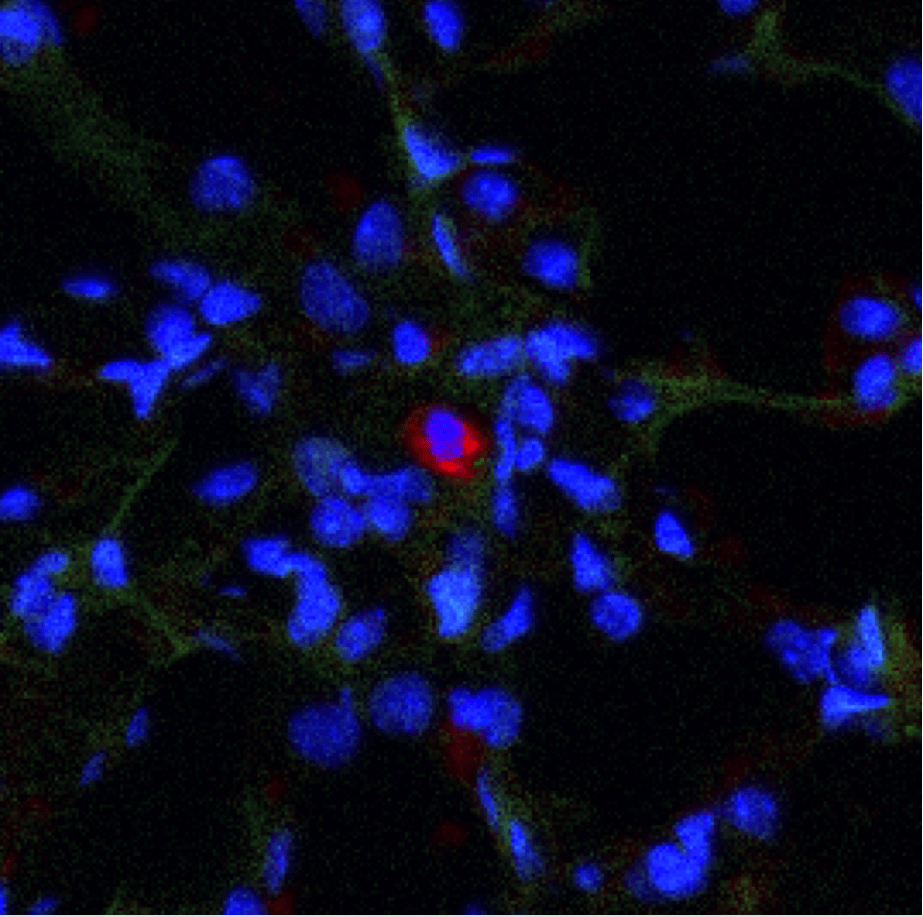


Many breast cancer patients suffer metastatic relapses months or years after removal of their primary tumor. This is thought to be caused by disseminated tumor cells that seed the distal organs and remain dormant until they re-activate, causing metastasis. We aimed to understand the mechanism of this phenomenon and wondered whether they could be related to the generation of an anti-tumor immune response.
To study this process, we compared two models of breast cancer in mice, 4T1 and 4T07. Both cell lines are derived from the same spontaneous breast tumor in Balb/c mice and can form primary tumors when injected into the mammary fat pad. However, while 4T1 aggressively metastasizes in the lungs, 4T07 cells seed the lungs and remain dormant as single cells.
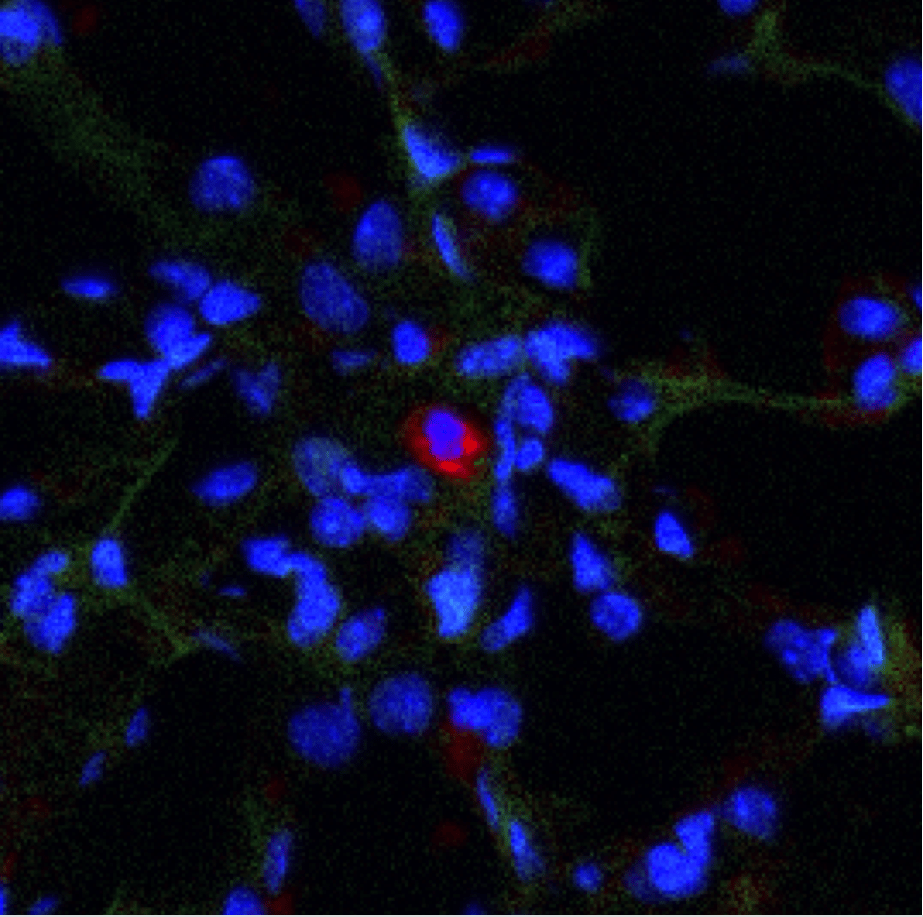 Dormant disseminated breast cancer cell in the lungs of 4T07 primary tumor-bearing mice by Héctor Castañón
We further explored the mechanism of this metastatic dormancy and discovered that it was dependent on the anti-tumor immunity generated by the primary tumor. This anti-tumor immunity was mediated by CD8+ T cells since their depletion or absence in genetic models allowed 4T07 cells to become metastatic. To further identify the CD8+ subset that mediated metastatic dormancy we analyzed the immune infiltrate in the 4T07 model. We discovered that 4T07 primary tumors and lungs were enriched in CD39+ PD-1+ CD8+ T cells. This population was enriched in effector and exhaustion markers.
Adoptive transfer of CD39+ PD-1+ CD8+ T cells prevented metastasis by induction of metastatic dormancy. This induction of dormancy was mediated by IFN-γ and TNF-α. Notably, stimulation of CD39+ PD-1+ CD8+ T cells with PD-1 blockade reduced the number of dormant disseminated tumor cells.
To translate our findings to cancer patients we analyzed the frequency of T cells in the primary tumors of breast cancer patients that had a metastatic relapse after surgery. The frequency of intratumoral CD39+ PD-1+ CD8+ T cells was strongly associated with increased disease-free survival after surgery, that is later metastatic relapse after surgery, while the frequency of total intratumoral T cells was not.
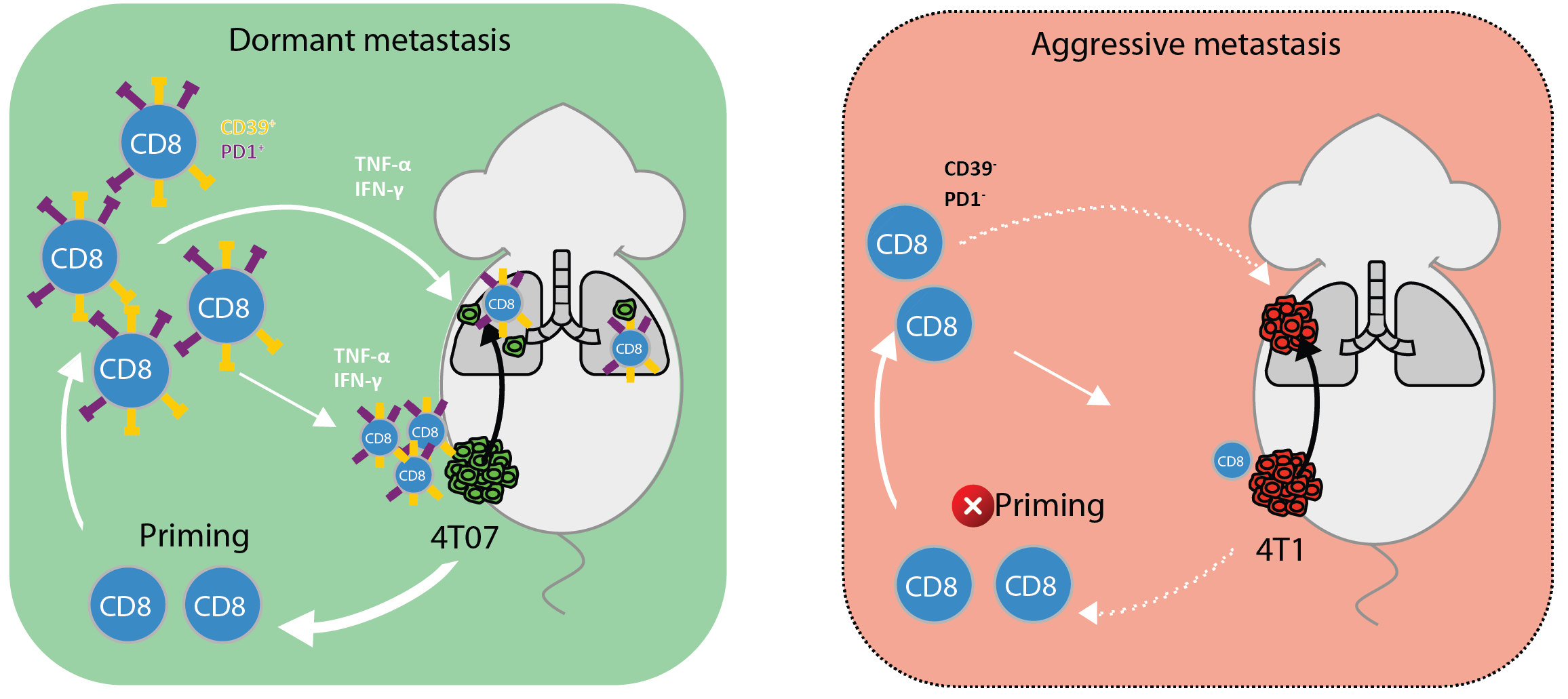 Scheme designed by Farkhondeh Movahedian Attar.
Our study reveals that, apart from tumor intrinsic mechanisms, the anti-tumor immune response contributes to the induction of metastatic dormancy and shows how immune stimulation can eliminate dormant disseminated tumor cells. Further studies are need to fully understand the biology and clinical consequences of metastatic dormancy.
Full article at: https://www.nature.com/articles/s41467-021-21045-2

Follow the Topic
-
Nature Communications
An open access, multidisciplinary journal dedicated to publishing high-quality research in all areas of the biological, health, physical, chemical and Earth sciences.

Related Collections
With Collections, you can get published faster and increase your visibility.
Women's Health
Publishing Model: Hybrid
Deadline: Ongoing
Tumor Microenvironment Crosstalk and Therapeutic Implications
Publishing Model: Hybrid
Deadline: Nov 02, 2026